Wines and sea: the one belonging to Catalonia d.o. Empordà – Costa Brava With its Mediterranean climate, it is not far from the popular beaches of the Costa Brava.
It is still a secret to most travelers that wines of discovery are produced there. We start our journey behind Rosas along the Sierra de Albera mountain range sinking in the sea. On the right, the houses of the urbanizations crouch on the mountain, on the left ancient olive groves stretch far into the country. Dolmens and menhirs from prehistoric times are hidden between dense bushes.
The first place on the track is Palau-Saverdera. The Romanesque church of Sant Joan is enthroned in the center of the village, venerably weathered. The Ermità Sant Onofre on the mountain flashes white above the village. The remains of the Castell de St. Salvador can be seen at the top of the ridge. The vegetation blooms profusely, the view over the Empordà and the Mediterranean Sea is breathtaking. Butterflies stagger in the wind, dark blue thunderstorm flowers and wild lupines, purple the thistle blossoms, crimson Cretan heads rise up and white and pink shine the cistus (Cistus albidus). Whimsical branches form into bizarre crowns of nature. Granite boulders form idiosyncratic sculptures.
d.o. Empordà
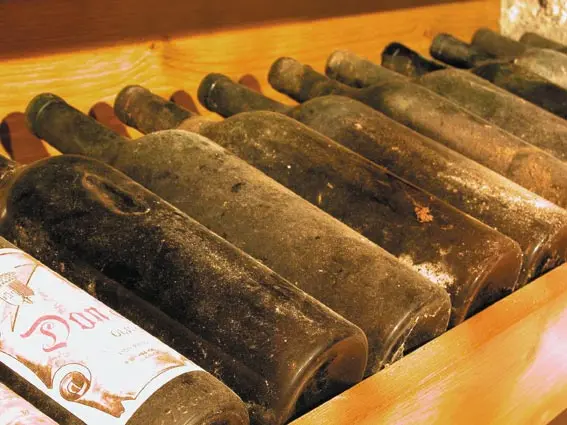 in the d.o. Empordà Every village has its cooperative. Here you can buy the young fruity wines of the region as well as fresh olive oil of the region as well as from the barrel or bottled in cardboard boxes and bottles. So also in the next village Pau. In Pau, too, the church of Sant Martí de Pau protrudes prominently over the roofs of the village. In the gardens there are ancient lemon and orange trees with enticingly bright fruits. Gnarled figs drive it green. The oldest houses in the village date from the 17th and 18th centuries and are made of fieldstone.
Between Pau and Vilajuïga is the modern Bodega Espelt (www.cellerespelt.com). At the Bodega bar you can taste the wines, and direct shopping is possible for everyone.
The Empordà – once known primarily as the producer of sweet white wines (‘Rancio’) – has now adjusted to the increasing demand for light, fruity and fresh wines as a wine region. You will find a wide variety of grape varieties here: e.g. the Garnacha Blanca, Macabeo, Xarel-Lo, Chardonnay, Moscatel, Sauvignon Blanc and Gewürztraminer as white and garnacha tinta, Cariñena, Cabernet Sauvignon, Cabernet Franc, Syrah, Ull de Llebre and Merlot as red grapes.
The cooperative of Vilajuïga also belongs to Empordàlia with draft wines and freshly squeezed olive oil.
In addition to wine, Vilajuïga also has water to offer. At the source of Vilajuïga you can fill up your water tanks. The water is also available everywhere on the Costa Brava in supermarkets and restaurants in fine glass bottles. By the way, Dalí drank almost exclusively this naturally bubbling mineral water with healthy minerals.
Garriguella is waiting with several wineries and the cooperative (www.cooperativagarriguella.com) on. The church of Santa Eulàlia de Noves de Garriguella forms the center of the village. Here you will also find the hotel and restaurant La Plaça (www.hotelgarriguella.com), a real insider tip in the hinterland of the Costa Brava. The author’s Mediterranean-French cuisine spoils his guests with fresh products from the region.
Mollet de Peralada
 In Mollet de Peralada we visit the young, ambitious winemaker Josep Serra in his Bodega La Vinyeta (www.lavinyeta.es) to taste the earthy red “Hay”. The modern eye-catching wine labels come from the designer Lluís Serra, the winemaker’s brother. There have already been awards for both the wines and the design.
If you want to eat stylishly, you should definitely visit the Mas Renart restaurant (www.restaurantmasrenart.com) in Mollet de Peralada. In the lovingly renovated Masia, international cuisine is served with fresh regional products.
As the region’s largest producer, the Castell de Peralada winery was the leader in the conversion to quality wines. With an annual volume of ten million bottles and potent donors such as the noble family Suqué-Mateu, which also owns the Peralada Castle with the casino, you can afford to experiment with grape varieties.
At Sant Climent Sescebes we visit the modern Bodega Terra Remota (www.terraremota.com). The minimalist building corresponds entirely to the wishes of the winery owners Marc and Emma Bournazeau, who were looking for a combination of tradition and modernity and at the same time wanted to do justice to the unique landscape of the Empordà.
Passing Sant Climent Sescebes, we drive through olive groves, vineyards and blooming poppies to Capmany. There are several well-known bodegas here. At the Grup Oliveda (www.grupoliveda.com) you can get noble wines and cavas in direct sales. During a tour of the wine and fittings museum, you can find out about the history of the bodega or enjoy a wine tasting. The Church of Capmany is of Roman origin and dates back to the 12th-13th century. In the upper village you will find the small chapel of Sant Sebastià from the 17th century. Among the young wine producers in Capmany is Bonfill by Celler Arché Pagès
(www.cellararchepages.com)
 The winemakers in d.o. Empordà – Costa Brava have understood the signs of the times and rely on quality and the connection between tradition and modernity. After all, we are here in the oldest wine-growing region in Spain: more than two thousand years ago, the Greeks brought their first vines with them when they landed in Nahe Empúries.
A list of Bodegas with their addresses is on the homepage www.doemporda.com to find. The large bodegas are usually open from Tuesday to Saturday, some on Sunday mornings, the smaller ones, especially on weekends and on request.