Perpignan, Collioure and Portbou: we have merged our three-part trip across the border to the Côte Vermeille into this one article. Here are the route and the key facts.
Perpignan, Collioure and Portbou at a glance
- Route: Perpignan, Collioure with Paulilles and Banyuls-sur-Mer, then Portbou and the coast near Colera
- Perpignan: according to our report only about an hour’s drive from the Costa Brava, more in our article Bonjour Perpignan
- Collioure: birthplace of Fauvism, where Matisse and Derain spent a summer in 1905
- Portbou: border town with the Walter Benjamin memorial by the artist Dani Karavan
- Côte Vermeille: the French stretch of coast north of the Spanish border
Part 1: Perpignan
A Excursion to the French neighbors is always a pleasant change. Perpignan is just outside the door and is only 1 hour’s drive from the Costa Brava. Shopping there can be combined with a subsequent stroll through Collioure – the pearl of the Côte Vermeille – and a varied return trip along the beautiful coast with stops in various wineries.
perpignan – Southern heart with a spicy accent – this is how the city is officially characterized. Perpignan (Catalan perpinyà) is the Capital of the southern French department of Pyrénées-Orientales.
Perpignan belonged to the crown of Aragon Catalonia since 1172. From 1276 to 1344 Perpignan was then the Capital of the Kingdom of Mallorca, of which today still the Palace of the Kings of Mallorca shows. In 1659 the city was attached to France by the Pyrenean Treaty. In the region around Perpignan – the Roussillon (Catalan Rosselló) – some Catalan people are still spoken today and good wine is pressed.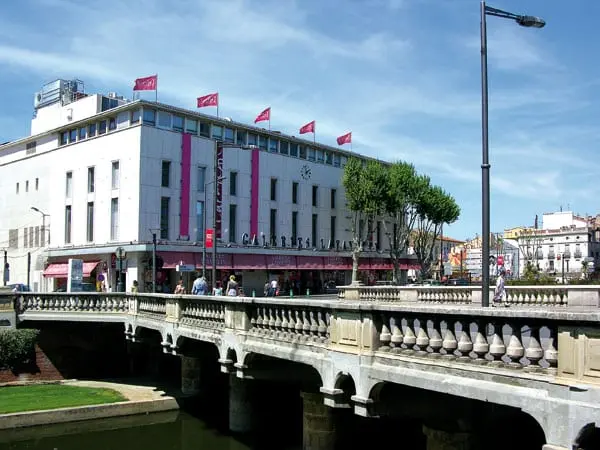
Perpignan impresses by Catalan culture and tradition paired with French charm and teach us the ease of being. Planets and palm trees alternate on the sunny wide avenues. There is a lot of hustle and bustle in the city’s many street cafés. Baroque and futuristic boutiques, a dusty little Lafayette, hip galleries and design shops make you want to go shopping. The weekly market Full of spices, fruit, vegetables, fish, sausage and baked goods seduced with thousands of scents and colors. Everywhere you meet history: from the monasteries to the museums, from the churches and chapels to processions and music.
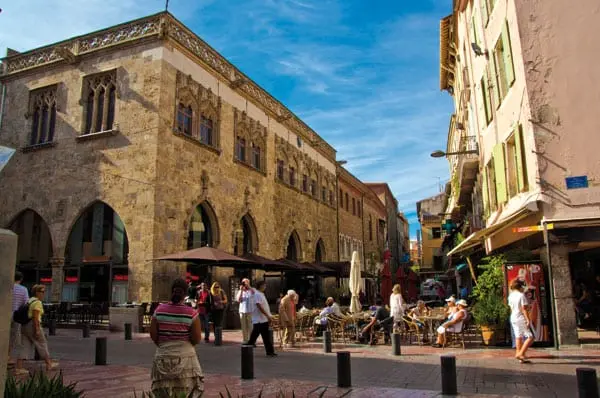
Perpignan combines the here and there, the yesterday and today, is traditional and cosmopolitan at the same time. always happy and at any time of the year we let ourselves be through the small streets of the old town drive, watch over a glass of wine with curious passers-by and buy French delicacies. After all, you really know how to enjoy it here.
More: Bonjour Perpignan – The Center of the World.
Part 2: Collioure, Paulilles and Banyuls-sur-Mer
Collioure at a glance
- fauvism: In 1905, Henri Matisse and André Derain spent a summer here, Collioure is considered the birthplace of Fauvism. A path, the “Chemin des Fauves”, follows in the footsteps of the painters
- Chateau Royal: The kings of Mallorca made the castle their seat in the 13th century
- kitchen: Collioure is known for his anchovies
- location: At the Vermeille
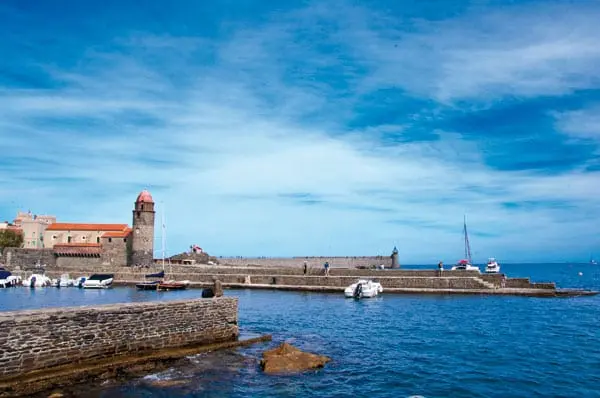
collioure is considered the Pearl of the Vermeille and is Birthplace of Fauvism. The place shines with bright colors and fascinating light. artists like Georges Braque, Raoul Dufy, Henry Matisse Oder Pablo Picasso were fascinated by Collioure. Henri Matisse remarked “there is no bluer sky in France than Collioure’s.” The special light gave the coastal region its name: Purple Coast – Cote Vermeille. Painters still characterize Collioure today. They banish the moments and moods on canvas or paper with colors and bear the reputation of Collioure as «painting city» bill. most popular motif then and now: the Notre-Dames-Des-Anges Church with the striking dome. We stroll out the mole and admire the silhouette of the King’s Castle, the harbor basin Port d’Amont from Port d’Avall separates. Later we lose ourselves in the old alleys with the picturesque stairs, flowers decorated houses, colorful boutiques, galleries, small cafés, bars and restaurants. We let ourselves be seduced into mussels and white wine. in the Brasserie «Hôtel des Templiers» at Quai Amirauté There are countless works by artists who settled in Collioure. The owner Rene Pous Had a heart for painters, and swapped many a bill for a picture.
For the way back to Spain we choose the coastal road: spectacular viewing angles, vineyards and ruins. Here the fine «Vin Doux Naturel», harvested. It rests in oak barrels for 30 months.
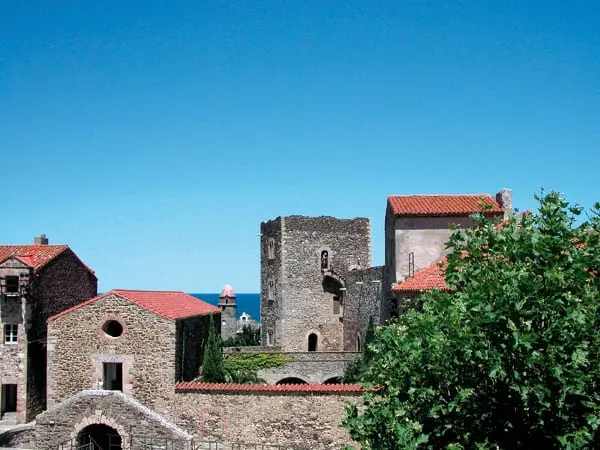 Paulilles
Our tip: Paulilles about 3 km south of Port Vendres behind the pass read Portas. The Small Mediterranean Bay stretches between the Bear Cape and the Oullestrell Cape. The three Beaches Bernardi, Del Mitg and Fourat are separated by rocks. Here you meet that Les Clos de Pauilles Winery. Les Clos de Paulilles has been owned by the Dauré family, who also owns the Château de Jau is. The wine tasting with sea views tempts us to shop: Les Clos de Paulilles Collioure Rouge AOC For example, an excellent dry red wine with a strong berry aroma. A jump into the cool waves of the picturesque bay just outside the winery’s gates will then clear your head. Ancient pine trees frame the sea here.
Integrated in the fantastic coastal region, one discovers a bay further Old Dynamite Factory, founded by Alfred Nobel. Paulilles was a self-sufficient complex, a special type of working and living community, located in the midst of Mediterranean vegetation and directly on the sea. Since the plant was closed in 1984, the entire site was left to its own devices. Over a period of several years, a team of architects, landscape architects and environmental planners developed a concept for using the middle section. Since 2008, about 17 ha of the area have been ‘Site de Paulilles’ open to the public.
Banyuls-sur-Mer
The next stop is Banyuls-sur-Mer. Here was the Sculptor Aristide Maillol at home. Today shows his Studio Museum.
in Banyuls-sur-Mer in the Internationally known wine cellar «Le Cellier des Templier» you can taste the wines of the region. The «Banyuls», a mahogany-colored sweet wine – which harmonizes excellently with chocolate – is world-famous.
The Fête des Vendanges in Banyuls Is a must for autumn: the wine festival on the beach of Banyuls-sur-Mer on October 8th and 9th is the meeting point for wine fans from near and far.
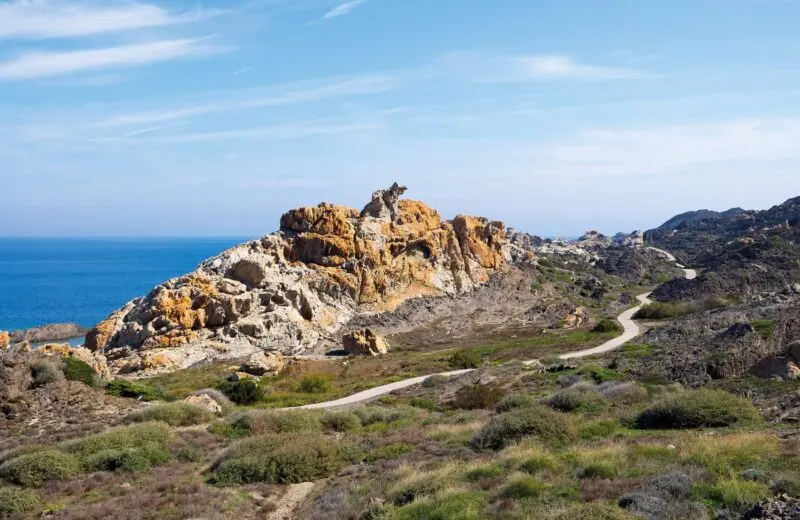
Via curves and inclines it goes back to the Costa Brava. Rocky mountains on one side and Azul-Blue Mediterranean Sea on the other – one of the most beautiful coastal roads in Europe Connects France and Spain.
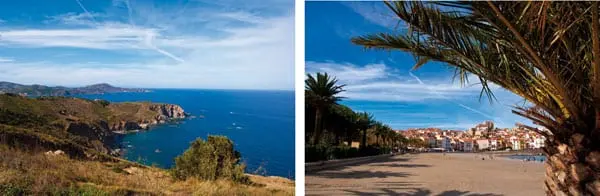
Part 3: Portbou
Portbou Appears down in the valley in front of us. This is famous here Walter Benjamin Monument. The Israeli artist Dani Karavan In the early 1990s, this highly acclaimed symbol of deceptive freedom was created to address Walter Benjamin and the victims of fascism to remember. The Monument Located next to the cemetery above the town and port. A rusty long metal staircase descends through a tunnel down the steep slope to the sea. The view between the rust-colored steel walls falls directly into the water. A staircase to nowhere. Symbolically for the blocked path to freedom, a glass plate borders the shaft to the sea.
In February 1939, thousands fled from Franco’s approaching troops. Among them also the Jewish philosopher and writer Walter Benjamin. His suicide saved the lives of other refugees.
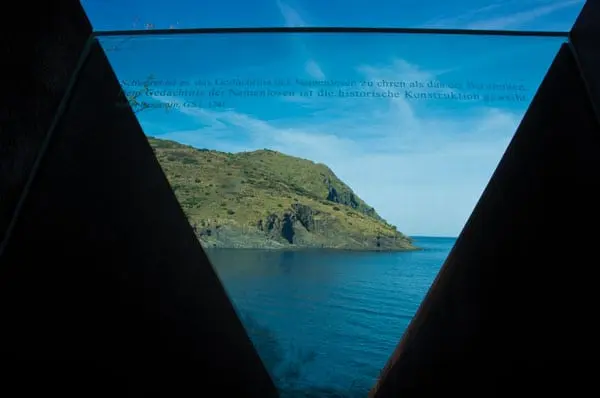 Dani Karavan constructed in Portbou in tribute to Walter Benjamin Den Memorial «Passages». This large landscape installation is “a field of tension of formal austerity and poetic expression, of nature and memory”. In it engraved in 5 languages the words: “It is harder to honor the memory of the nameless than that of the famous one. The historical construction is dedicated to the memory of the nameless.”
Walter Benjamin. G.S. I,1241.
Further past Colera, the evening sun has finally taken over the power in the sky. The sea turns azure blue. 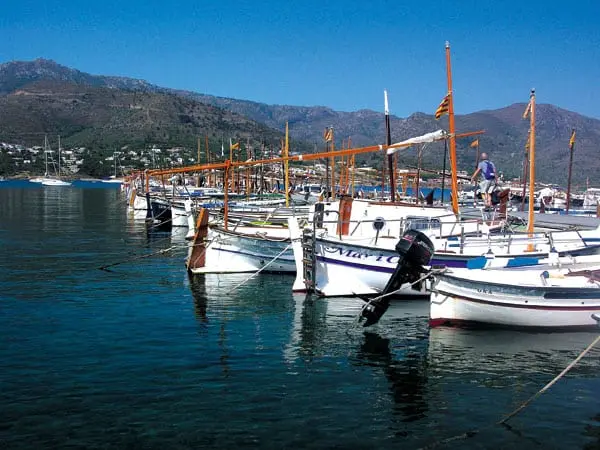 On the horizon white sails, the screams of circular seagulls, a picturesque bay on the left. The Platja de Garbet Has style. The Garbet Beach Restaurant is considered a gourmet address by the sea. Arrived in Port de la Selva, the sun slowly slips behind the horizon. The nets of the fishermen are spread out. We stroll relaxed and tired along the sea. The last sailors are looking for the safe haven. we a small restaurant. The off-season has its very special appeal: you get a good place with a view everywhere. The Costa Brava Also worth a trip in October.
More: Llançà – Portbou: Gone by the Wind.
Frequently asked questions about the Côte Vermeille
Why is Collioure famous?
Here, in 1905, Henri Matisse and André Derain painted strong, not true to nature, it is considered the birthplace of fauvism. The place is also known for its anchovies.
What is the Château Royal?
The castle at the port, which made the kings of Mallorca their seat in the 13th century.
Where is Collioure?
On the Côte Vermeille, the French stretch of coast north of the Spanish border.
What is the Côte Vermeille?
The French stretch of coast north of the Spanish border (according to our report).
How far is Perpignan from the Costa Brava?
According to our report only about an hour’s drive. Perpignan lies about 30 kilometres north of the Spanish border (Wikipedia).
What is the Walter Benjamin memorial in Portbou?
A monument by the Israeli artist Dani Karavan from the early 1990s that commemorates Walter Benjamin and the victims of fascism. It stands next to the cemetery above the town and harbour. A rusty metal staircase leads through a tunnel down the steep slope to the sea, and a glass panel closes off the shaft (according to our report).
Which stops does this trip include?
Perpignan, Collioure, Paulilles, Banyuls-sur-Mer, Portbou and the bay of Platja de Garbet near Colera (according to our report).
Sources: My France, Collioure, Visit Occitanie, Collioure, Off to vacation, Collioure, Wikipedia, Perpignan.