La Gavina – living in style – or pure luxury.
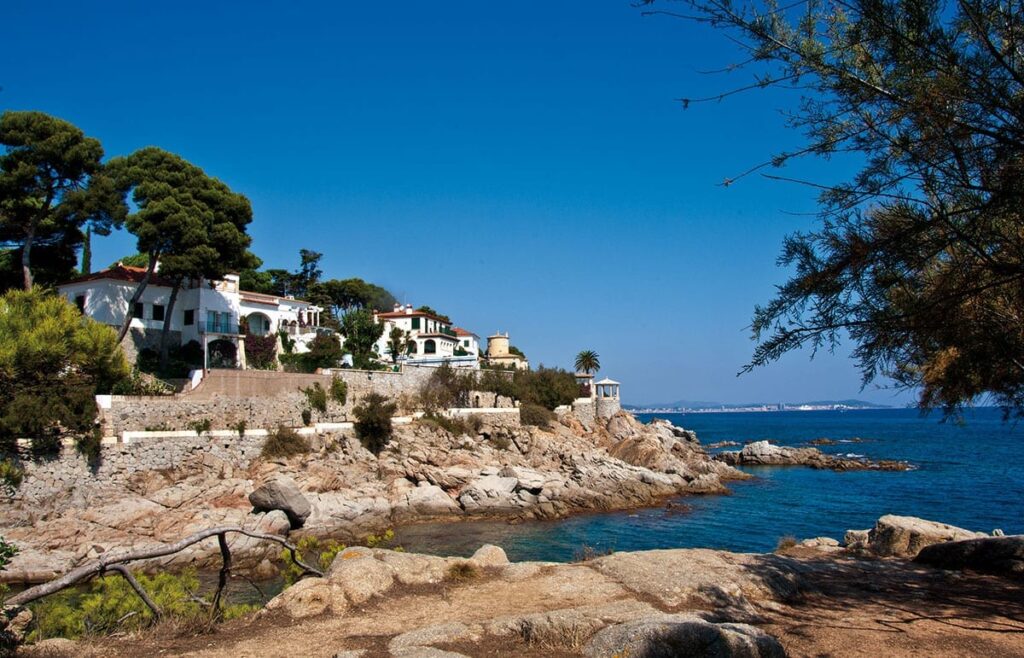
We had heard a lot about La Gavina in S’Agaró near Platja d’Aro and have long wanted to see the magnificent villa district with the famous classic five-star hotel »Hostal de la Gavina«.

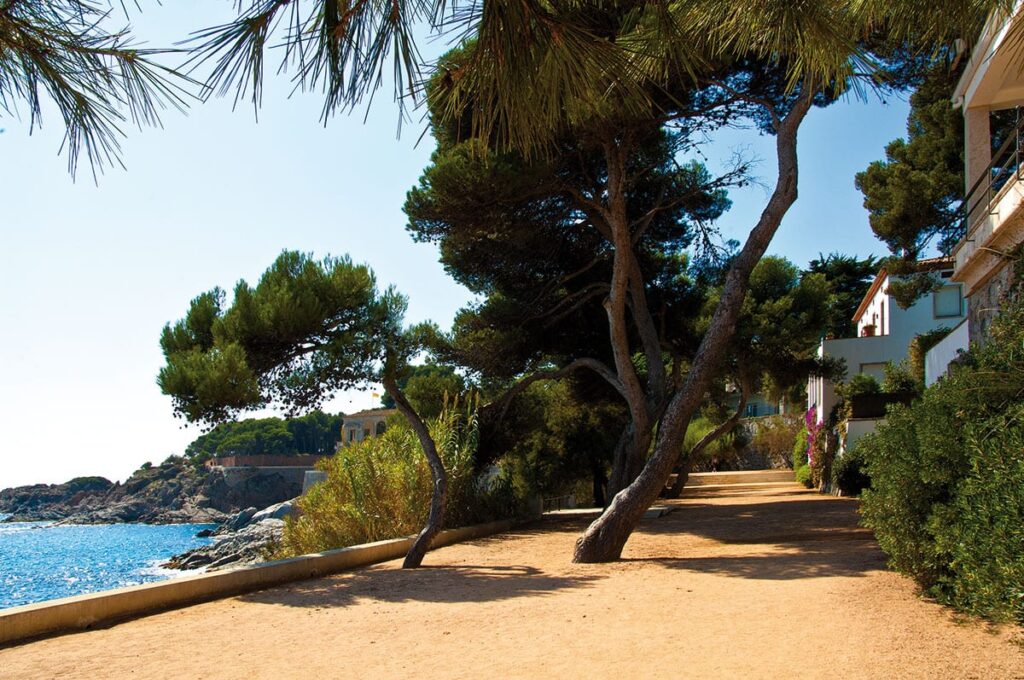
Some time ago, the press also made the Camí de Ronda de s’Agaró headlines. The old promenade has been renovated in an exemplary manner and has been showing itself in a new guise for a short time. The promenade is considered a masterpiece of landscape architecture and is one of the most romantic walks by the sea.
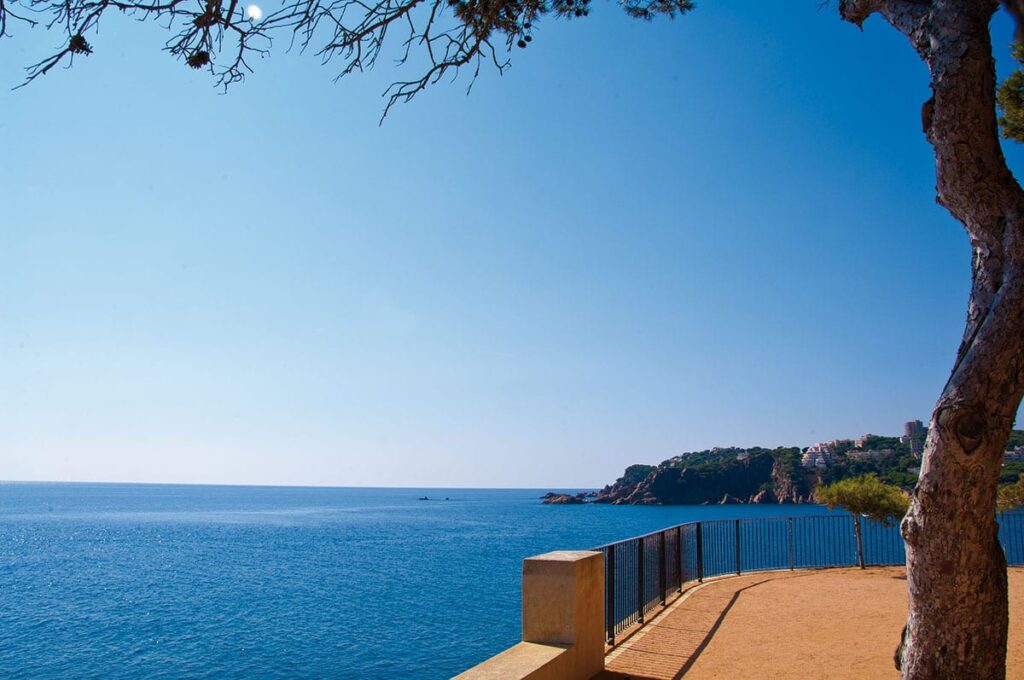
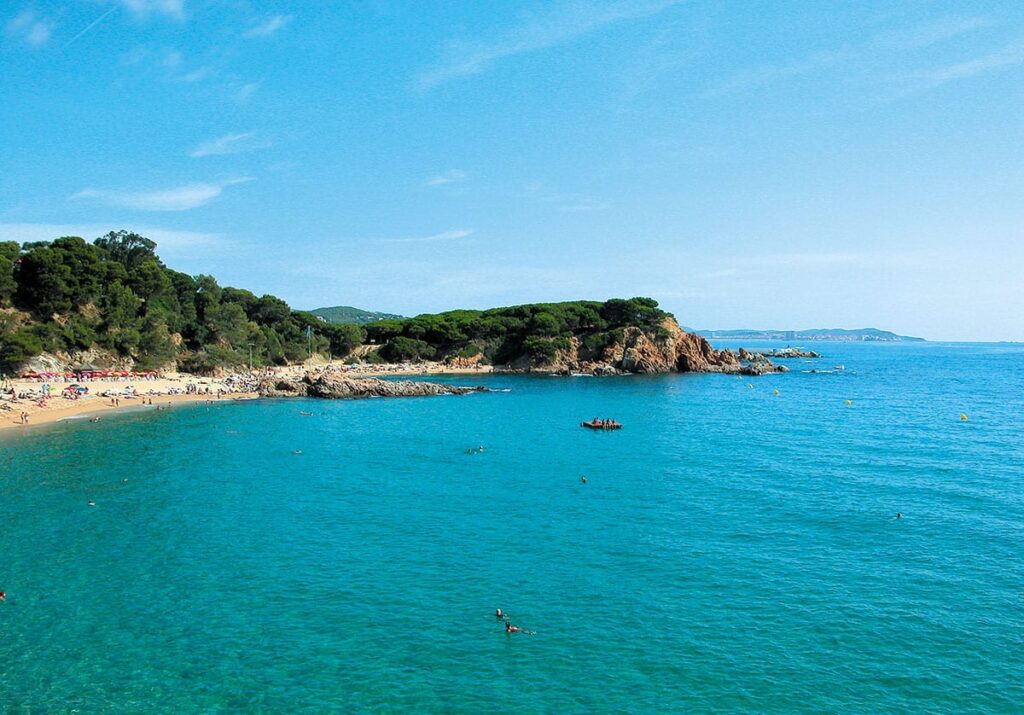
Already Charlie Chaplin, Humphrey Bogart and Ava Gardner Enjoyed the exclusivity of the La Gavina district with the magical little beach “Cala de sa Conca”. The private settlement opens its gates only to the residents’ cars. If you want to enjoy the tranquility and the clear turquoise blue water of the Cala de Sa Conca bay, you usually have to park and walk at the entrance to the town (Club Náutico).
La Gavina in S’Agaró is the oldest luxury holiday settlement of the Costa Brava
The La Gavina in S’Agaró is the oldest luxury holiday settlement of the Costa Brava. In 1924, the Ensesa family, under the direction of the great Girona architect Rafael Masó, began construction of the villa settlement. After 1939, the architect Francesc Folguera took over the further design of the “Cami de Ronda” promenade. La Gavina in S’Agaró is now one of the most beautiful and expensive places in the Costa Brava.
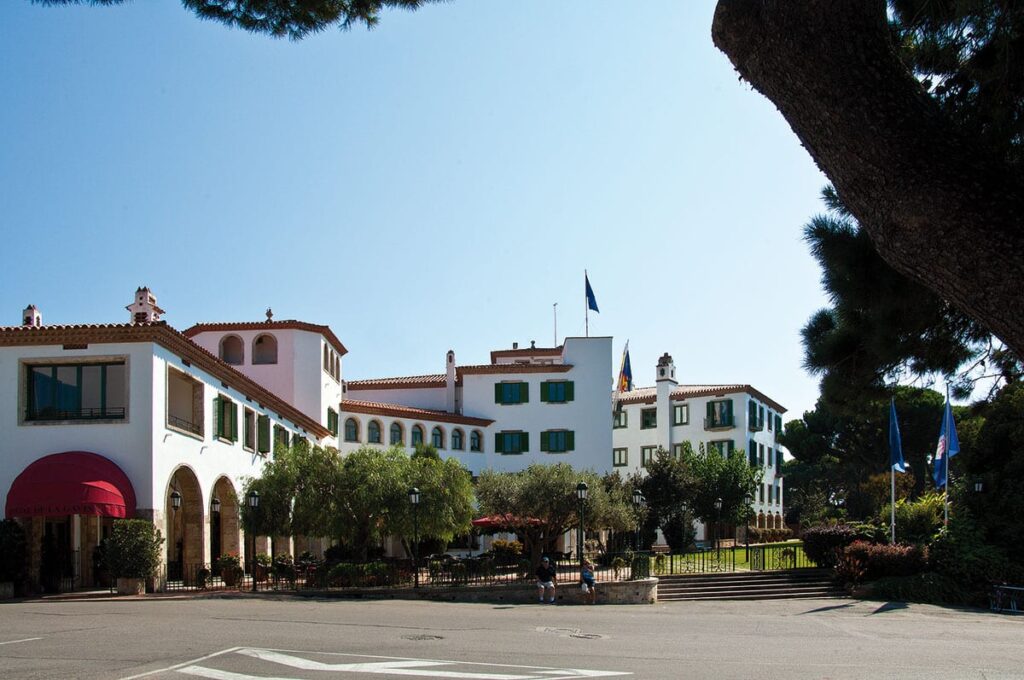
At the entrance to this urbanization La Gavina, the Hostal de la Gavina is built in 1932, in the park of which is the Venus of S’Agaró created by Joan Rebull.
The architectural style of the hotel complex is referred to as “Novecento”, with an independent, Mediterranean inspiration. Important historical events took place here, and then as now, international hautevolee from business, culture and politics.
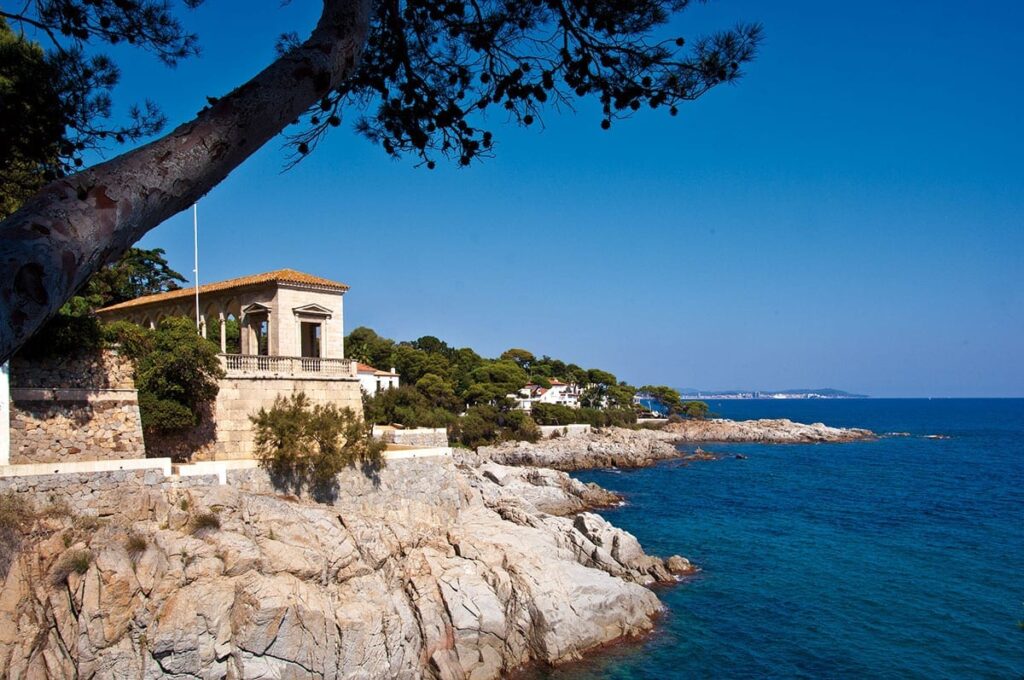
The Villas of La Gavina in S’Agaró
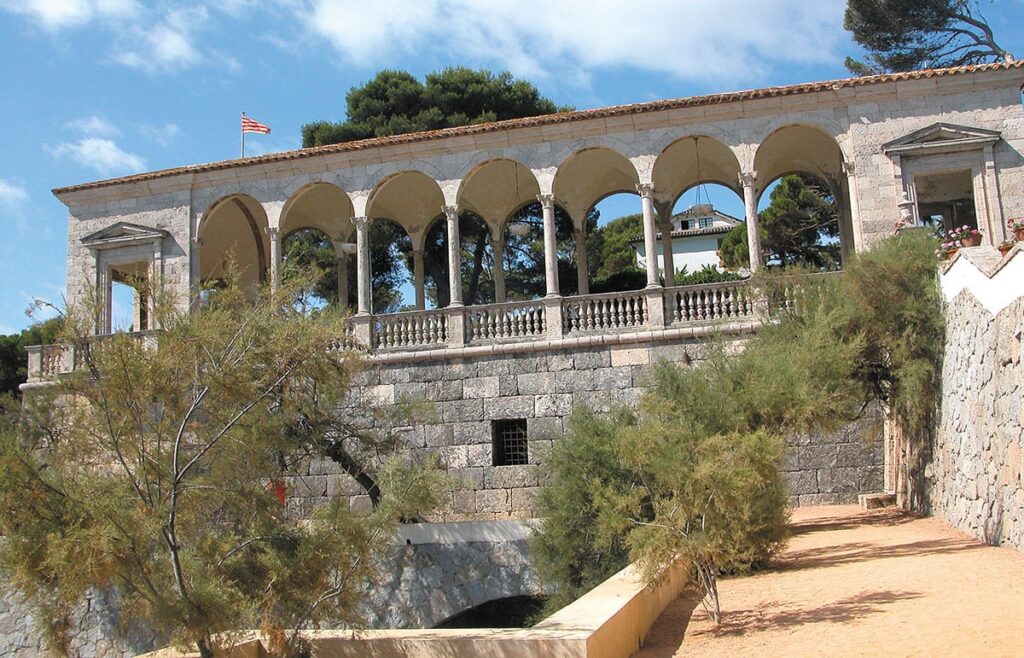
The villas Gorina, Sibils, Bonet, the house of the architect Masó himself and especially the Villa Ensesa with the gardens “Senya Blanca” and the “Loggia de Senya Blanca” with a magnificent viewing terrace are next to the hotel Masó’s important buildings, at the time, he decided to collect stylistic elements from decaying farmhouses, palaces and monasteries of Catalonia and to develop his own new architectural style with the help of these elements. Buildings were cleverly combined to create a new villa style, with the Ensesa family’s Senya Blanca, another foundation stone for this idyllic urbanization with dreamlike holiday residences by the sea. The architects Francesc Folguera and Adolf Florensa on behalf of the Ensesa family gave their manuscripts in the luxury facility La Gavina.
The great Hollywood stars of the fifties loved La Gavina and S’Agaró
In the 1950s, the name La Gavina and S’Agaró stood for luxury on the Mediterranean. The international jet set and members of the Spanish royal family felt at home here. At the time, the big Hollywood stars appeared on the Costa Brava and made their films. Fascinated by the beauty and untouchedness of the landscape, the Costa Brava attracted the attention of directors and producers. Films were made here, such as “Suddenly last summer“, „Whispering Shadows„, „Pandora and the Flying Dutchman„, „The light at the end of the world” and many others more.

Sa Conca Bay, the Loggia of the Senya Blanca, the rocky coast in front of it and the beach of San Pol often served as a backdrop. The big stars of the American film industry wereted their dollars in La Gavina and S’Agaró and met for parties and parties. stars like Ava Gardner, Yul Brynner, Kirk Douglas, Elizabeth Taylor, Montgomery Clift or Rock Hudson fell in love with the region and came back to the Costa Brava after their films were already filmed. Charlie Chaplin, Humphrey Bogart and Lauren Bacall were also one of the guests of what was then the most luxurious hotel in Spain »Host de la Gavina«.
Because of their generosity and the aura of partying, luxury and waste that came with the film people, the Hollywood stars became the great idols of the area, and various myths and legends spread around them.
In 1956 the first music festival of S’Agaró took place. This tradition has survived to this day and every summer famous musicians and orchestras perform worldwide.
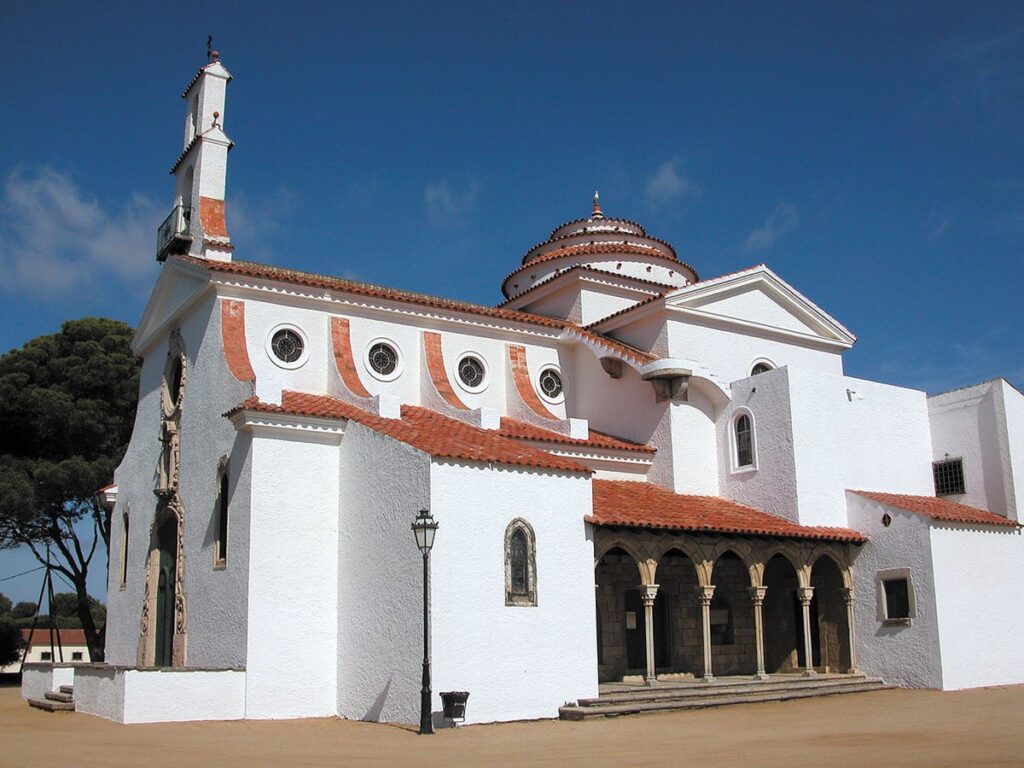
The Church of Nostra Senyora de l’Esperança
We visit the church Nostra Senyora de l’Esperança high up on the hill. The church was built in 1942 by Francesc Folguera. Its peculiarity is the inclusion of the Gothic arcades of the cloister of the former Franciscan monastery in Girona. The roof edges and stairs of the church have typical Catalan, Mediterranean architectural elements. The walls are whitewashed and the portal is ornate stone. A seagull is enthroned on the dome, which after our photo swings into the air again. We walk down the many steps to the “Cami de Ronda” coastguard. All the stairs of the urbanization lead there. Here you can find spectacular views of the sea and villa architecture.

Cala de Sa Conca in La Gavina
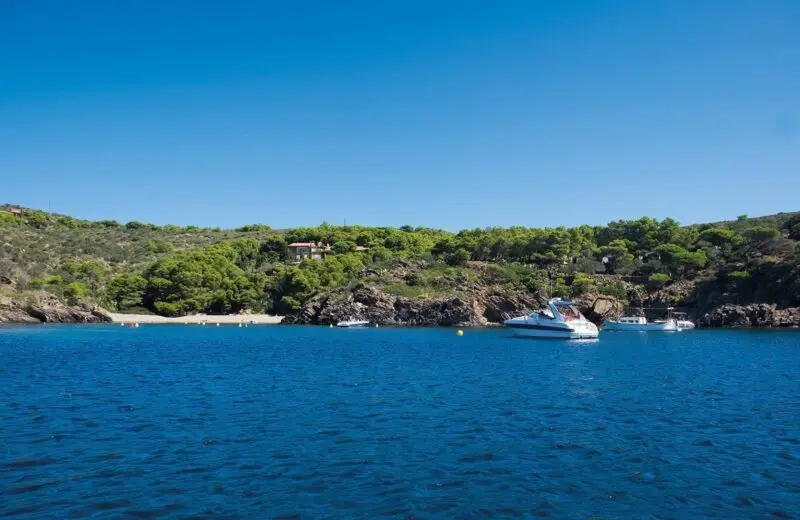
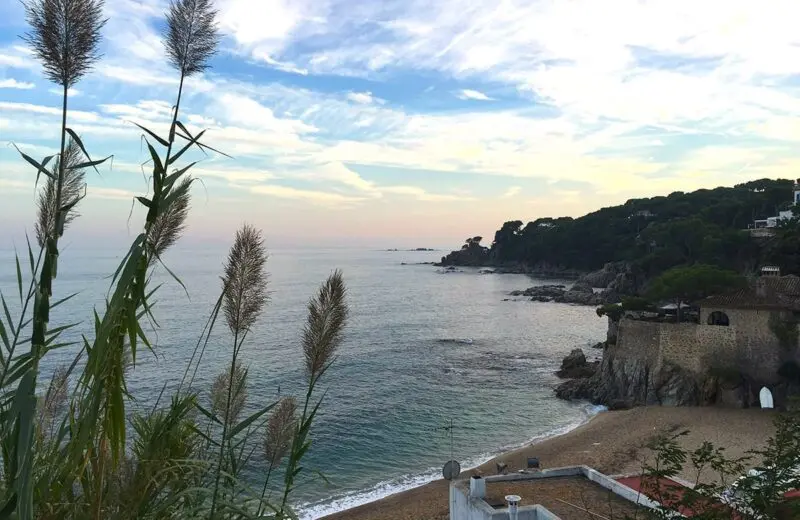
The bathing bay Cala de Sa Conca is turquoise blue and clearly deep below us. The view extends to the seabed. Some swimmers cavort in the cool water. The beach here is not overcrowded here, even in midsummer. Most villa owners prefer their own pool.
Mirador La Gavina
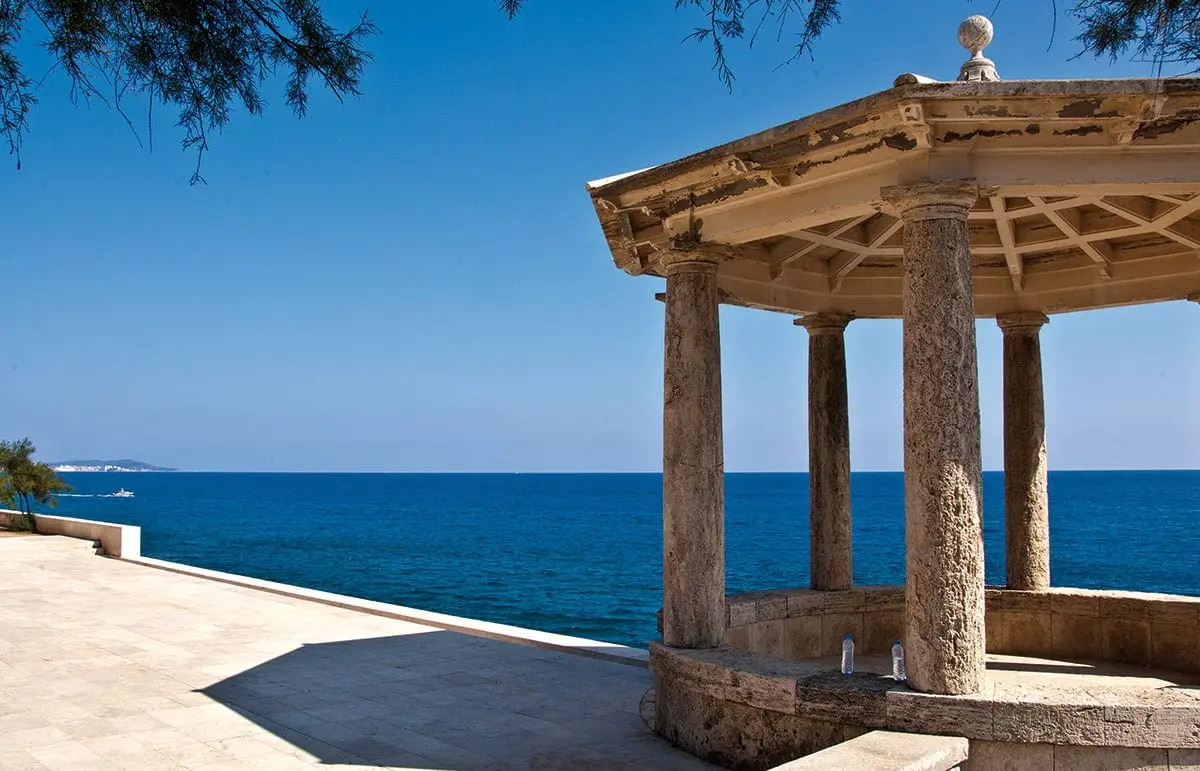
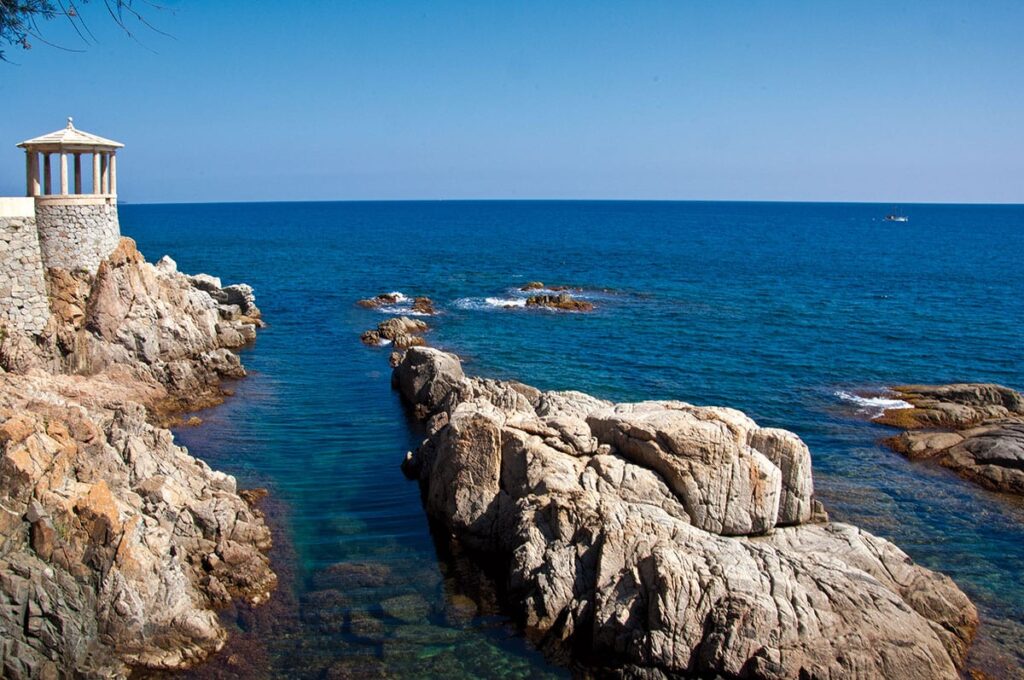
We follow the circular route and reach a Mirador. If you stand directly under the shell in the dome of the stone pavilion and loudly call out a name, you have an Echohall in your ear. But this only works in the center of the circle on the floor.

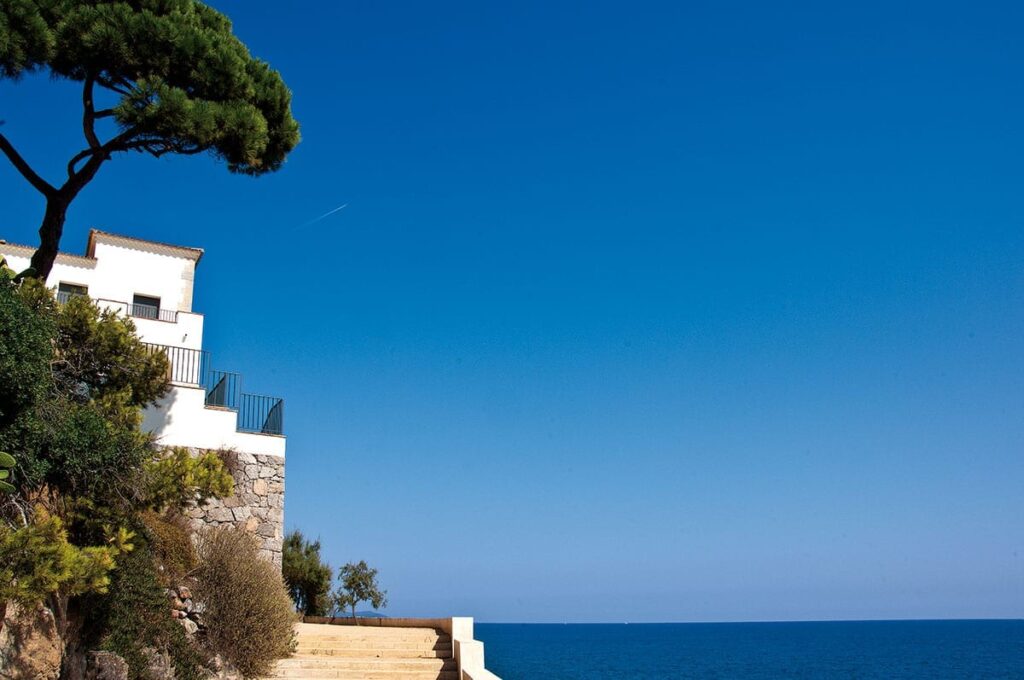
The large stone plateau to the sea is gigantic. If you walk towards it from above, a jump plateau appears directly into the sea or the end of the world. The “Cami de Ronda” always line ancient trees that provide shade. Pine trees are devoured into sculptures and Tamarisk have been defying the wind for decades. The stone walls on which the villas and gardens rest by the sea are immense. They tell of tedious construction work and the mood of the tides. Ancient ship lanterns in a bay and the weathered ship’s ramp are reminiscent of the filming of the past. The light ocher of the path contrasts with the dark blue of the sea. The villa architecture always impresses again and again. It must be paradise in the Villa Ensesa to while. The Loggia Senya Blanca is high above the sea. She is the scenery of the renowned Music Festival of S’Agaró.

Cami de Ronda
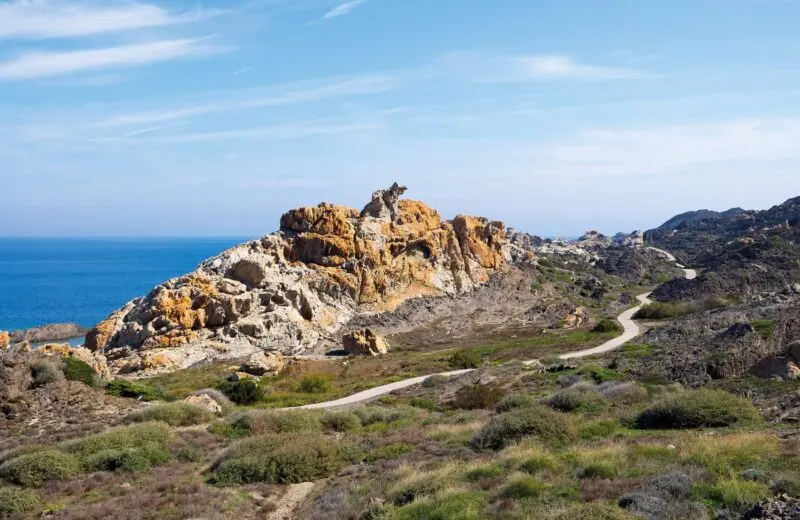
the “Cami de Ronda” runs on one of the most beautiful rocky coast sections of the Costa Brava and, since its renovation, has once again presented itself as a captivating landscaping structure with spectacular views over the sea. Small bays hide tiny sandy beaches between red and yellow rocks, and smoothly washed rock formations serve as a sun terrace.
Host de la Gavina
We leave the circular route and walk up the steps to the Hotel Hostal de la Gavina. We would like to take a look at the Venus of S’Agaró created by Joan Rebull. Unfortunately, photography is only allowed from 7 p.m. As long as the hotel guests are cavorting by the pool, photographers are not allowed. Who knows what celebrity is just relaxing at the pool today and afraid of paparazzi photos. We are kindly given us a hotel brochure with the permission to take over the Venus of S’Agaró from it.
 The colorful bathhouses on the beach
Finally, we have to photograph the colorful bathhouses on the beach in San Pol. These have been considered the landmarks of S’Agaro since the 1950s and cannot be found on any other beach. The La Taverna del Mar from 1930 also looks back on a long tradition. Here you can eat well and expensive all year round and you will meet everyone who wants to see and be seen.
Conclusion of the excursion:
The greatest possible effect is achieved with fine architectural details and a lot of taste. With style and luxury, the complex stands out, especially today, in clear contrast to the Costa Brava urbanizations stamped out of the ground.
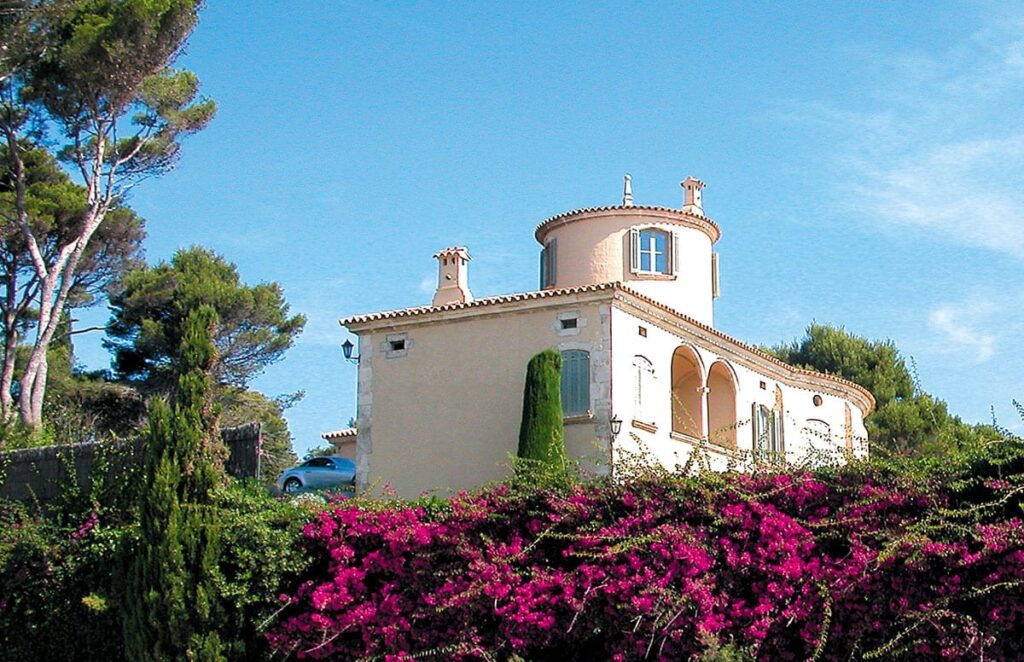
The game with old components and the inclusion of vegetation and nature are particularly convincing. The “Cami de Ronda” walk promises pure romance, especially in the evening. Then spectacular sunsets dive the scenery in a fabulous pink light.
Now we’re looking forward to a cool bottle of white wine and grilled sardines in a simple beach restaurant far from the luxury mile and leave the millionaire’s caste to itself again.