On this page
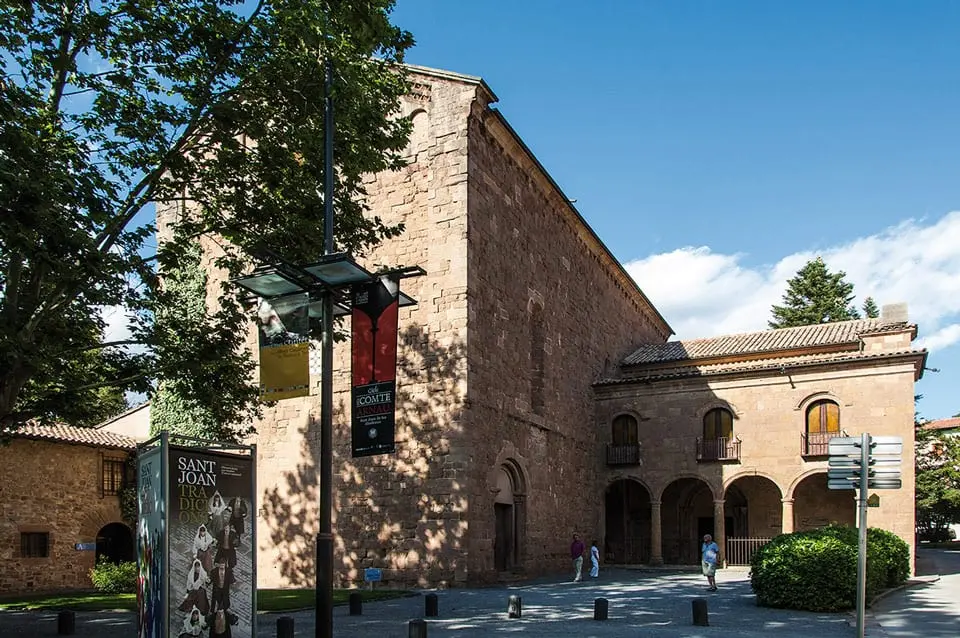
Usually towns give rise to their churches and monasteries – in Sant Joan de les Abadesses it was the other way round. The monastery came first, and a village gradually grew up around its walls that still bears its name today.
Sant Joan de les Abadesses at a glance
- Location: in the Ripollès at the foot of the Pyrenees, about ten kilometres east of Ripoll
- Founded: in 887 by Count Guifré el Pilós (Wilfred the Hairy) as the first convent in the Catalan counties
- Highlights: the 12th-century Romanesque church, the Santíssim Misteri of 1251, the Gothic cloister and the museum
- Visiting: opening times and prices vary by season – check the monastery website
A monastery that gave rise to a village
As quaint as the medieval town may look, with its stone façades, stately houses and fountain splashing in a green park, it was the monumental monastery at its heart that breathed life into the place and gave it its name. What lies behind the heavy wooden doors that mattered so much to people?
At first sight, the monastery’s simple elegance feels less overpowering than many others. Slender stone columns rise like ribs, wrapped in climbing plants, and in the cloister your gaze falls on a little fountain. The air tastes of times gone by – you can almost picture the abbesses and abbots who watched over this place for centuries.
Inside: the Santíssim Misteri
Inside the church, deep darkness envelops you. Candles cast their flicker on the cool stone walls and light up the faces of the saints. It is a place of awe, with a trace of incense in the air. The many changes over the centuries can be felt everywhere: an ivory-coloured, playfully ornate altar stands out brightly, while elsewhere golden motifs adorn the walls.
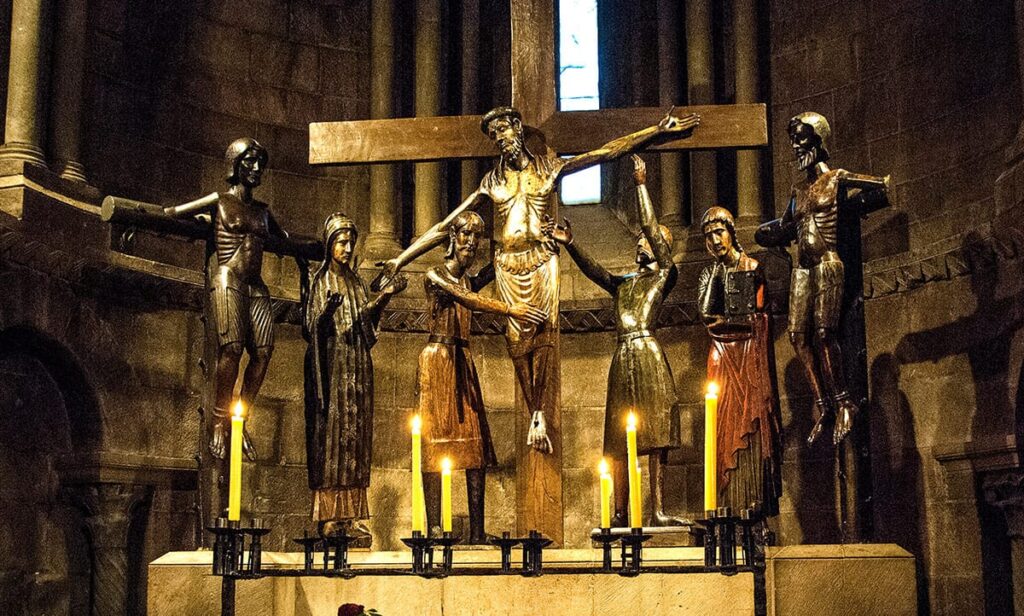
At the other end of the vault stands the Santíssim Misteri, a wooden Descent from the Cross dating from 1251. The figures are so lifelike that you half expect them to blink. It is regarded as one of the most important works of Romanesque wood sculpture in Catalonia.
From its founding to the present day
In 887 Count Guifré el Pilós founded the monastery and made his daughter Emma its first abbess. It was the first convent in the Catalan counties, and with it came the settlement of the valley; little by little a village grew up around the mighty building. In the early 11th century the nuns had to leave, and the monastery then passed through many hands – each leaving its mark. The present church dates from the 12th century. These very layers make a visit so rewarding: you feel as if you were walking through several eras at once.
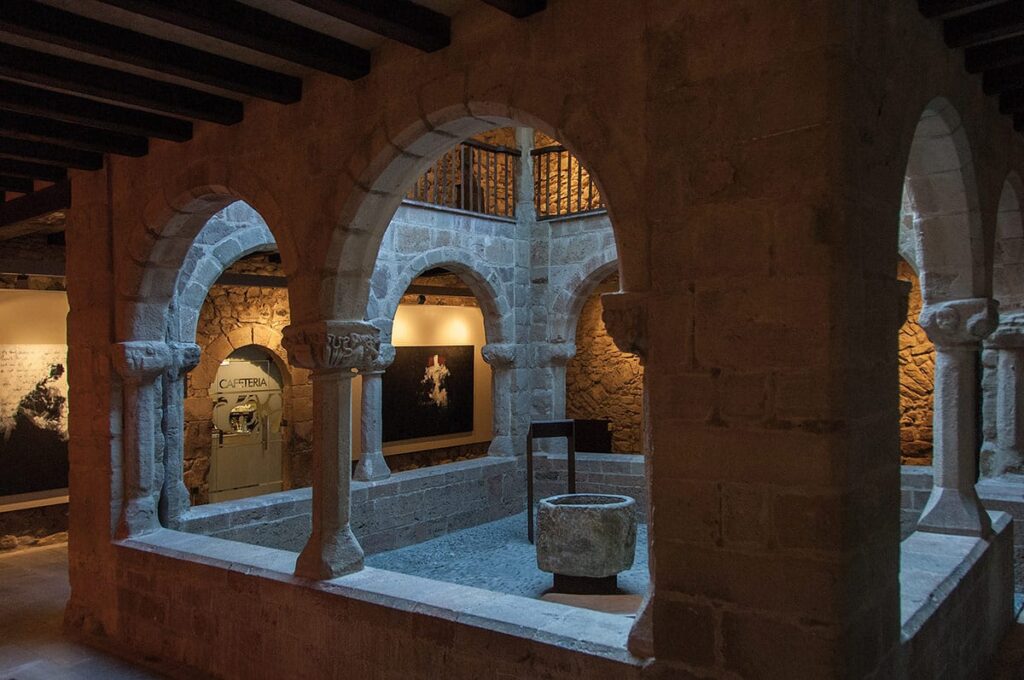
Back in the daylight, you can settle on the sunny square with coffee and cake, or take a look at the monastery museum. With golden rosaries and rock-crystal crucifixes, it is like a small treasure chest. If you fancy more of the Pyrenees afterwards, drive on into the Vall de Camprodon to the mountain villages of Espinavell, Rocabruna and Beget.
Sources: Monestir de Sant Joan de les Abadesses, Catalan Government heritage service.