On this page
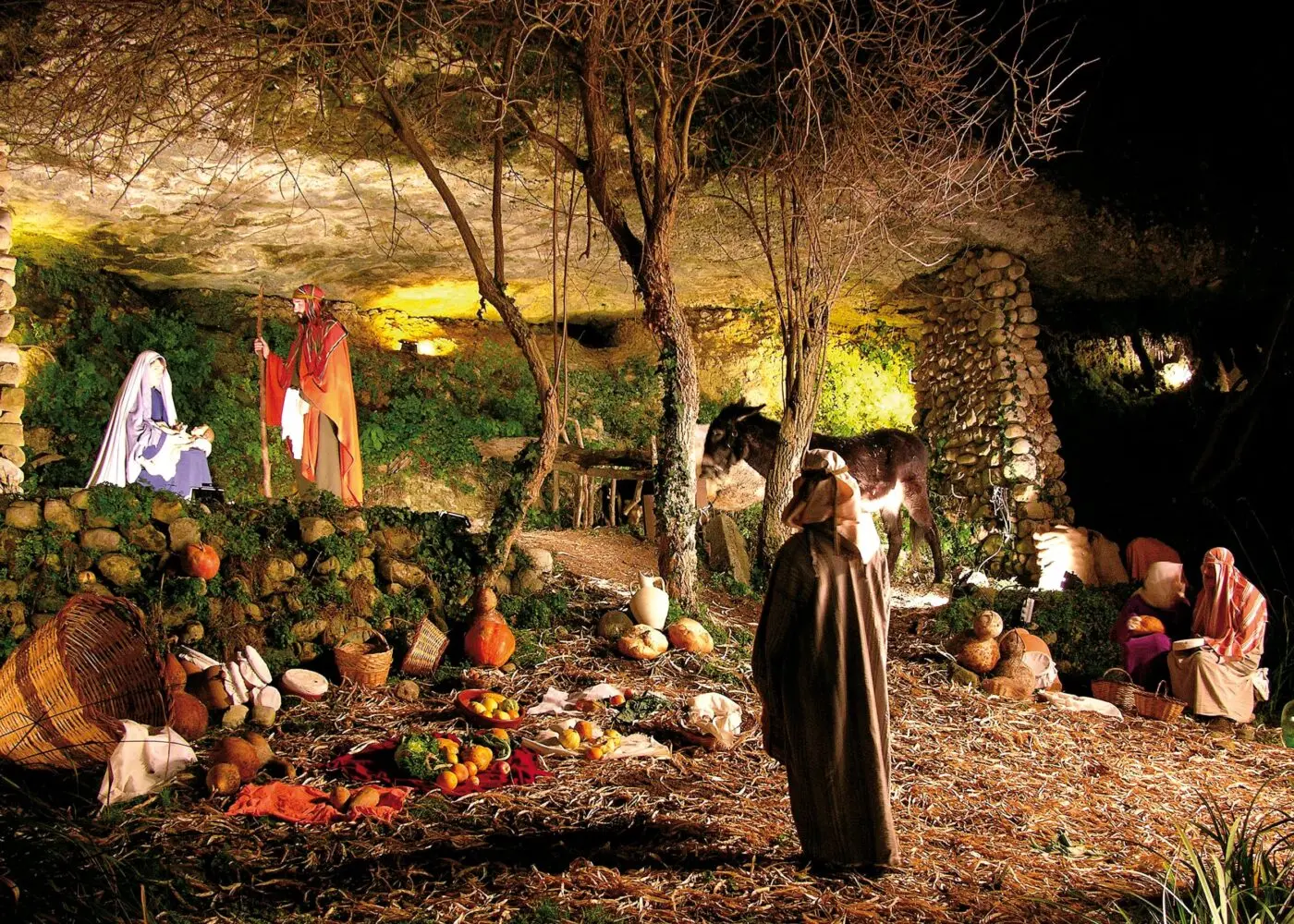
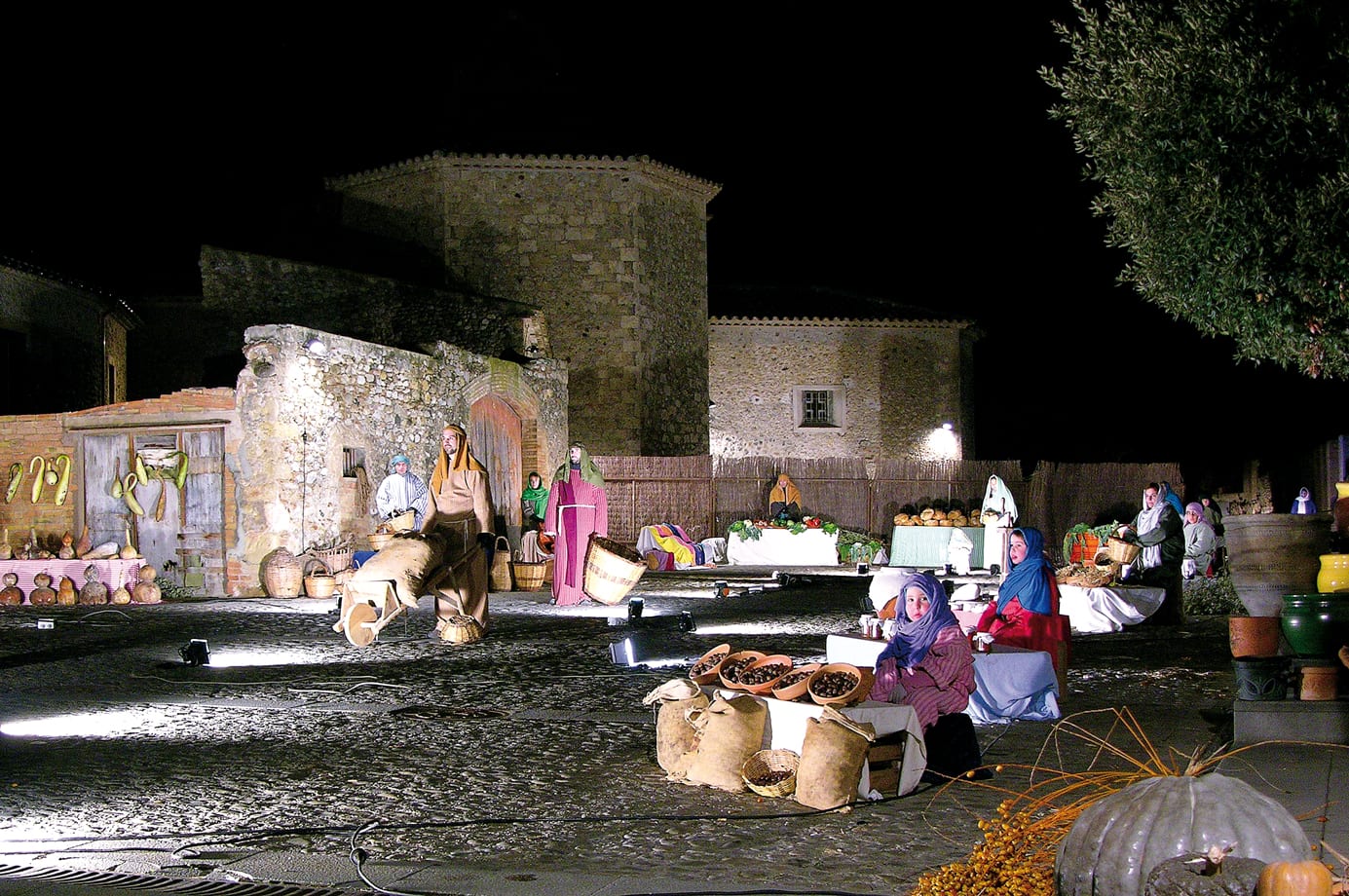
Every Christmas, some Catalan villages turn into living picture books. Neighbours bring out old tools, dress in period clothing and transform stone lanes and courtyards into scenes of everyday life and the Nativity. There are children, animals, woodsmoke and the sound of craftspeople at work. These are the pessebres vivents – living nativity scenes – one of Catalonia’s most atmospheric winter traditions. Our photographs date from an earlier report in 2014; the 2026/27 performance dates have been checked afresh.
Living nativity scenes 2026/27: confirmed dates
- Bàscara (Alt Empordà): 20, 25, 26 and 27 December 2026; 1, 2 and 3 January 2027. All performances begin at 7 pm. The route follows the medieval centre and the Fluvià river. Official cultural agenda.
- Pals (Baix Empordà): 26 and 27 December 2026, then 1 and 3 January 2027. The official poster indicates 6–8 pm in the old town. Tourism office poster.
- Santa Pau (Garrotxa): 5 and 6 December 2026 at 7 pm in the Vila Vella. Official cultural agenda.
- Corbera de Llobregat (near Barcelona): performances on selected dates from 28 November 2026 to 9 January 2027. Check individual times in the official programme.
Information checked on 19 November 2026. A date range does not imply daily performances. Always check tickets, prices and last-minute changes with the organiser. For events across the region, see the Federació de Pessebres Vivents de Catalunya.
What happens at a living nativity?
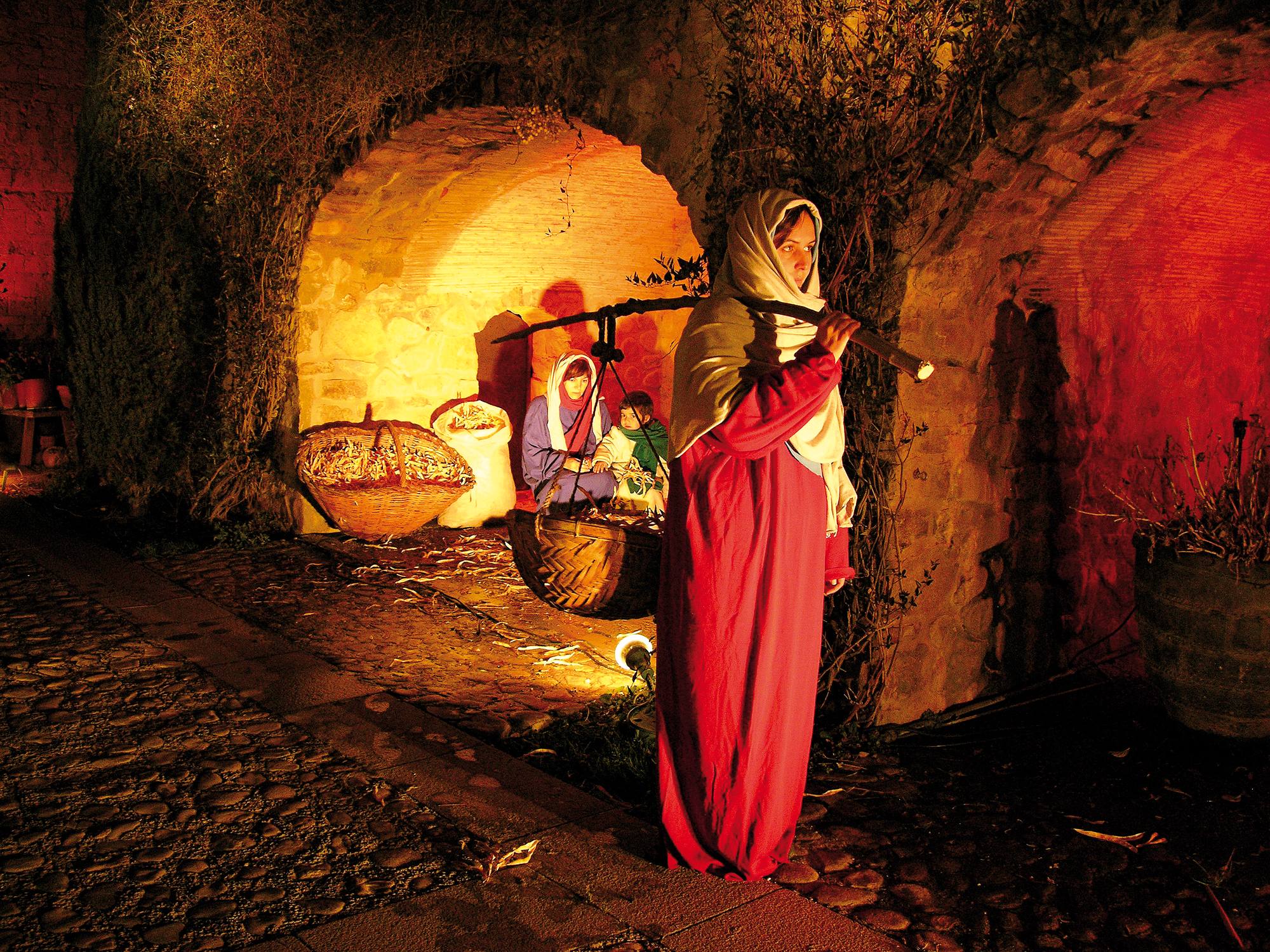
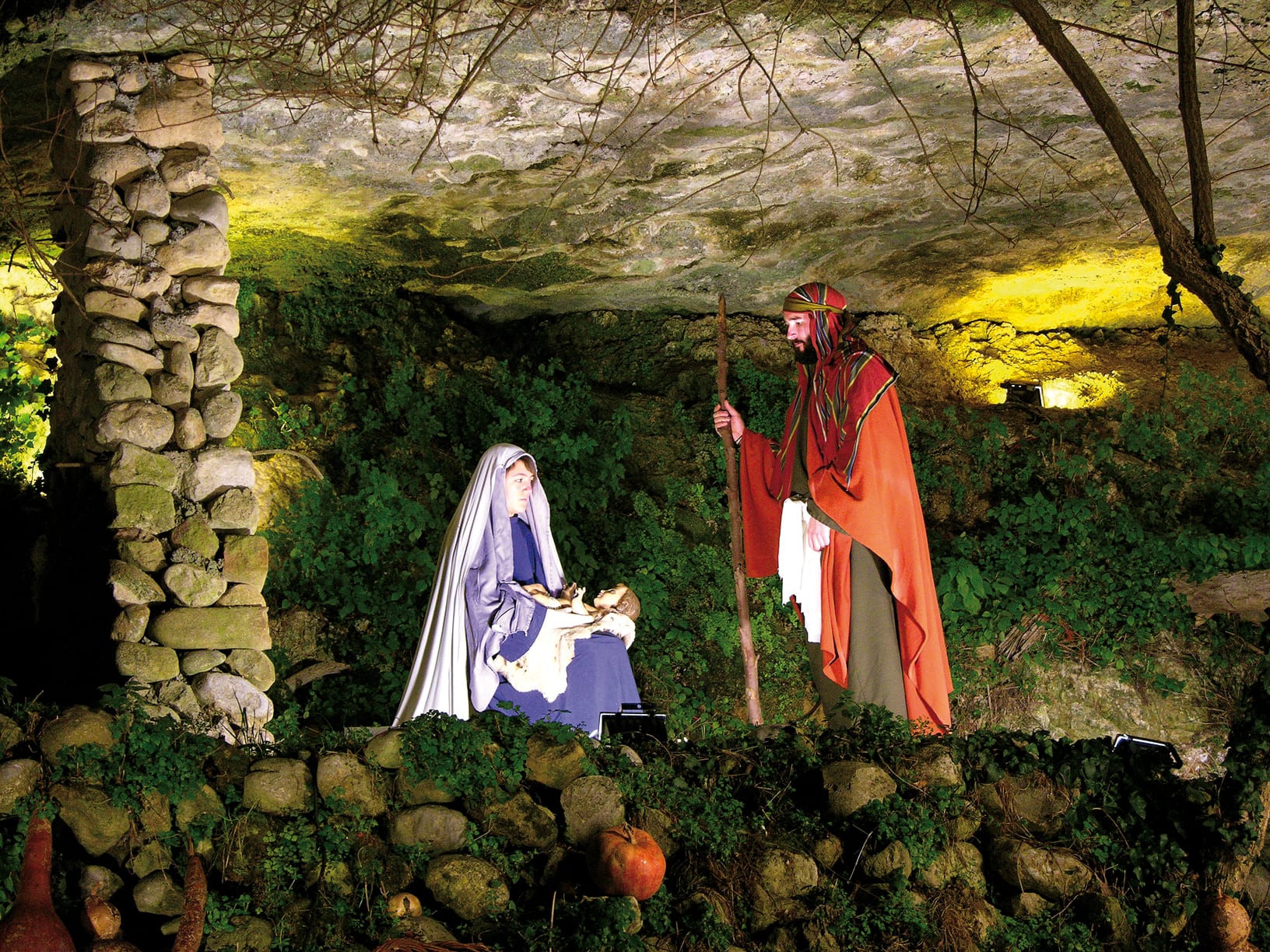
Instead of sitting in a theatre, you stroll through scenes arranged along village streets, gardens or river paths. Local families play shepherds, merchants, craftspeople, Mary and Joseph; they bake bread, weave, tend animals or gather around fires. Each community tells the story differently. The result feels both like a Christmas tradition and a journey into the old rural life of Catalonia.
Bàscara and Pals: two remarkable settings
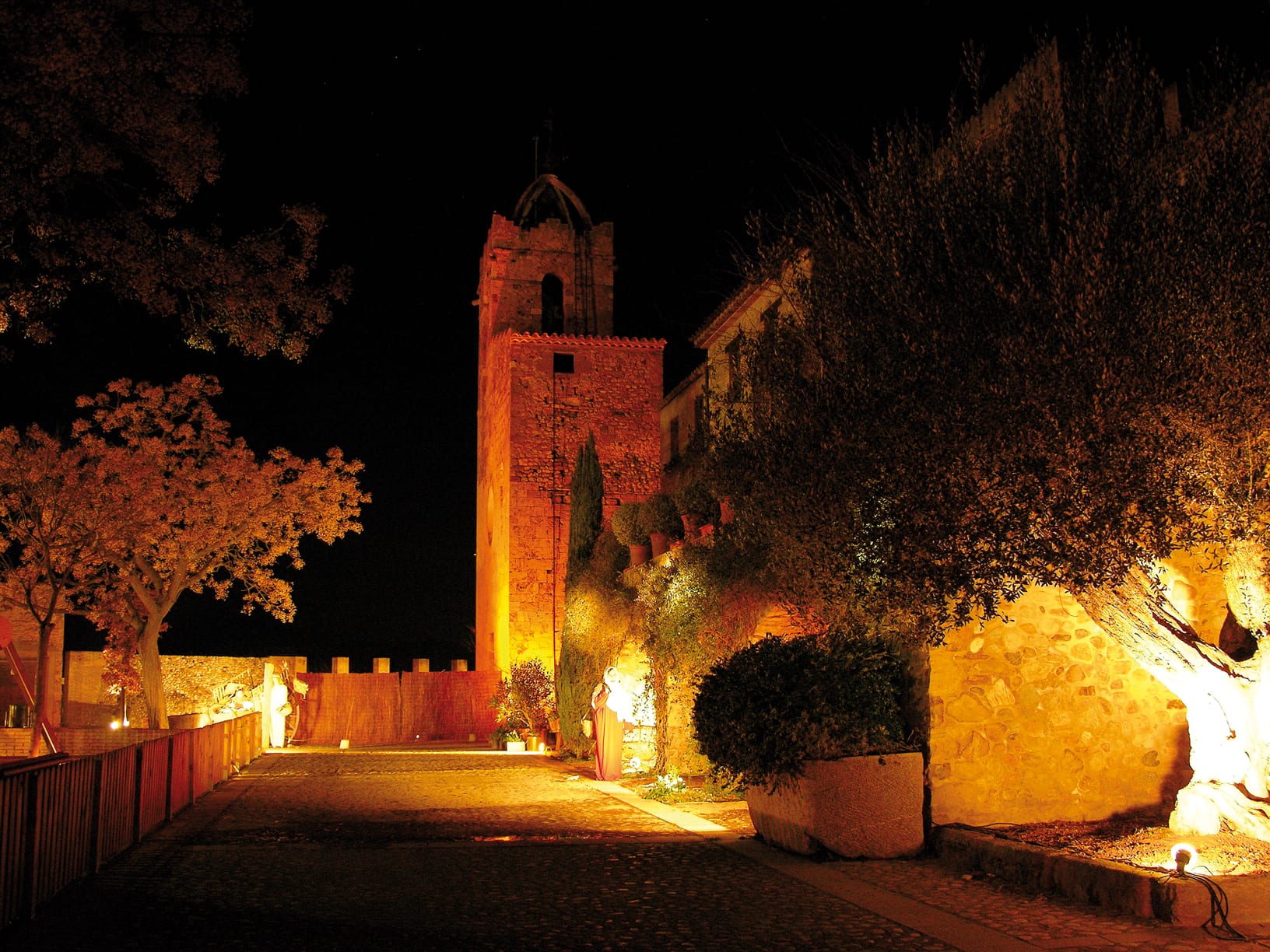
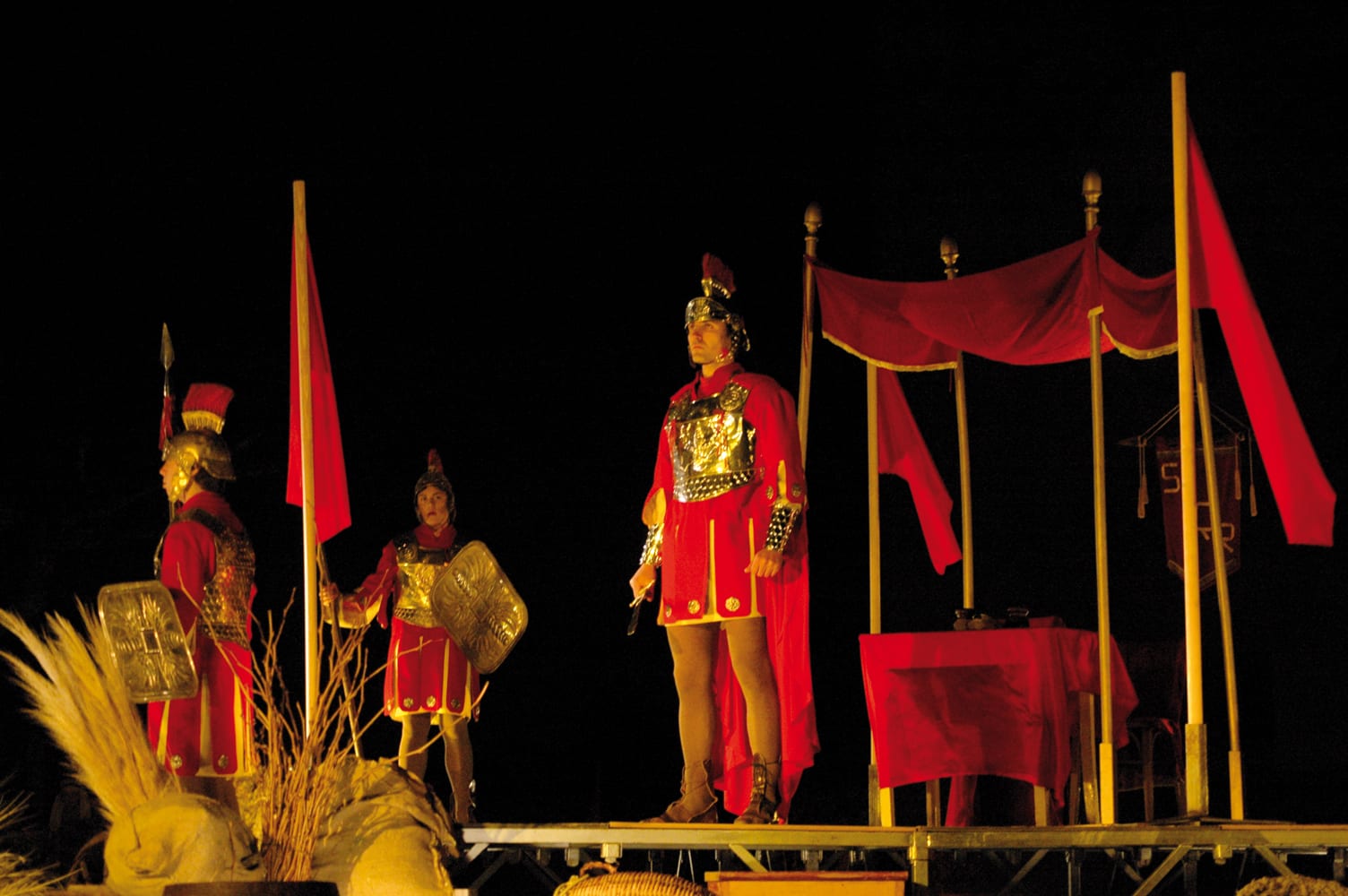
The Bàscara tradition began in 1973. Its organisers report more than 250 participants in recent seasons, turning the medieval lanes and the banks of the Fluvià into a richly detailed outdoor spectacle. Our Bàscara first-hand story remembers the chilly night, the Roman soldiers, the angel and the small fires by the river. In Pals, it is the Gothic old town – with its stone houses and narrow streets – that provides the scenery. Both are memorable, but the routes and atmosphere are quite different.
The cheeky Catalan Caganer
A miniature Catalan nativity sometimes hides a surprising figure: a man with his trousers down. The Caganer is a centuries-old local custom rather than a new joke; Catalonia’s cultural authorities trace it to the 18th century. Alongside the traditional peasant, modern figurines also parody famous faces. Our 2014 article mentioned the popular designs and shop prices of that year, but those are historical references, not current prices. The Caganer is principally associated with miniature nativity displays and is not necessarily part of every live performance.

Practical tips for families
- Bring a warm coat, scarf and sturdy shoes – many routes are outdoors, often on uneven stone paths.
- Confirm dates, sessions and tickets before setting off; some villages stage only a handful of performances.
- Leave extra time with children, especially on busy holiday evenings.
- All the photographs in this article come from our historical archive, not from the upcoming 2026/27 season.
Official references: Bàscara, Generalitat; Pals 2026/27 poster; Santa Pau, Generalitat; Corbera, Generalitat; and Catalan cultural archive on the Caganer.