l’escala
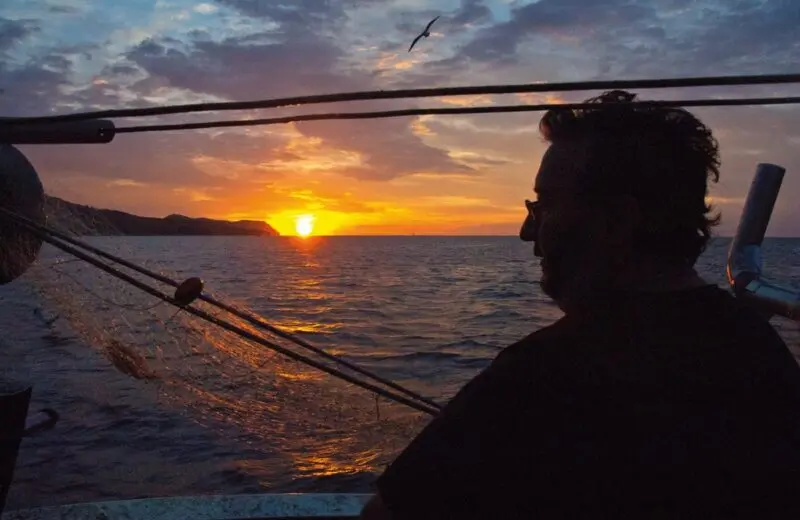
– was formerly known for its sardine and anchovy fishing. Today, tourism is one of the main economic factors in the small town Golf de Roses.

Club Nautic l’Escala
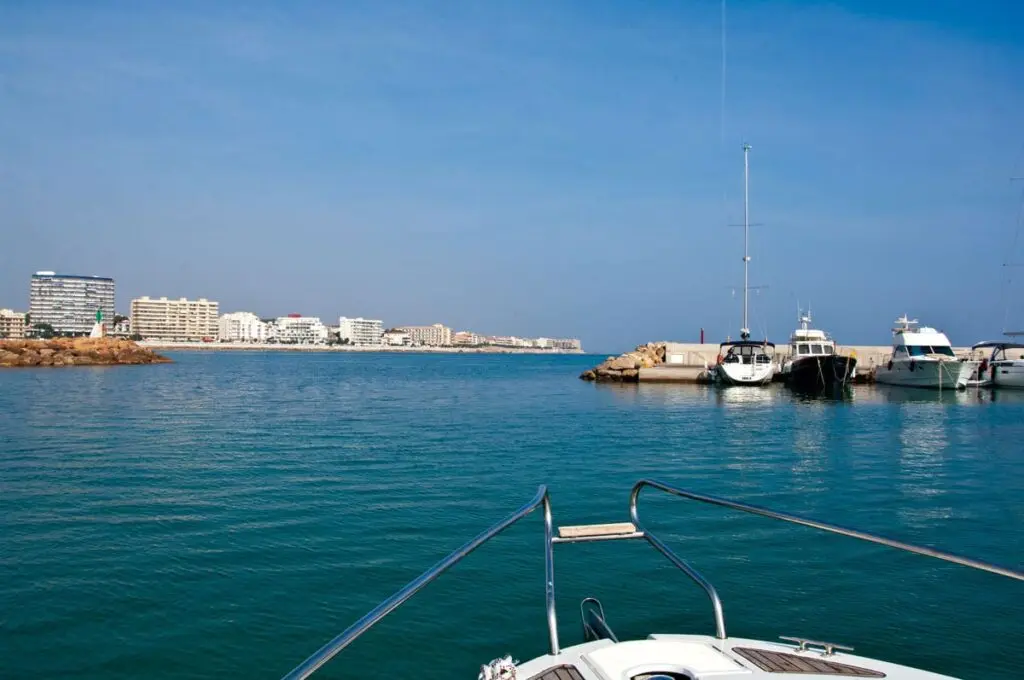
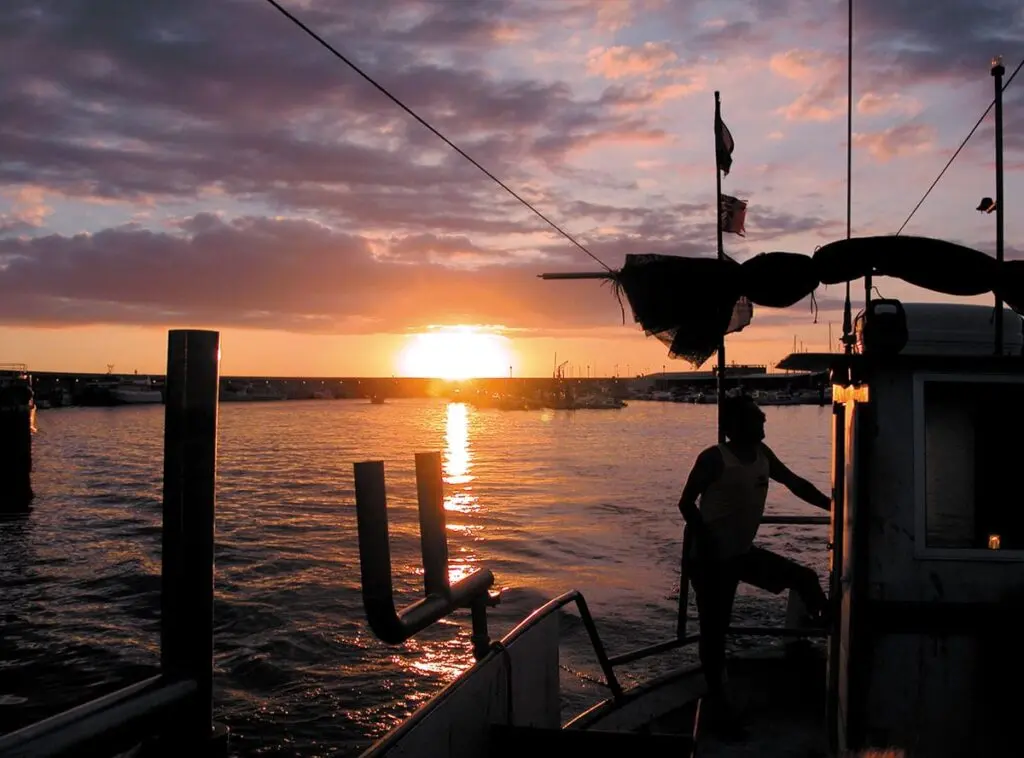
Club Nautic L’Escala regularly organizes international competitions and regattas. So and from July 2nd to 7th in the Bay of l’escala A sailing regatta as part of the European Championship of the class Europe. L’Escala became the meeting point of the international sailing scene for a week. Costa:Live was invited to follow the events up close on site. With the VIP yacht of the organizers and sponsors, we rushed out of the harbor directly to the starting field of the regatta. The unstable wind led to start delays. Our skipper Xavier Lopez – sports director (Director Esportiu) of Club Nautic – used the time.

In his opinion, he showed us the most beautiful and wildest stretch of coast in Spain. As a passionate sailor, he has already taken part in the Spanish Championships and twice in the Olympic Games. He has already sailed on all the coasts of the Mediterranean and knows his way around.
Cala Montgó
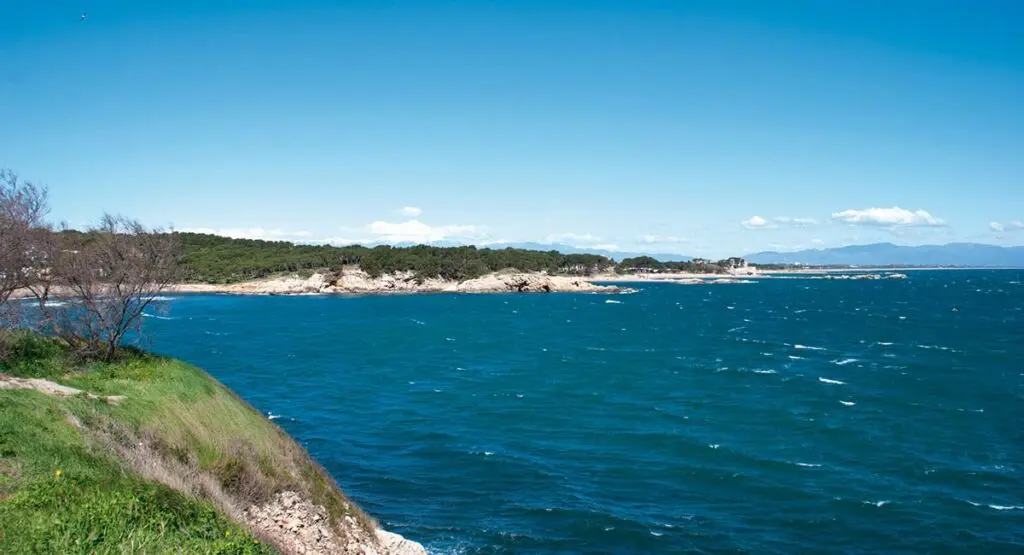
We drive past the fishing port along bizarre rocks Cala Montgó. Beautiful villas thrones on top of the cliffs. From time to time there is such a top property with him Real Estate Office Selected Property for sale. However, you have to dig deep into your pocket for such an opportunity. Objects under one million euros are only available in the second or third sea line in the Montgó bay.

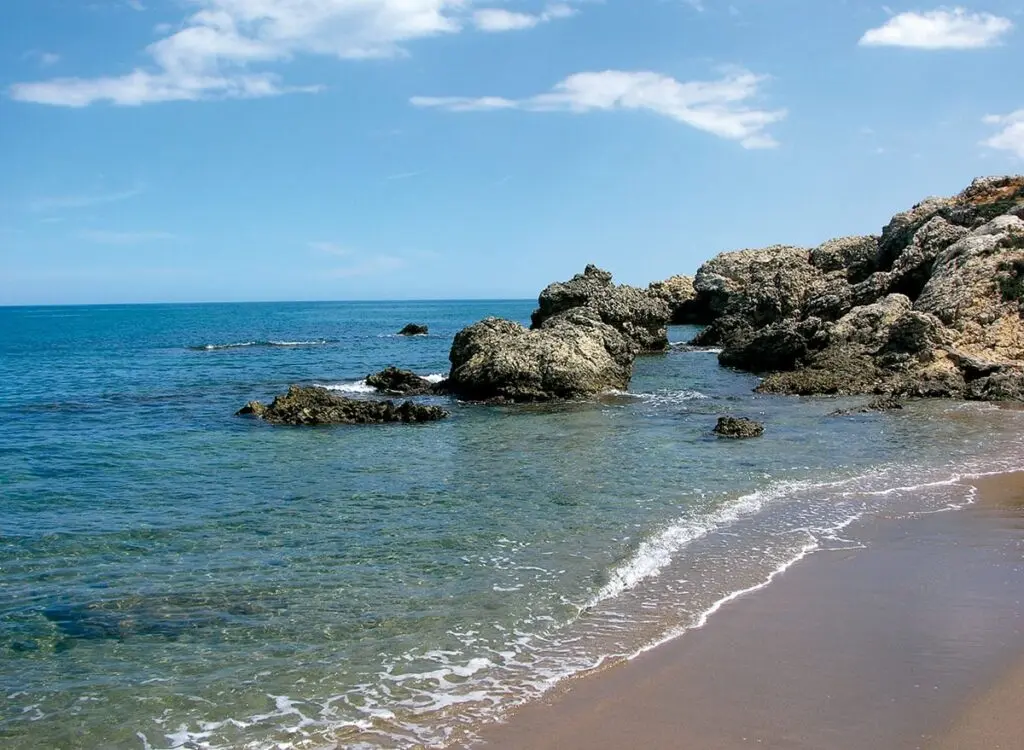
The rocky cliffs rise steeply out of the sea. The water is crystal clear and is now in darkest blue. Seagulls sunbathe on rocky outcrops. Small and large yachts are anchored in the Cala Montgó. Sailing boats swing in the wind. We’re sailing further in the direction l’estratit. Next to us rises the Montgrí massif up to 300 meters. The nature reserve extends to water and land. Over the course of millions of years, the sea has formed the rocks into sculptures, creating deep cuts and caves.

impressive the Rocca Forada: The rock tunnel can be driven through by boat. With our yacht, this adventure seems too risky. Smaller boats dare to go through. The bay Cala Farriola owes its celebrity to the natural artwork Roca Forada (perforated rocks). Unfortunately, we don’t have the time for a circumnavigation of the famous Medes Islands. We will be informed of the upcoming regatta start by radio. With great speed and splashing water we jet back towards L’Escala.

On the Golf de Roses you meet real professionals
Our captain stops briefly on the way to say “Hello” to a friend. doctor Nando Muñoz has already sailed around the world several times. He was a participant in the famous Volvo Ocean Race. The Volvo Ocean Race (formerly The Whitbread Round the World Race) is a sailing regatta that has taken place every four years since 1973 and runs around the world once. The regatta starts in Europe in autumn, the further route leads through the Atlantic surrounded by Africa, leads over the South Pacific to America and from there back to Europe. Due to the wind and weather conditions, especially in the South Pacific (wave heights of 30 m and wind speeds of 110 km/h), the regatta is considered one of the toughest challenges in sailing. A total of around 45,000 km has to be covered.
On the Golf de Roses you meet real professionals.

European Championship
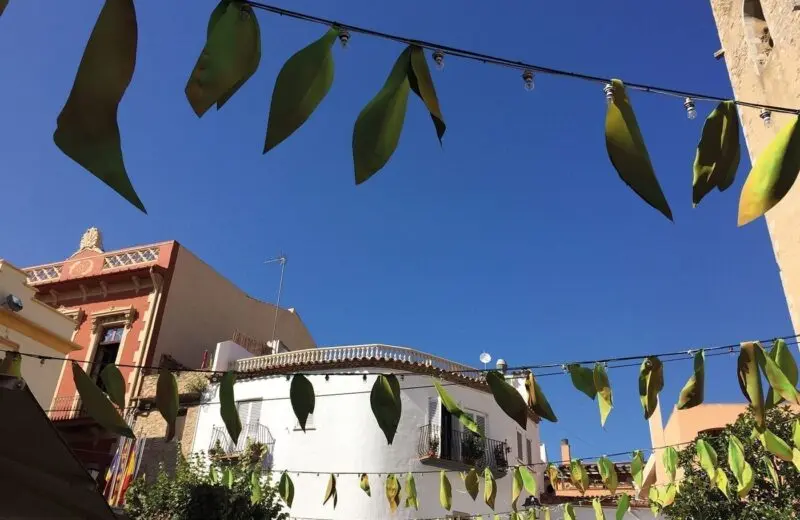
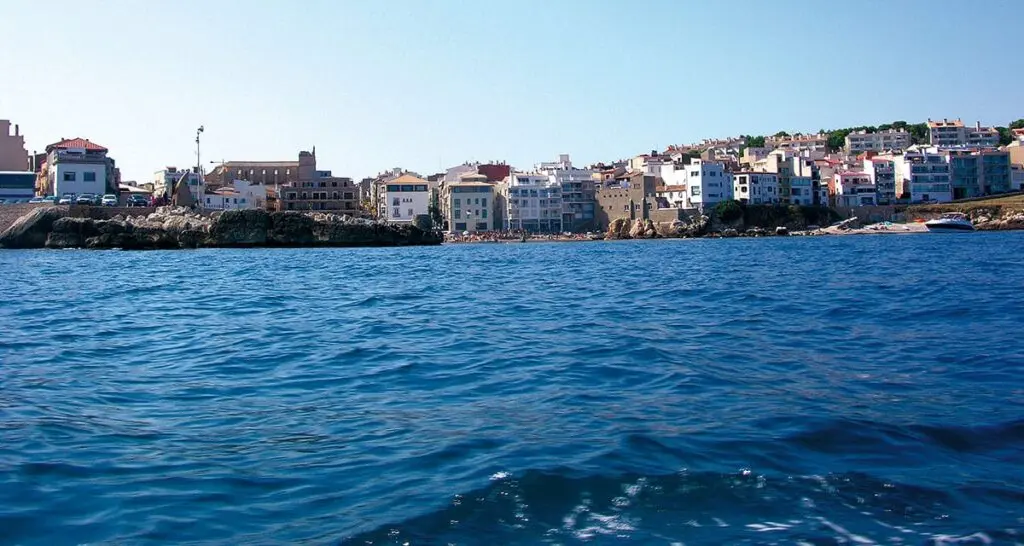
Our rapid drive continues to the starting buoy. Here, all the participants in the European Championship of the Europe Class have positioned themselves for the next round. After the starting signal, the small, light boats lay down in the wind. The first positions soon emerge. The race has many laps. Whoever wins the medals at the end will only decide after days. We drive back to the harbor and then stroll along the seafront along the sea to the old town of L’Escala. Here you can see the typical character of a fishing town Costa Brava. The narrow, steep alleys with small white houses, adorned by wrought-iron balconies and terraces, have retained their old charm to this day. Traditions and fiestas are also celebrated as before. An example of this is the Festa del Carme on July 16th. The procession of the mermaid to the church of Sant Pere accompanied by the residents and onlookers is a highlight every year.

gastronomic offer
In L’Escala there is a wide range of traditional cuisine, where the fish is never missing. After our boat trip, a late lunch is now recommended. We love the lunch menu in the Hostal and Restaurant El Roser On the Carrer Església or the view from the terrace of the 1869. But you can also get a simple fishing menu for 8.50 euros during the week in the fishing harbour. On Thursdays there is an excellent paella on the program. L’Escala is always worth a trip.

Festa de la Sal: Salt – the gold of the sea
The life of the fishermen in the XVIII. Century
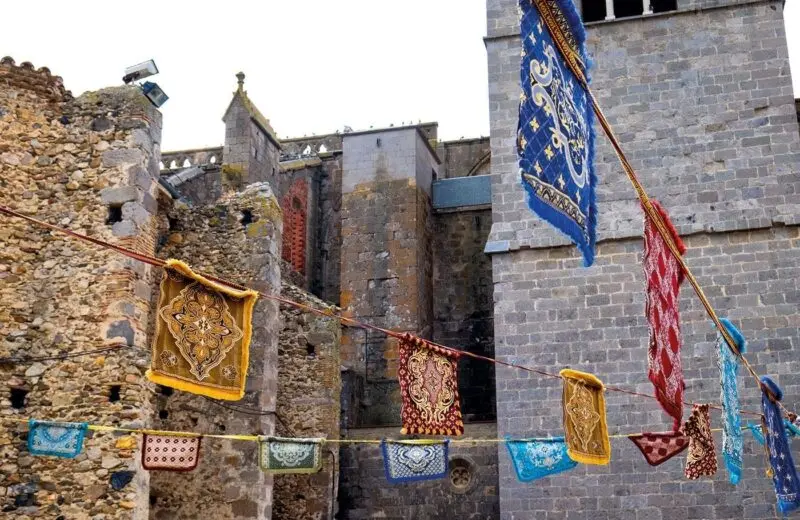
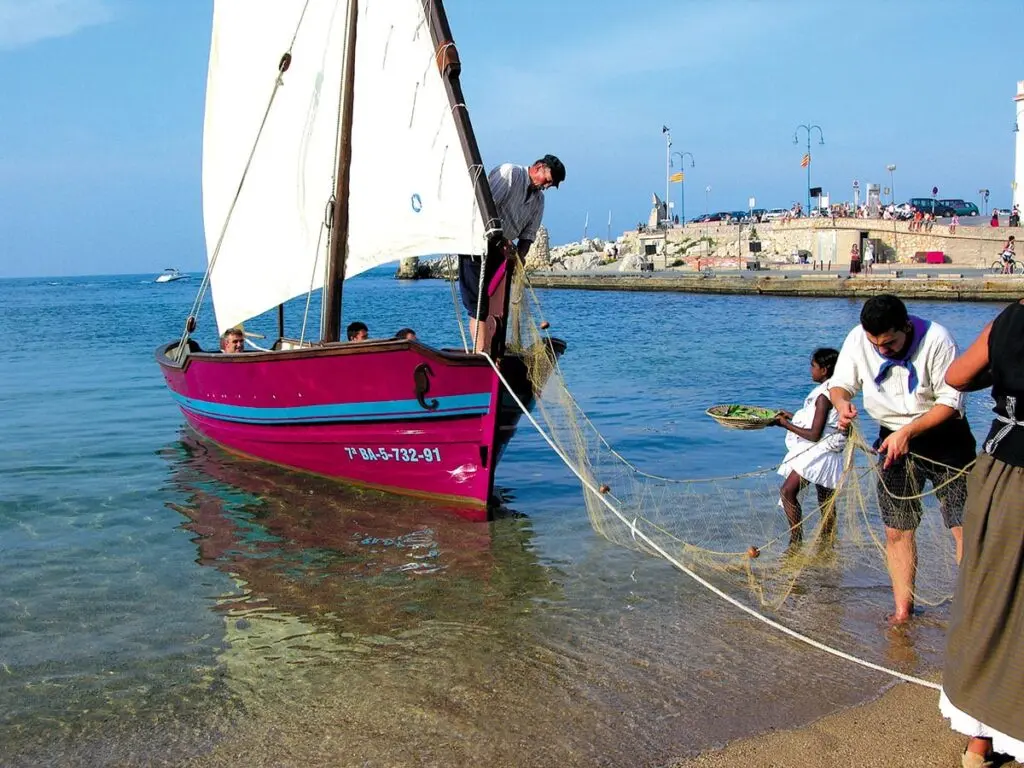
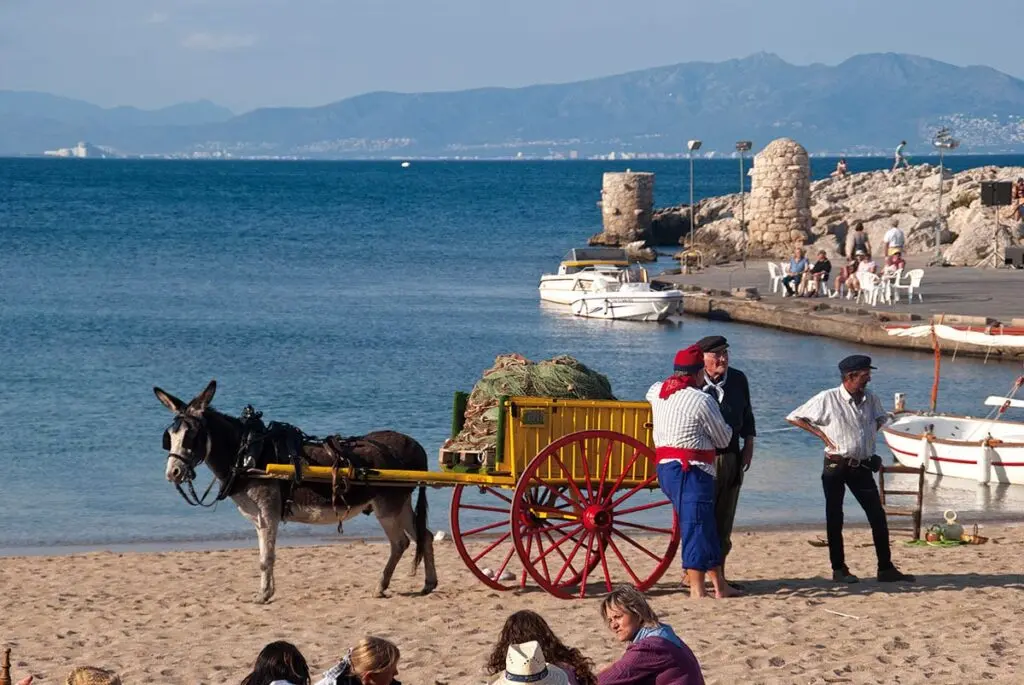
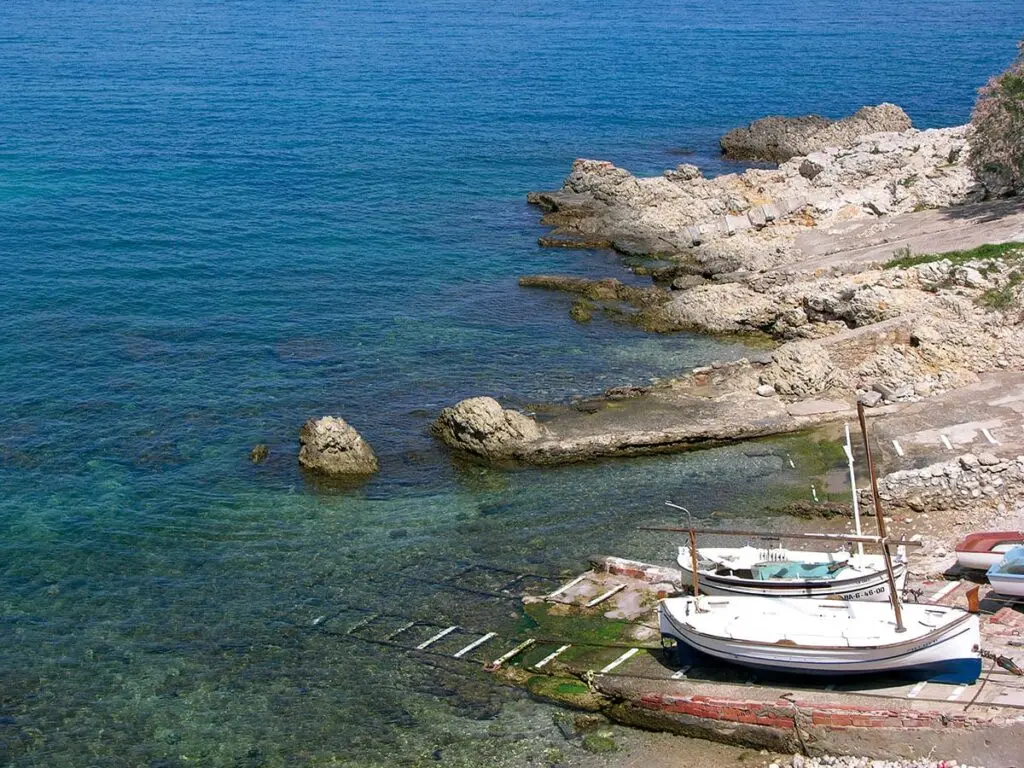
For several years in L’Escala, the Platja de les Barques transferred to another century for a day. The life of the fishermen in the XVIII. Century and the transport of salt is recreated in vivid pictures on the beach. You feel like you’re on the set of a historical costume film. Numerous press photographers and television teams have gathered in the sand. The scenes on the beach are ready for film: fishermen in long wide skirts patch nets. Sardines are grilled on large grates. Children stack empty fish boxes.

Old fishing boats
Old fishing boats swim on the sea: including Les Barques Rafael (1920), Sant Isidre (1925) and some Latin sailboats (Vela Llatina). You have loaded salt. When the first boat reaches the port, fishermen in traditional clothing rush over. With combined forces, the boat is pulled ashore and the salt is dumped. It was used to preserve the famous L’Escala anchovies. The whole village once lived on fishing and anchovy production.

Anxoves (Catalan) – Anchoa (Spanish) – Small anchovies or Anchovis (German)
Anchovis conservation is traditionally located in L’Escala. Anxoves (Catalan) – anchoa (Spanish) – small anchovies or anchovies (German) – are considered the most typical product of L’Escala with designation of origin. They are popular far beyond the borders of Catalonia and a delicious holiday souvenir. Since the 18th century, fresh anchovies have been placed in salt and processed into anchovious preserves.

A few years ago, the Anchovies of L’Escala a Museum. You can see historical photos and equipment, an old fishing boat and barrels in which the anchovy fillets were stored in salt. The fishes are not only preserved by salting, but also fermentation is used to improve quality and taste during the storage period. In the past, the salt for fish preservation by sea was transported.

The transport of the salt
Large sailing ships added the precious estate from the Torrevieja salt mines near Alicante l’escala. With their small boats, the fishermen went out to the big ships to sea and loaded salt blocks to bring them to the shore. They landed their precious cargo on the beach of Les Barques. Here the salt was packed in bags and put in storage. The historical staging on L’Escala in September is accompanied by traditional songs and dances. On the evening of the festival, you then gather for a meal together with Suquet and Cremat, accompanied by Habaneres chants.
More: L’ Escala – Sea View Included, Traditional Salt Festival in L’Escala on the Costa Brava.