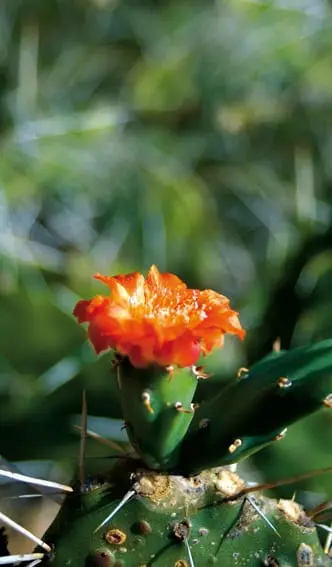
A cactus stands for exoticism. Originally he is from America.
Cacti belong to the family of Cactaceae and are succulent plants. They get very old and can easily survive a person. In Mexico, there are old man’s heads who are already half a millennium or older. The family of Cactaceae Consists of about 1,650 species.
With the discovery of America, the first cacti came to Europe. Today they are an indispensable part of the Mediterranean.
In South America and North Africa, cacti are used as impenetrable hedge plants to fence off pastures or farmsteads.
Cacti on the menu
In some countries, cacti enrich the diet, such as the limbs of cactus or opuntian cacti, which after removing the spines Mexico prepared with salad or stewed as a vegetable. The fruits of opuntia you can buy it in southern Spain as prickly pears in the markets.
Grilled, a fresh cactus leaf is a real delicacy. A Mexican friend amaze us with it last summer. He cut off the youngest leaves of the limbs in the garden, removed the still soft thorn bases with the knife and put the green cactus leaves with the steaks on the grill. Finally, he melted some goat cheese on the grill cactus. Really tasty.
 But not all cacti promise unpunished enjoyment. Some varieties contain alkaloids such as mescalin. This may mean that you can see bright colors after enjoyment and dance intoxicated around the fire. The best-known intoxication cactus is the so-called “Peyotl- Lophophora Williamsii“In Mexico, it has been used by Indian tribes at ritual festivals for centuries. The hippie generation of the 1960s also discovered this cactus for itself and hallucinated with it. Unhealthy and forbidden, of course.
The Kings of the Night
Medically, cacti are considered a phenomenon: the pharmaceutical industry produces a cardiac remedy from the “Queen of the Night” – “Selenicereus grandiflorus” makes a cardiac remedy, since the ingredients of the plant stabilize the circulation.
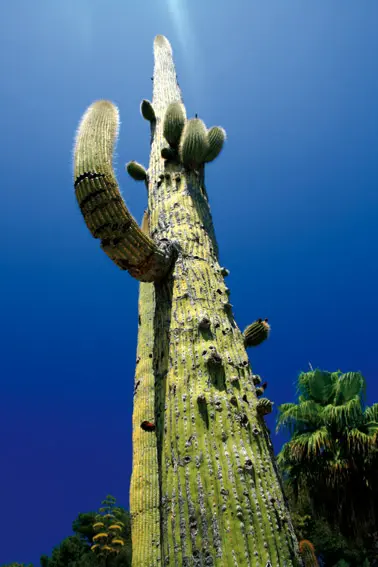
In general, their flowers are admired. For one night, the inconspicuous cactus with its flower splendor and exotic, seductive fragrance bewitched. In July, Her Majesty paid us the honor of our balcony for the second time. Shortly after 10 p.m., she opened her ivory-colored flower framed by a pink rays wreath. A truly royal appearance. We pay homage to the storm of flashlights and cava. The indescribable scent of the flower beguiles – as a heart note of feminine perfumes, even in winter.
Our Queen of the Night, like most cacti in our garden, descends from cuttings. Cuttings are cut off from the mother plant during the growing season. The interface must dry off for about 2 weeks. Then you can put the cutting in sandy soil. When pouring, you should first be careful until the cactus begins to grow. Then he developed his roots and with a little luck and lots of sun he will eventually also produce wonderful flowers.
Blanes – “Jardí Botànic Pinya de Rosa”
The visit of the JArdi Botànic Pinya de Rosa“ in Blanes is a must for all cactus lovers. There have already been several plans for the urbanization of the unique 500,000 square meter site with over 7,000 different plants, including more than 600 cacti. Unfortunately, the Catalan government has just rejected the purchase of the finca with the tropical garden. The 23 million euros demanded by the founder’s heirs were considered too high. The value was only estimated at 13 million euros. According to the Greens, the preservation and public use of the park is now to be secured by law.