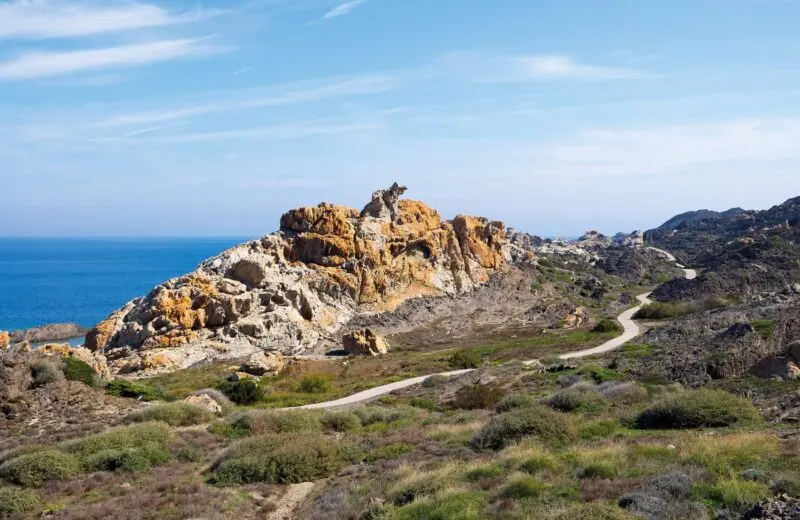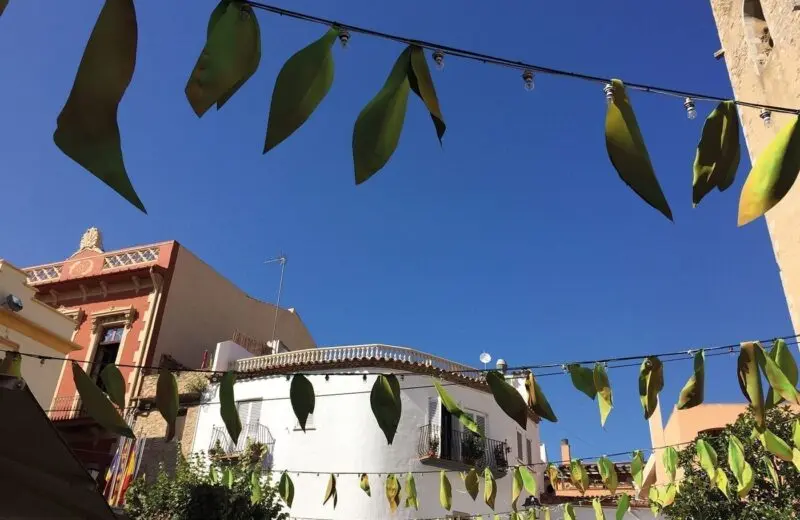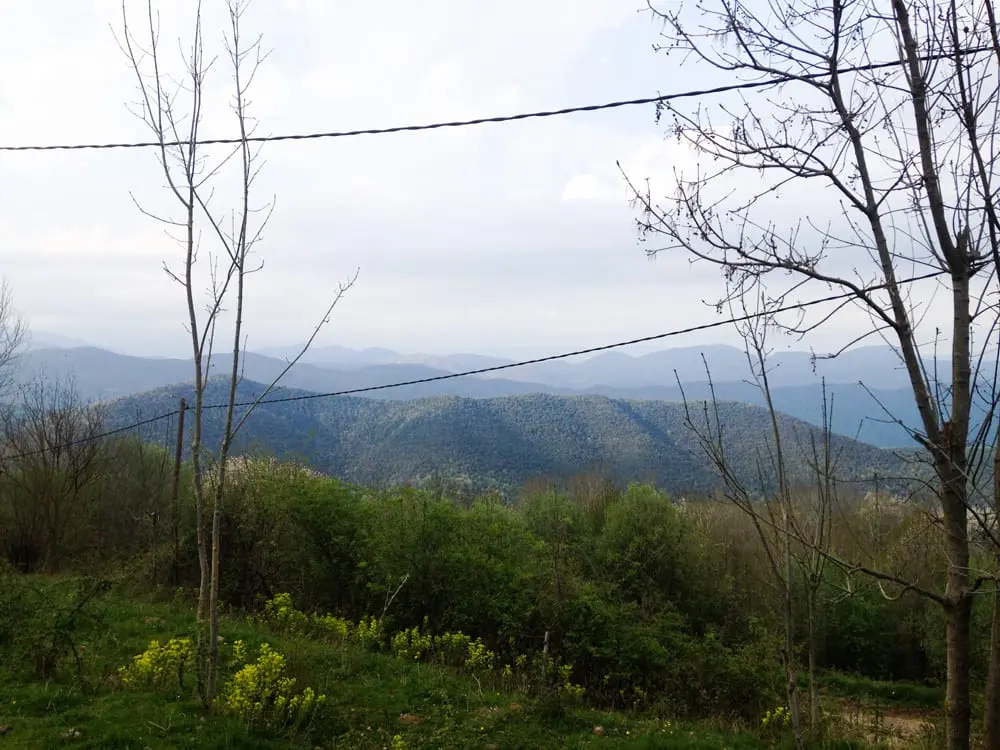
The Pyrenees form the natural border between Spain and France and lace the Iberian Peninsula like a belt from the rest of Europe. On a mild spring day, we set off to discover this no man’s land on the northern edge of Catalonia and to learn what endless vastness and absolute harmony with nature mean.
The border between Spain and France at a glance
- Border Mountains: The Pyrenees, a mountain range of almost 450 kilometers in length from the Atlantic to the Mediterranean Sea
- Spanish regions on the border: Basque Country, Navarra, Aragon and Catalonia
- Catalonia: Borders to the north by the French department of Pyrénées-Orientales. Between Spain and France lies the small state of Andorra
- Costa Brava border crossing: La Jonquera in Spain and Le Perthus in France, in the Comarca Old Empordà
- Curious: The Spanish Exclave Llívia Located in the middle of France
And let’s go!
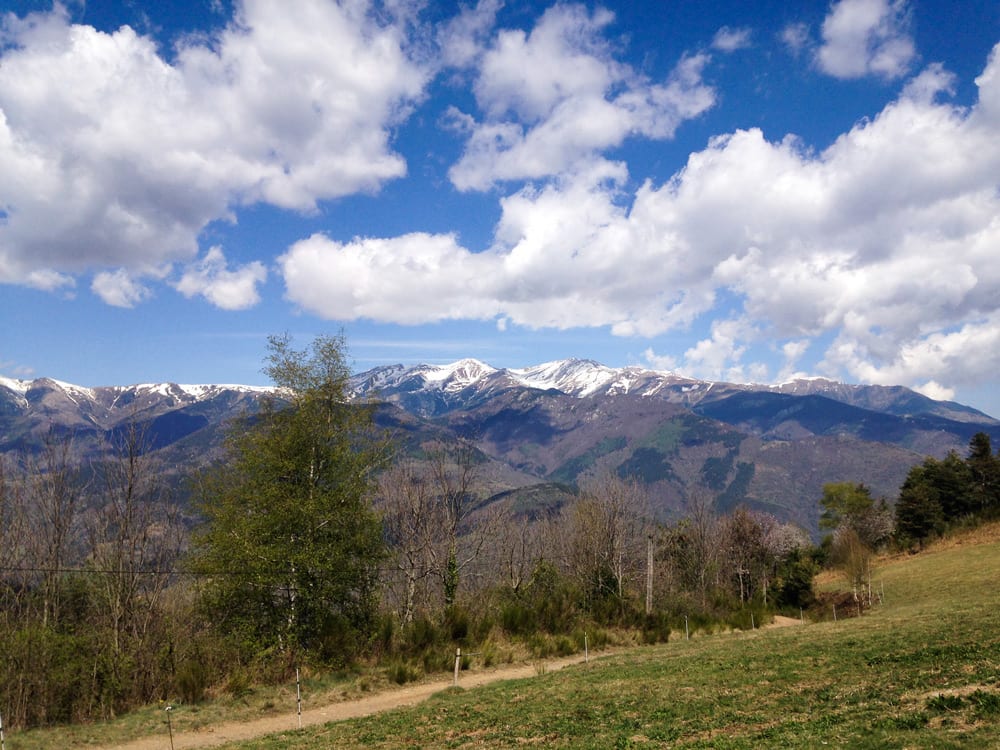
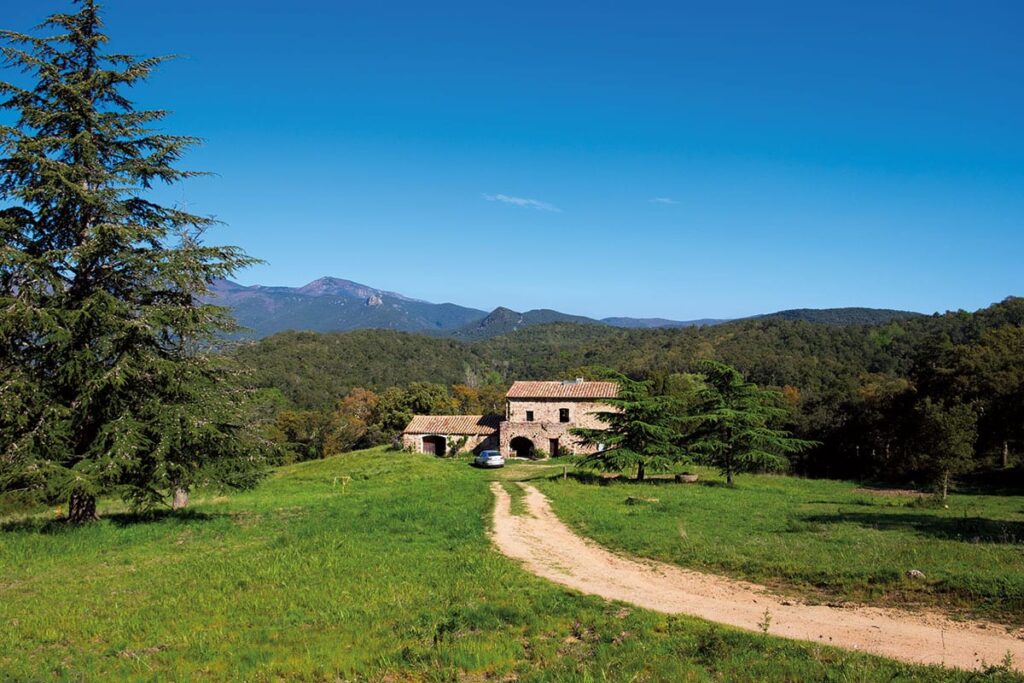
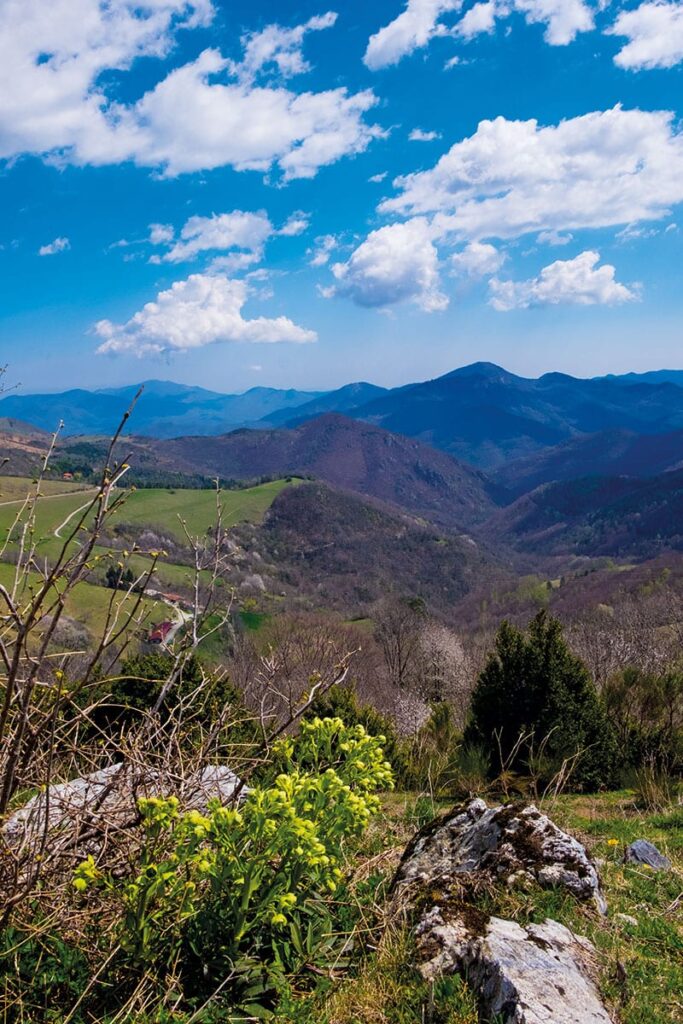
From Torroella de Fluvià we drive towards Darnius and immerse yourself in another world. Dense forests of cork oaks lay like a ceiling over the mountainous landscape and narrow streets lined with blooming gorse bushes, lead us further and further up in the direction of the peaks still covered by snow.

Narrow streets and small places
Like a thin thread, the road runs up into the heights of the Pyrenees, bypasses rocky terrain and passes small rivers and valleys over bridges that seem to merge with their rocky subsoil. We’re passing by Maçanet de Cabrenys and Tapis and are already in Coustouges on French territory. If the street signs and inscriptions on shops and billboards weren’t suddenly in French, you wouldn’t notice that at all, because all these small towns have one thing in common: time seems to be passing more slowly there and thus somehow worth more.
On one corner, neighbors meet for a short chat, in another children play on the playground and one step further is an old man with a fresh baguette on his way home. The narrow and mostly steep alleys of the mountain villages are covered with a cloak of calm and serenity. The houses made of natural stone nestle on the slopes of the mountains and create a pleasant, protective atmosphere.

Textile company in the middle of the Pyrenees
Just in time we come to Saint-Laurent-de-Cerdans. It’s just before 12 p.m. and we’re quickly left in the sales room of “Les Toiles du Soleil” before their lunch break begins. The traditional Catalan company high up in the Pyrenees has been producing high-quality fabrics made of cotton and flax since the end of the 19th century.
We are not only in the last textile manufactory of the village, but also in the fabric paradise. In all imaginable colors, the striped fabrics are processed into cushions, serviettes, aprons and much more. If you prefer to be creative yourself, you can take the meter goods or leftover fabric home with you. An extensive color and shopping frenzy later, we sit back in the car and continue our journey.

Magic of the mountain villages
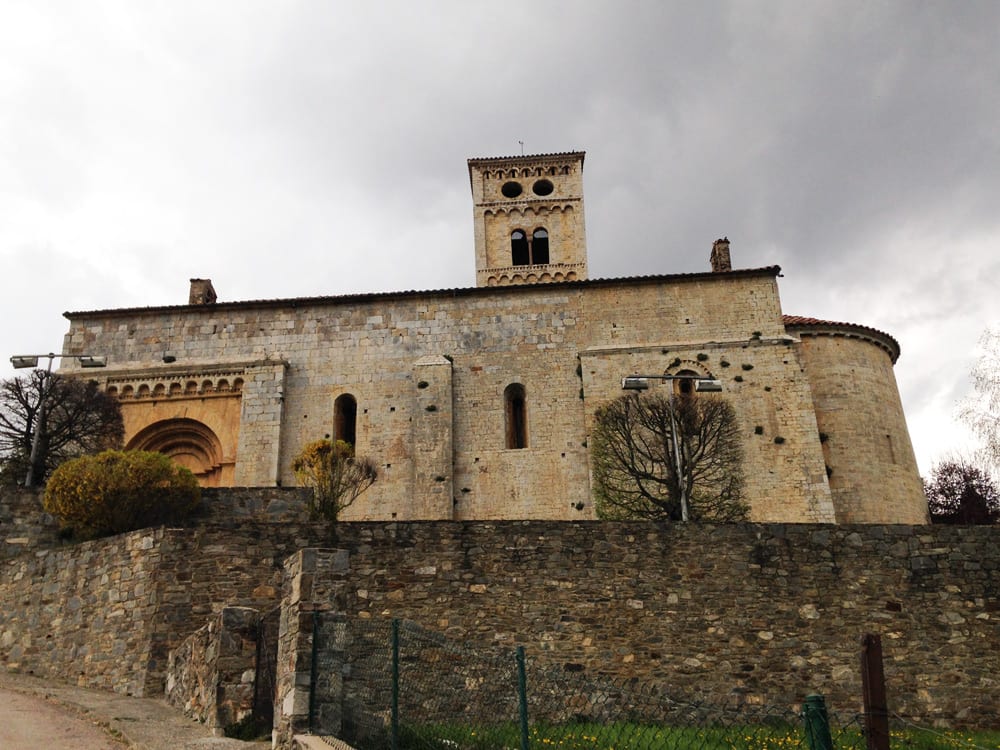
Passing the villages of Le Tech and Prats-de-Mollo-la-Preste, the narrow pass road finally leads us across the border back to Spain, to the town of Espinavell. The houses in the village seem to stick to the mountain, they are built so closely on top of each other. Down on the river, where every autumn the horses are driven past the mountain meadows into the valley, is a small one country hotelwhere we eat exquisite freshly caught trout. After this taste experience of freshness and nature, we make our way back to Molló. It says, that it is not to be overlooked, a Romanesque church immensely large for the manageable town.
On our route, we wind our way further and further through the mountains, cross the mountain river Ter several times, which, like the small roads, has found its way and finally come to Camprodon. A picture of this place that you certainly don’t forget is the “Pont Nou” round arch bridge, which, like a wooden block, creates a connection between the two banks.
Sant Joan de les Abadesses also adorns such a bridge, but in memory it is probably due to its small monastery, the history of which dates back to the 8th century. At the end we make a short detour to Ripoll, with whose Benedictine monastery the Romanesque construction method was introduced into Spain. Inspired by the former St. Peter’s Church in Rome, the monks have created a small oasis of calm there.

Back from the mountains
With a few fresh pieces of sweet Coca and many impressions in our luggage, we finally start our journey home via Olot. Slowly we dive back into the loud and fast-paced everyday life at the feet of the pleasant peace that we found high up in the mountains. The seclusion of the villages, the endless expanses of the mountain ranges and the feeling of being able to touch the clouds at the highest point of the pass, we leave all behind us.


Frequently asked questions about the border between Spain and France
Which region in northern Spain borders on France?
The Basque Country, Navarra, Aragon and Catalonia border on France in the north. The Pyrenees form the natural border.
How long are the Pyrenees?
The mountain range stretches almost 450 kilometers from the Atlantic to the Mediterranean Sea.
Where is the border on the Costa Brava?
On the Costa Brava is the well-known border crossing La Jonquera (Spain) and Le Perthus (France) in the Alt Empordà.
Is there a Spanish area in France?
Yes: the city Llívia In the Cerdanya is a Spanish exclave and is entirely in France.
Sources for the information in the box and in the questions: Wikipedia: Pyrenees, Tormentich: Pyrenees. Times, prices and rules change, please check the operator before visiting.