Basalt rocks in the Garrotxa
Basalt, wild water, bubbling springs and cows in the forest. At the foot of the Pyrenees lies the Garrotxa. The name means something like “imposable terrain”. Wherever robbers once hid, hikers now find wild nature. Sant Joan Les Fonts is in the middle of it Besalú.
Hiking over hill and dale from Sant Joan les Fonts to Molí de Roquer
Stories of peasant uprisings, gangs of robbers and Catalan rebels surround the Garrotxa. The Garrotxans have suffered a lot and fought for their country and their customs.
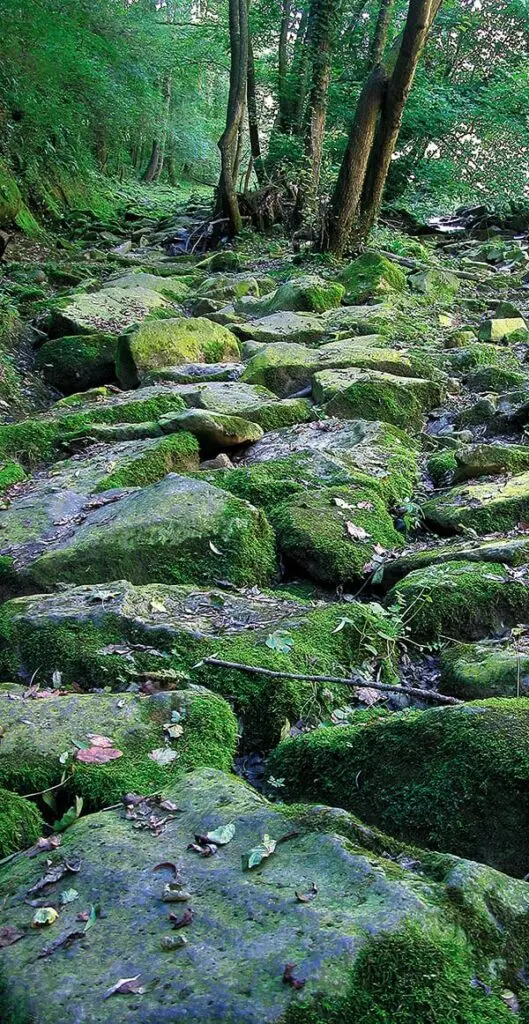
The retreat of the bandits is now roamed primarily by trained hikers and freeclimbers. Of the “Trabucaires” – the legendary gangs of robbers – only the legends have remained. The only walls that have survived are Romanesque chapels, a specialty of the garrotxa. You can also go hiking here.

Sant Joan Les Fonts
Sant Joan Les Fonts is dominated by a monstrous brick-red church. The gates are closed, the windows are walled up. Near the church you can park the car next to the picnic area on the outskirts. From there you follow the description “Ruta vocànica 3 Colades” and “Columnes Basàltiques” on the right. We met an old farmer on the dirt road to the river and reassured ourselves in the right direction. We had too often had unwelcome experiences with the signage in Spain. The old gentleman enthusiastically described the small hiking rod to us, explained to us that we needed good shoes because it went through the river twice, the basalt rock walls are worth seeing and worth the effort of a walk. You can also find some springs in the forest. Apparently, the path takes three hours if you choose the comfortable tar path above the gorge back. He had probably set his pace then, and that was at least 90 years old. On the map, the track looked rather short.
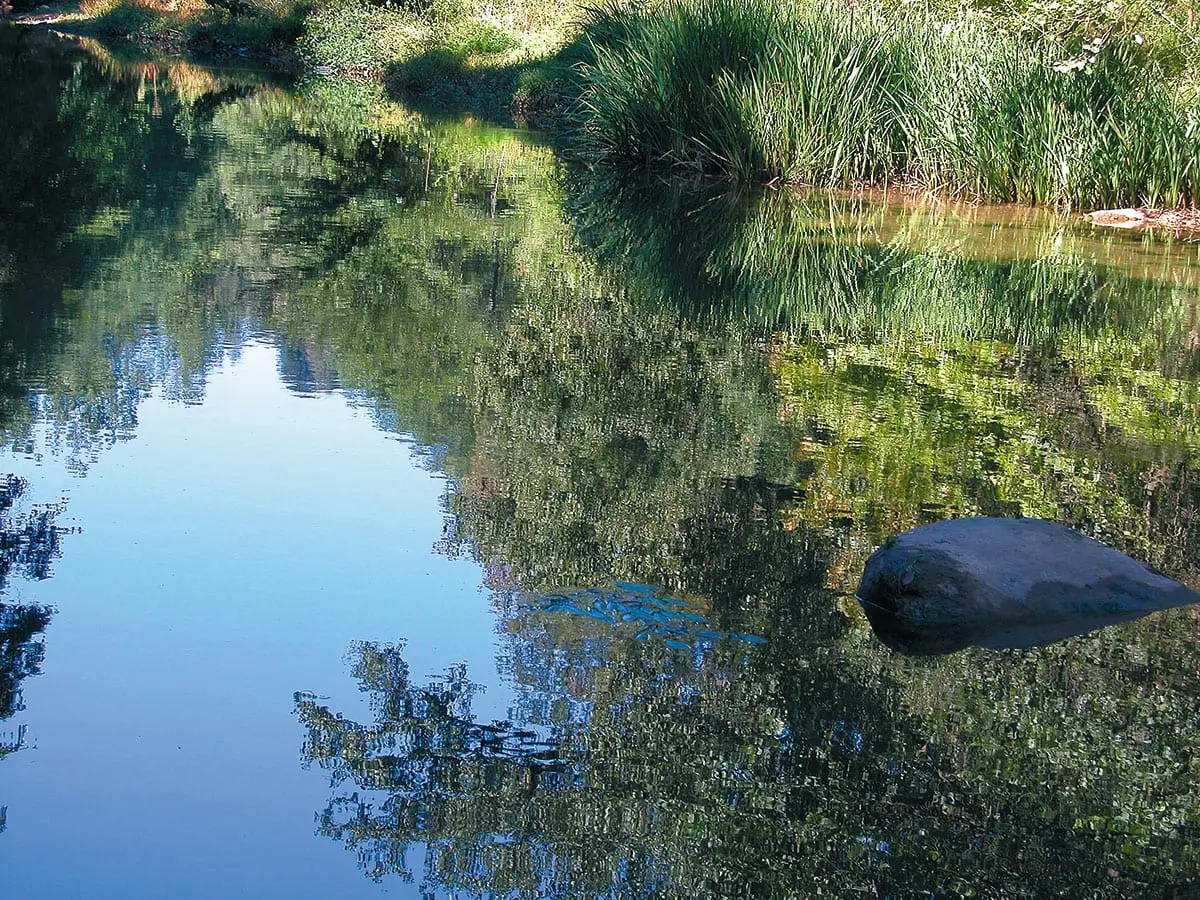
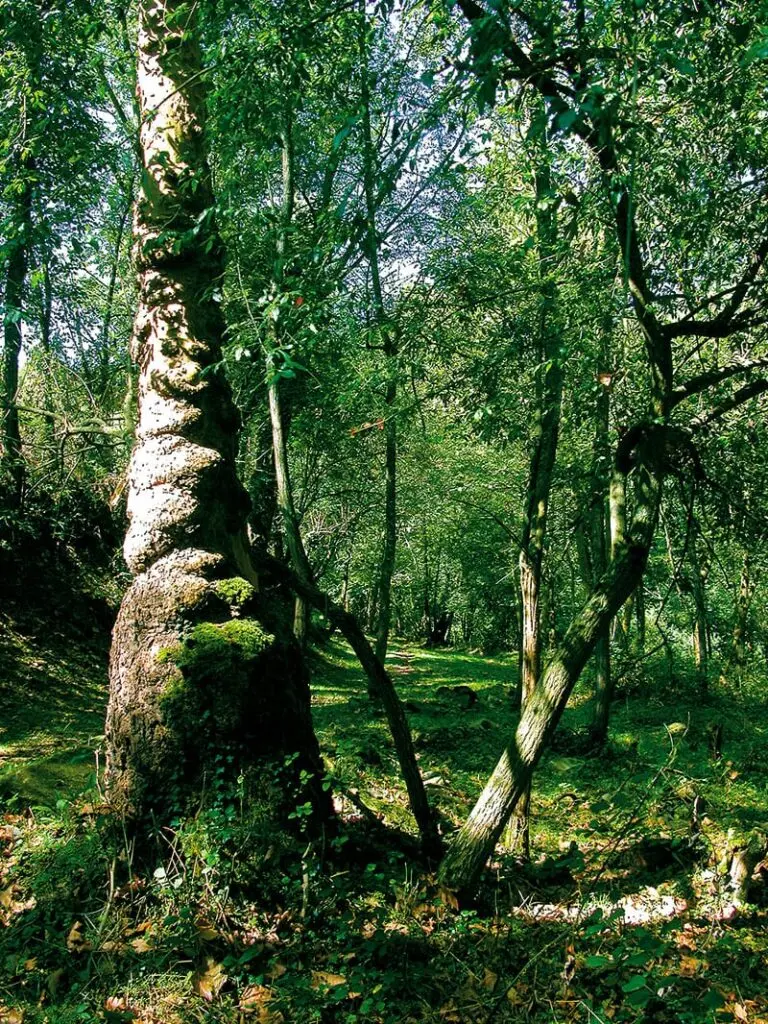
At some point we managed to say goodbye to the friendly old man, who was fascinated by his homeland. He would have preferred to accompany us, but at some point he realized that lunch was waiting for him. So he shuffled from there waving. We dived into the coolness of the forest and soon came down to the river. According to the map, it was no longer called Fluvià but Riera de Bianya. The forest floor became damp and rocky. The heat of the day was locked out. We climbed over roots and stones. Luckily we had really sturdy shoes on our feet. The hiking trail became more and more the path and partly meandered along the river bed. After major rains, it is guaranteed to be impassable. Today the water rushed tamed next to us and washed over moss-covered stones, devoured plants and old trees. High beeches filtered the sunlight. Delicate leaves conjured up fine shadows on our skin.

Impressive basalt columns
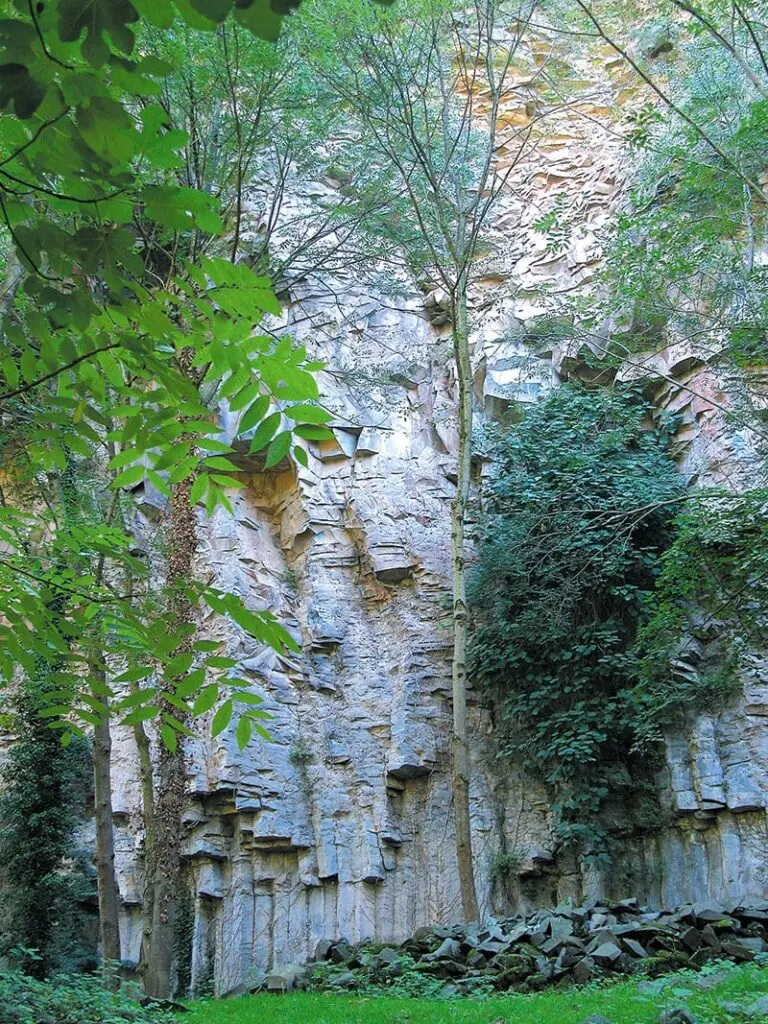
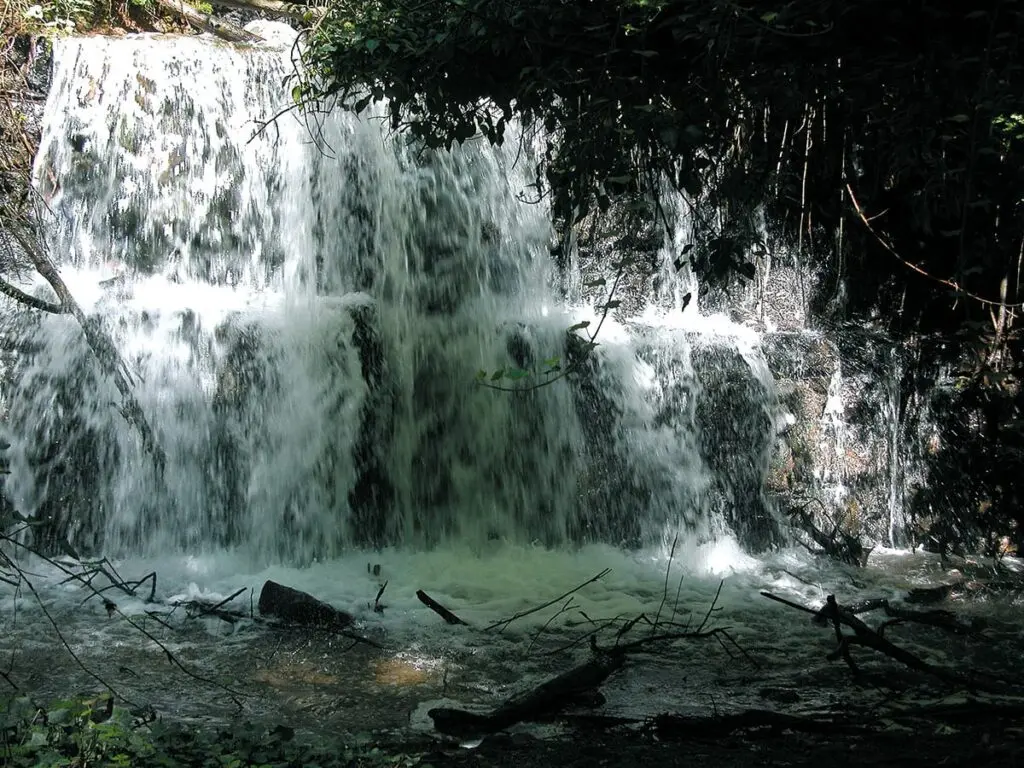
Soon we were standing in front of the first rock massif. The basalt changed in dark shades of blue and green, sometimes up to reddish nuances. The basalt columns lined up like sculptures. Nature always proves its sculptor talent. The meadow in front of the rock shines lush green with fat grass. Summer was not dry here. A lone mushroom blinks in the grass. We leave it for snails and rabbits for breakfast. The leaves of the wild strawberries are reminiscent of spring and delicious fruits. We discover blackberries in the undergrowth and feast on the dark sweetness of this fruit. Now comes the first challenge of crossing the river. Large round, slippery boulders are lined up to the “Brücke”. None of us would like to take a dip in the mud of the river bed. We carefully balance to the other shore. Done. Here a waterfall of side rocks rushes. The sound of the water dampens our steps. Soon we have to go back across the river. Here the stones lie in the sun and offer a safe step. A spring bubbles in front of the next rock face. We don’t taste the clear, cool water, but rather get our own drinking water lukewarm from our backpack.
Romantic farmhouses in front of the Pyrenees
Soon we will meet the three steps of a weir. Behind is an old mill. The garden house of the mill serves as a studio. Wooden sculptures are in front of it. Roses are blooming in the forest. The windows of the renovated house are open. Nobody can be seen. Two cats keep rendezvous under the chestnut. A handwritten sign asks the hikers to walk around the private property outside. We are reluctant to follow the request – because curiosity actually attracts. But the politeness triumphs, and we take the “detour”.
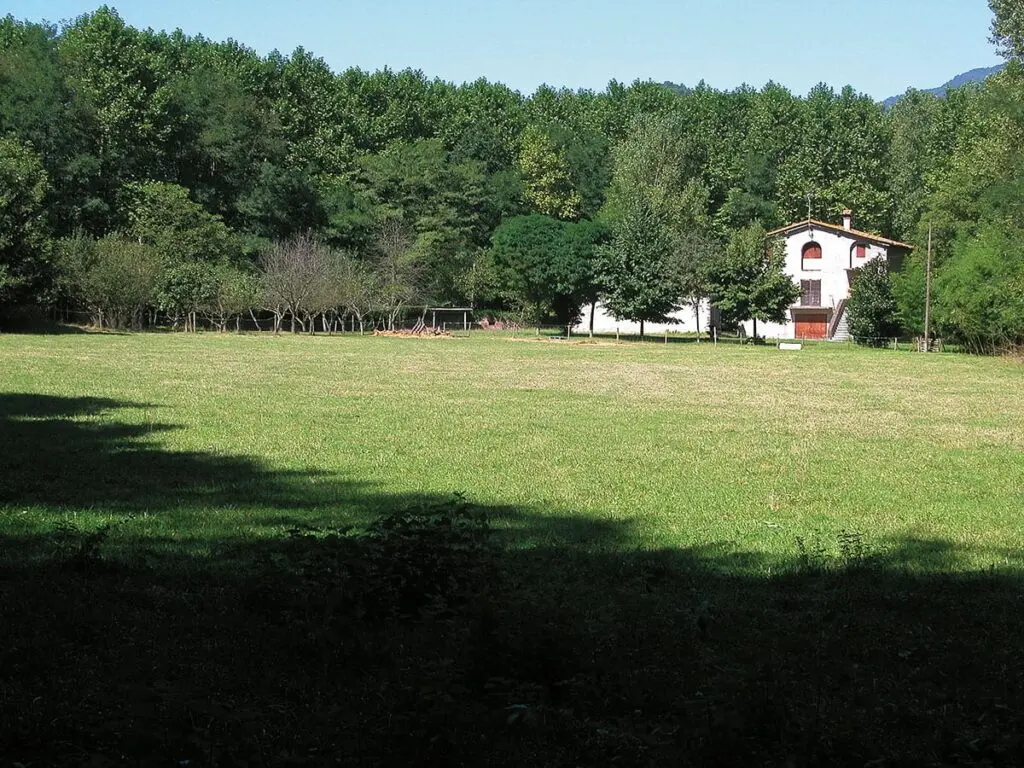
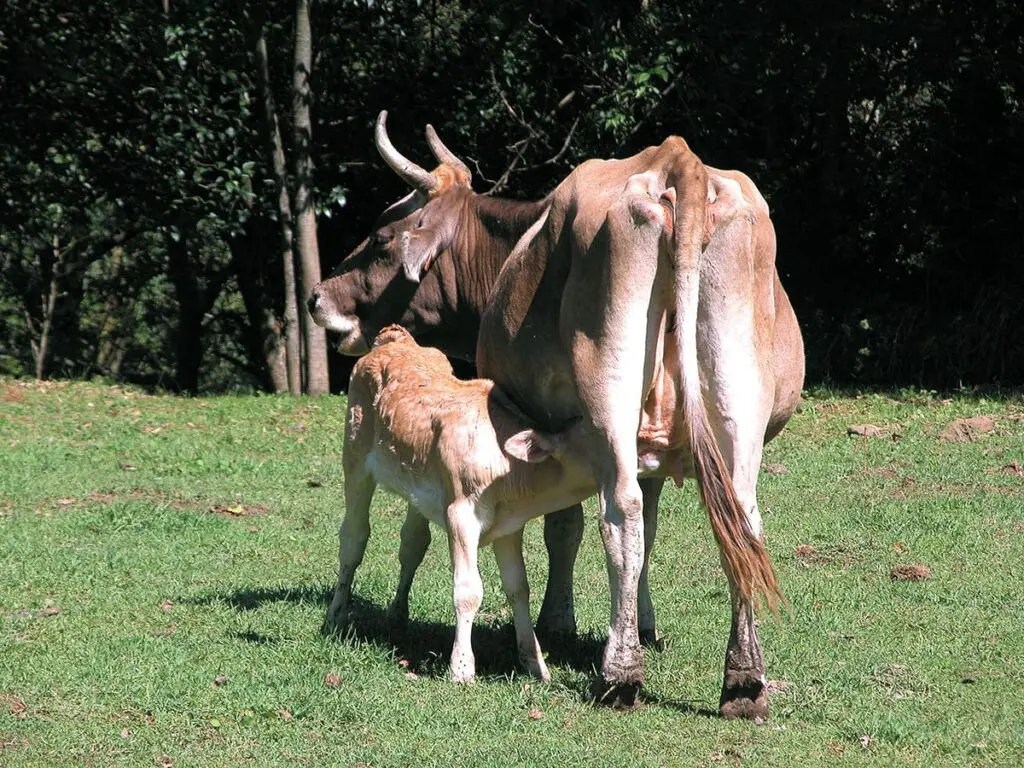
There are horses in front of the next farmhouse. They come to us curiously. Unfortunately, we don’t have any treats in our pockets, so they’ll soon be turning their noble butts to us. Here is a way up. We follow him. On the ridge of the rocks it is easy. There is nothing about coolness, river and rocks up here. Trees and bushes line the edge of the cliffs. Individual farmhouses doze in the midday sun. Young dogs romp behind us for a while behind a fence. Cows graze peacefully in the forest. A calf sucks on the mother udder. The slap of the cow tails chases flies. After 1.5 hours we are back at the car. The heat welcomes us with power. The coolness in the valley made us almost forget late summer. We drive back to the sea to refresh ourselves with a cool bath in the waves.
Around Olot, Santa Pau and Castellfollit de la Roca, green hills rise in the Garrotxa that are in fact sleeping volcanoes. The natural park covers about 15,000 hectares with around 40 extinct volcanoes. The key facts are set out here.
The Garrotxa at a glance
- Natural park: Garrotxa Volcanic Zone Natural Park, about 15,000 hectares, eleven municipalities
- Volcanoes: around 40 extinct volcanoes
- Founding: sources give 1982 or 1985
- Towns: Olot, Santa Pau and Castellfollit de la Roca
Frequently asked questions about the Garrotxa
How many volcanoes are there in the Garrotxa?
Around 40 extinct volcanoes in the natural park.
How big is the natural park?
About 15,000 hectares, spread over eleven municipalities.
Since when has the Garrotxa been a natural park?
According to Costa Brava Pirineu de Girona since 1982; Turisme de Catalunya says it was declared a natural park in 1985.
Sources: Reisen nach Spanien, Garrotxa, Costa Brava Pirineu de Girona, Naturpark Vulkane der Garrotxa, Turisme de Catalunya, Garrotxa Volcanic Zone Natural Park, Campings in Girona, Garrotxa.