Mission: One day and one night in Barcelona, 8 hours time, sniff out a district to the farthest corners. Or maybe – especially the farthest corners. It’s ten in the morning, I’m sitting in front of a coffee and a sandwich in a small roadside corner bar and trying to wash down the cat that gave me the last night I’ve been seduced by Barcelona’s tempting nightlife. It was worth it and it doesn’t help – I have exactly nine hours left in this city, which I fell in love with at first glance, before heading back home and my curiosity screams louder than my humming skull.

In addition, the feeling of being able to snuggle up close to the big city’s chest again makes me almost fidgety. As much as I liked bathing in the calm and seclusion of the Spanish villages for the last few weeks, I need the hectic contrast program from time to time. After all, I usually live in the heart of Berlin. So what do you do, in such a limited time and in such a place that seems to bubble over with liveliness? The big advantage is that I know in advance where I’m going to. I’m not a big lover of overcrowded sights, with my size I wouldn’t see much anyway because of my heads in front of me. It’s the district raval That lures me, that fist-shaped spot that begins south of the Rambla and where a few years ago no walker would have lost.

Dominated by prostitution and crime and characterized by catastrophic living conditions, as well as a low level of education, it was probably the opposite of the dazzling tourist promenades of Barcelona. Only in the course of the last few years and in the course of the improvement measures of the living space taken after Franco’s death did a smile elicit a smile from the gloomy face of the Raval – gradually a lively subculture of young people, charming cafés and alternatives developed Bars found their way into the vacant building complexes and the first visitors hesitantly began to cross the narrow streets. Although this part of the city is still a rough wind, it now has a reputation for Barcelona’s scene character to contribute.
The reason why my fingers itch after exploring this area is probably also hidden in the fact that my apartment in Berlin in the district of Neukölln lies, which resembles the Raval, in relation to the processes of circulation that have taken place in the recent past, like a twin brother. So I hope to discover maybe a bit of home in the streets – which would then finally make it impossible not to return to Barcelona for a long time.

An hour later, after I managed to get through the tourist schools that Rambla I find myself diving through to dive through, in the chaotic tangle of narrow alleys and ramifications, which demand the highest concentration of my maltreated head.
It’s amazing how quickly silence seeps between the houses and the noise of the Rambla seems to be ruled out – I immediately feel like I’ve just slipped into a cocoon that the rest of the world has no access to.
But the Raval doesn’t just stand out from the part of Barcelona that I’ve seen so far. Little by little, the colorful souvenir shops, which were just paving the roadsides, are replaced by small vegetable shops, butchers and kiosks, in front of whose doors you can buy both water ice and a new cell phone. Since I have neither a guide nor a particularly good sense of direction, I decide to just roam aimlessly through the area.
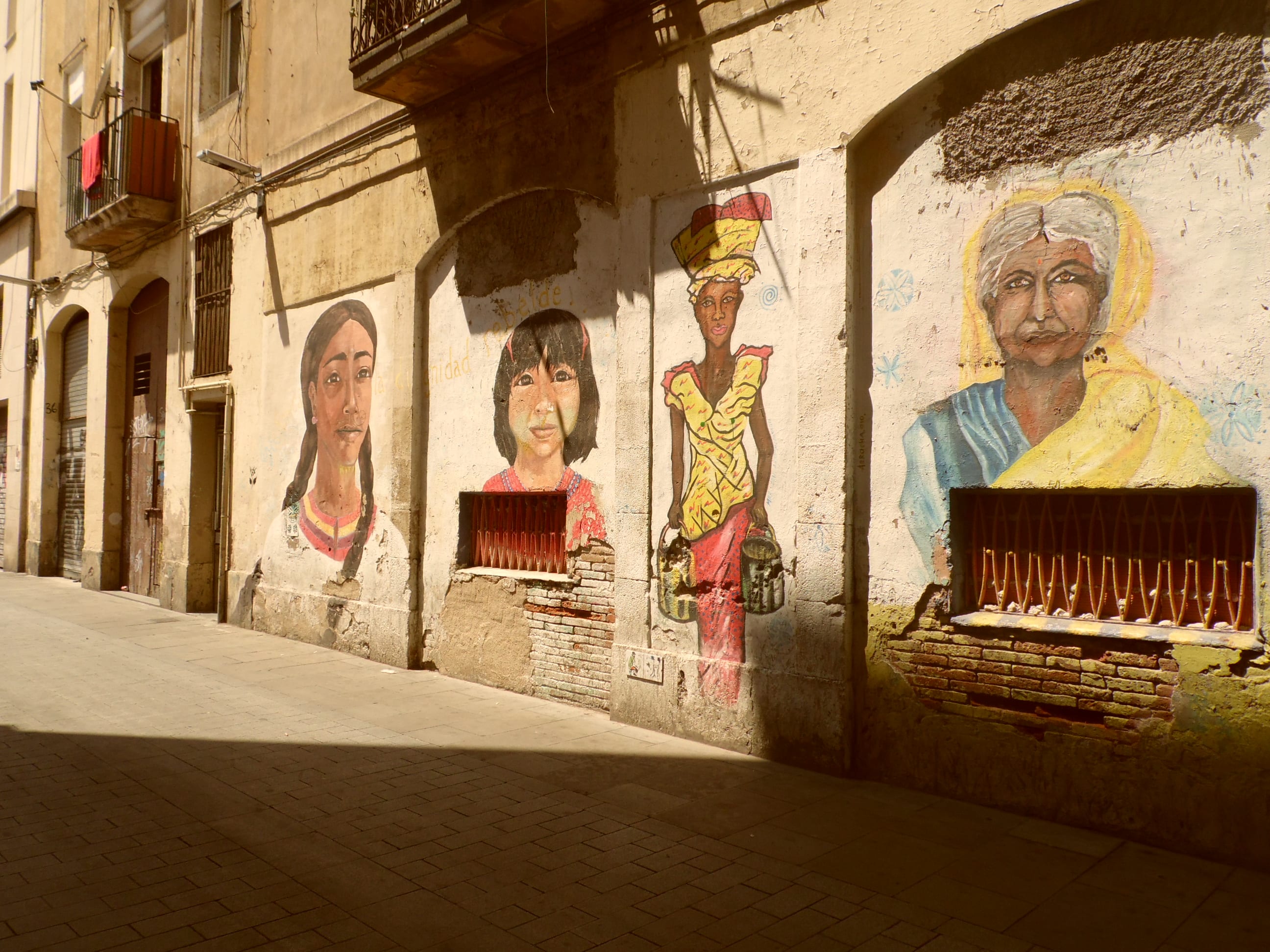
The streets will soon become narrower, some of the houses will be turned in such a way that their wrought-iron balconies almost strip – clothes lines adorn the facades where colorful shirts and dresses flap. The path in front of me becomes increasingly deserted, vacuum cleaner noises and children’s screams come from the open windows of the houses. In contrast to the Rambla, which overflowing with people, I feel here to meet a more honest place in the city where the everyday life of the residents leaves its mark on every corner.
As I am used to from Neukölln, I quickly realize that the Raval can also be divided into different zones. The deeper I grope into his throat, the more I go into the melting crucible of different cultures. The silence that initially encircled me now changes with a background noise that is no less booming than the babble of voices on the Rambla. I walk into alleys where both sides of the houses are lined with market stalls and greengrocers, women wearing headscarves fill their shopping baskets and exchange news, children play on the side of the road, men chewing nuts drink tea in front of the doors of the apartments. This place reminds me so much Neukölln that it almost hurts a bit – at the latest as the first doner kebab appear in front of me, I can hear the home bells ringing.
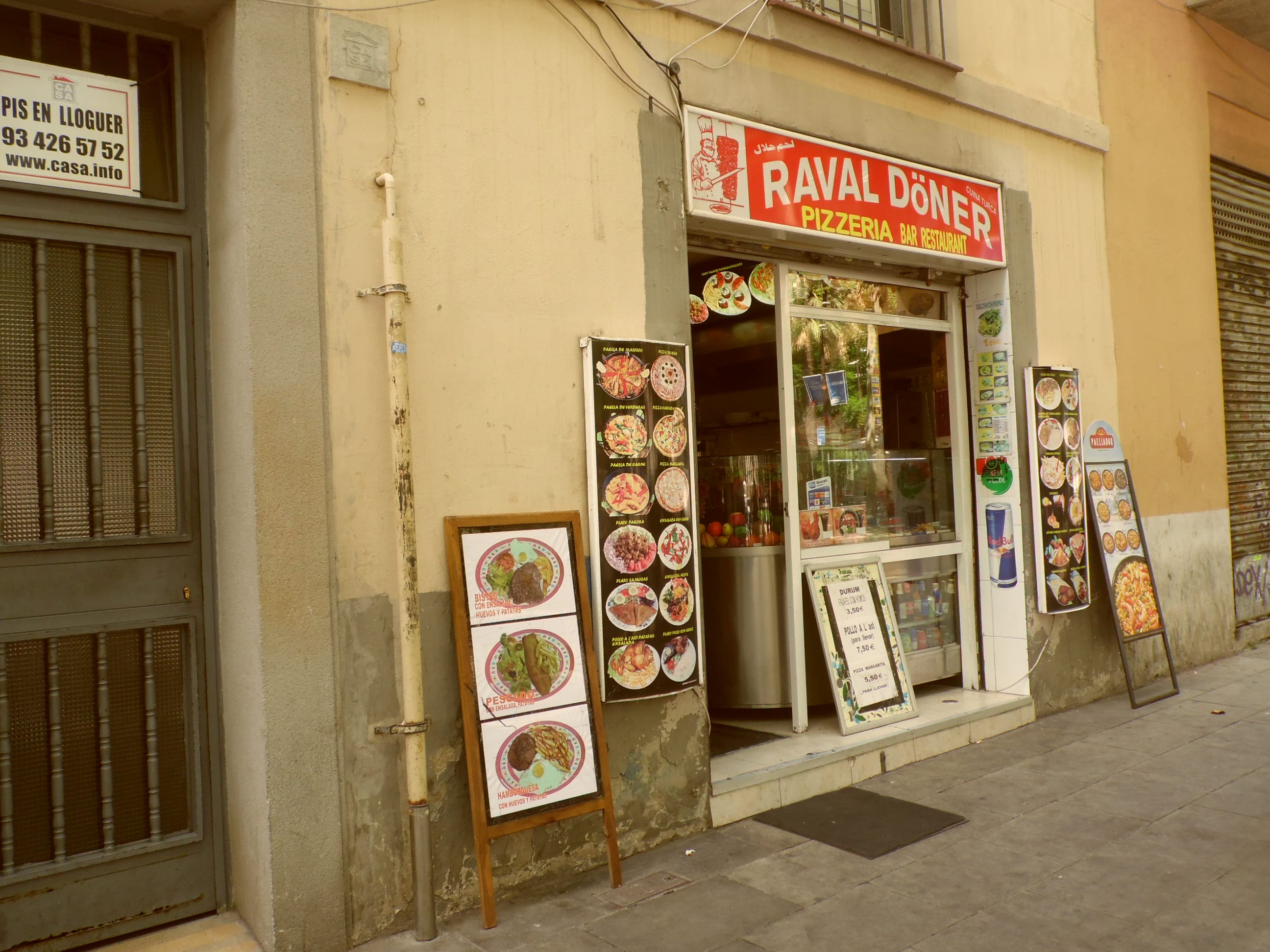
A few corners of the house then the first graffiti on the walls appear – a clear sign for me that I Subcultural heart of the Raval slowly getting closer. And indeed, I come across the first, scattered cafés and bars, on whose terraces young people wearing sunglasses sit and drink sangria, the scent of incense sticks out of the doors of small clothes shops and Creativity. The apartments in this part of the district seem a bit more spacious and populated predominantly by students, instead of clotheslines, posters and flags adorn the gray facades.

Despite the colorful atmosphere that seems to be bursting with brightness, it is impossible to go through the Raval without even catching a glimpse of his ugly face. I pass terrain where the silence sudden Oppression Appears to give way – heat builds up in the backyards, the air is so sticky and stuffy that you hardly want to breathe it. Here stinking mountains of rubbish pave the street corners like termite hills, the color of the house facades has long since peeled off, window panes have been smashed or no longer existent. The views of the few you meet here are suspicious and grumpy, often it is old, fragile people who laboriously drag themselves along the street. I let the camera and notebook disappear into my pocket – otherwise I would feel like a sensationalist looking for the most moving signs of poverty.
These corners of the Raval seem to be the ones the former residents have retreated to, or rather: to which they were driven when more and more students moved into the comparatively cheap apartments and the rents increased bit by bit.
Because the medal, as so often, has two sides: subculture and the scene district on the one hand, gentrification and uprooting on the other.

After eight hours, finally, I have to break the shell of the cocoon again to escape from him. The chaotic hustle and bustle on the Rambla in the evening sun now seems all the more artificial and artificial – I’m glad when I can put my aching feet home on the train journey. I don’t want to draw a conclusion from my foray through the Raval. The neighborhood is closed multi-layered and Contrastingto be able to describe it in a few words. I’m only aware of one thing now: Barcelona stole a bit of heart and I’ll have to get it back soon.
More: Barcelona – 48 hours, Short break in Barcelona, Barcelona – The other side.