The Val de Nuria is considered that Last “real” high mountain valley of the Eastern Pyrenees. Núria is Car-free and only accessible by the “La Cremallera” cog railway. Despite some ski lifts, the valley is still described as a real natural paradise with an impressive summit backdrop.
On a holiday in August, we made our way to the Pyrenees early to explore the Vall de Núria ourselves.
At 5.45 a.m. we are already in the car and driving Direction Besalú, Olot via Ripoll to Ribes de Freser. The new route from Besalú to Olot is just finished 4 lanes and we are the only ones on the slopes. Gradually, the dawn of Rosa rises into the sky. Behind Olot we climb the old national road N260 into the mountain. Romantic little mountain villages and solitude. The sun is slowly rising from the sea. She has not yet reached the mountain peaks. In Ripoll, the streets are deserted. The day starts late on a holiday.
 in the Small Pyrenean town of Ribes de Freser is the valley station of the “La Cremallera” cog railway, which takes you to the car-free Vall de Núria.
We drive one more place to the Mountain village Queralbs At 1220 meters high. This is where the road ends and you have the last opportunity to get on in “La Cremallera”. We park around 7.45 a.m. in front of the mountain station. Some hikers are already waiting at the platform. The first train of the day starts at 7.42 a.m. in Ribes de Freser and will stop in Queralbs in about 5 minutes. At the ticket counter we only solve the outward journey and receive information material. We want to walk the way back. Our guide promises spectacular scenery.
The Ride on “La Cremallera” is of particular appeal.
The train winds its way through tunnels and along steep abysses with surprising views and briskly up the mountain. Below us the wild water of the Rio Núria. impressive the Waterfall Salt de Cua de Cavall (Horse Tail). Wild lupins and magnificent thistles bloom everywhere along the river. In the undergrowth right next to the train, two chamois jump up and away. A new tunnel for the rockfall endangered middle section is currently being built for the cog railway.
Vall de Núria at a glance
- location: Eastern Pyrenees, Catalonia
- Arrival: Only with the Cremallera de Núria cog railway. It leads up from Ribes de Freser and Queralbs and overcomes more than 1,000 meters in altitude
- car free: The valley is a car-free nature area
- Parking: Free parking at Ribes Enllaç, Ribes Vila and Queralbs
- sanctuary: The Santuari de Núria in the valley
- nature: Gateway to the Capçaleres del Ter i del Freser Nature Park
- winter: Ski resort with ski lifts
Hike through the Valley of Dreams
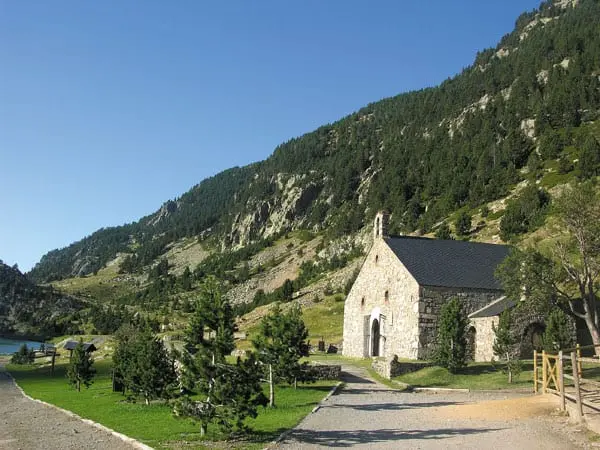
After about 20 minutes of driving that is Val de Núria before us. here on 1,967 m height is a large building complex from the 19th century, which houses the hotel, fast food restaurant and pilgrimage site. Not necessarily a gem, this religious place is considered a popular destination for the Catalans. The system is currently being renovated piece by piece.
The landscape of the valley on the other hand enthusiastic. Surrounded by high mountain peaks, the small Reservoir Still in the shadow of the mountains. The sun casts her morning spotlight on the peaks. Horses grazing on the slope. Riding excursions are possible. A herd of cows pulls over the mountain. Lush green mountain meadows wherever the eye sweeps.
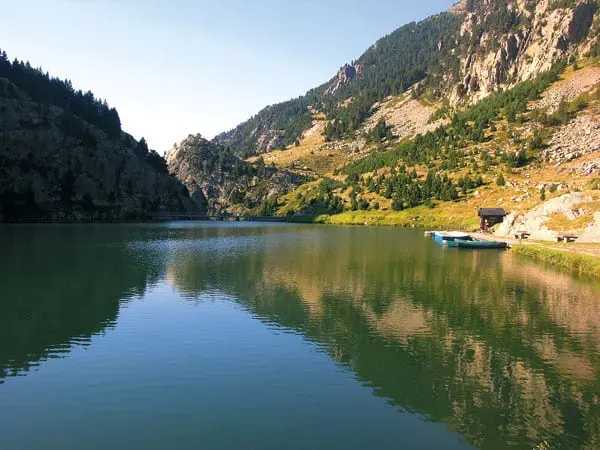 We overlook the ski lifts. A donkey greets us behind the hotel complex. Ducks and chickens also live here in a peaceful association with a rabbit family. You can go boating on the artificially dammed lake. Circular hikes of various efforts to the peaks or around the lake are alternatives to the steep descent into the valley. We hesitate briefly, but still stick to the plan for the descent.
Later this will take revenge with severe sore muscles.
The most visited place in Núria is undoubtedly the Pilgrimage Church of the Mother of God of Núria, protector of the Pyrenean shepherd and helpful if you want to have children.
The Descent into the valley takes about 3.5 hours. We walk carefully from stone to stone. Wild raspberries along the way. Blooming meadows and picturesque views make us pause. The further we descend into the valley, the more numerous hikers come towards us who dare to climb the steep climb. We don’t have the training for that.
Our hiking trail ends in Village Queralbs.
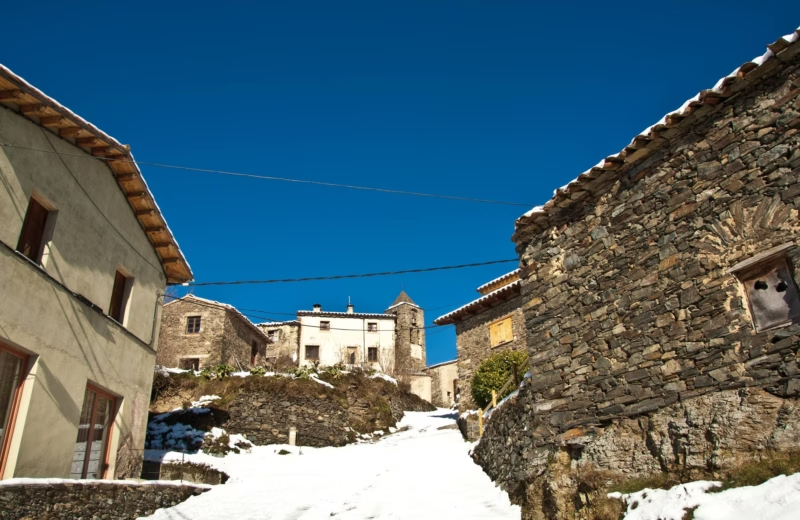
The picturesque medieval Pyrenean village with the typical stone houses of the mountains lures with rustic village restaurants and rural cuisine.
For lunch, it is better to reserve in advance here on public holidays, so we learn. Exhausted, we sit in front of the small bar behind the town hall and order sparkling cold water and ice-cold cola.
After this refreshment, we revitalize it in the small village shop for a picnic: excellent mountain cheese from goat and sheep, delicious sausages from the region, crispy stone oven bread and fresh tomatoes.
So prepared we set off on the way back to the sea.
That was certainly not our last trip to the mountains. Even in midsummer you can hike here in pleasant temperatures if you get out of the springs early enough.
Frequently asked questions about the Vall de Núria
How do you get to Núria?
With the Cremallera de Núria cog railway. It connects Ribes de Freser and Queralbs with the High Mountain Valley.
Can you drive to Núria by car?
No, the valley is car-free. The car is left at one of the access stations, and parking spaces for passengers on the cog railway are free.
Is there a ski area in Núria?
Yes, in winter there is a ski area with ski lifts in the Vall de Núria.
Does the cog railway run all year round?
The timetable changes depending on the season, in autumn, for example, the train only ran at the weekend. Current times are with the operator of the railway.