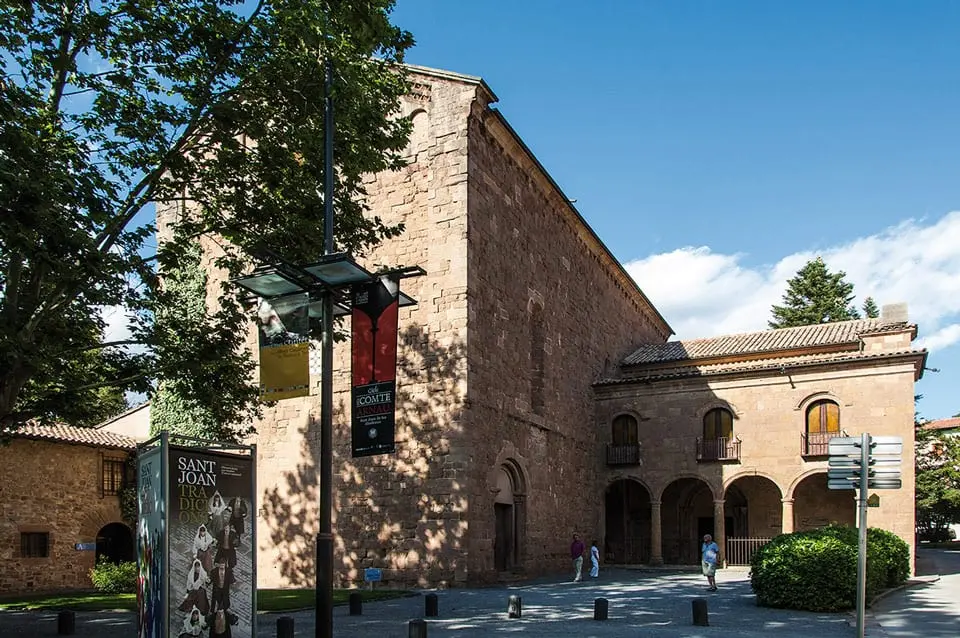
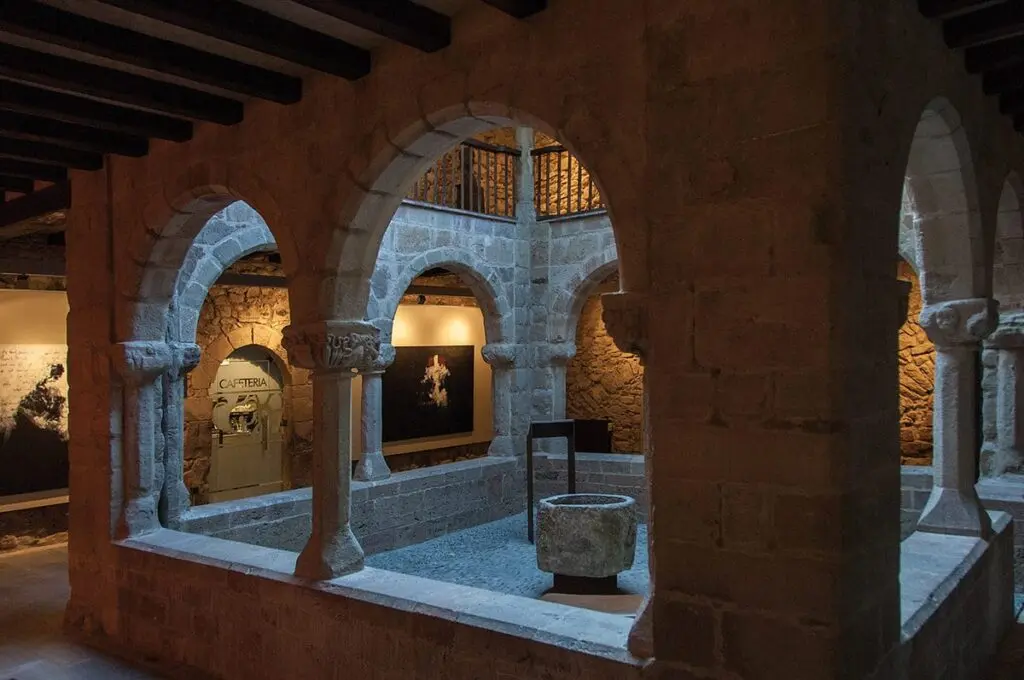
Usually it is the places that produce their walls and houses, churches and monasteries – with San Juan de Las Abadesas it’s the other way around. As quaint as the medieval nest at the foot of the Pyrenees, with its stone facades, stately manor houses and the babbling fountain in the middle of a green park, may seem like a green park – it is the one from the 12th century originating, monumental monastery building in the heart of the village, which breathed life into the town and lent it its name. So what kind of secret is hidden behind the heavy wooden doors to which people attach such importance? At first glance, San Juan de las Abadesas with his simple elegance Less oppressive than other monastery buildings. Ribs similar to narrow stone columns grow up, climb around climbing plants, and in the cloister there is a view of a small fountain. Abbots watching over this place for centuries.
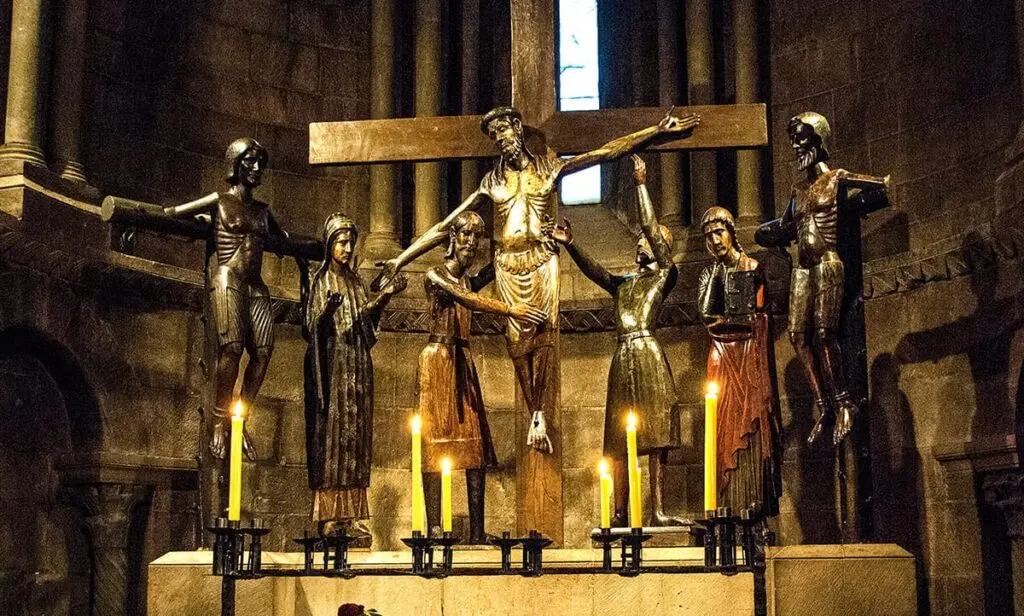
If you finally feel your way further into the interior of the monastery, you will be surrounded by a dark darkness. Occasional candles paint their flicker on the cool stone walls and illuminate the wistful faces of the statues of saints that look down on the visitors. It’s a place of reverence and heaviness, on the scrap of incense scent in the air like the spirits of bygone times. In fact, the changes that have shaped San Juan de las Abadesas over the years are noticeable everywhere – the ivory, playfully decorated altar stands out radiantly from the rest of the monastery, sometimes adorn golden frescoes, sometimes Exotic animal motifs the walls, at the other end of the vault, the view of the Santíssimi Misteri grants, that of the 1251 wood carving of the cross acceptance, which looks so real that one waits for the figures to blink. It is the traces of both French and oriental and Arabic architecture and art that are found here and the San Juan de las Abadesas manifold touch lend – no wonder, with the many different owners in whose hand it was already.
 Around 880 founded the then Count of Barcelona The monastery, in the years that followed, served the daughters of the country’s richest families as a residence – at the same time the settlement of the untouched valley began. Gradually, a place weaved around the mighty building, which was immediately given the same name. After the senior abbess was deposed around 1000, the monastery migrated through countless different hands, each of which left its fingerprints. It is precisely these that make the place so worth seeing today – after the visit you feel as if you have just walked through several epochs at the same time. If you have spit it out again, you can either look at the sunny forecourt settle down and enjoy coffee and cake or continue the foray and a few more glimpses of the Museum next door Throwing, which with its golden rosaries and rock crystal crucifixes resembles a small treasure chest – here the wood carvings and stone frescoes can also be viewed up close.
 get there:
Plaza de la Abadía Museo s/n
17860 Sant Joan de les Abadesses
Sant Joan de les Abadesses, Girona (Catalonia)
when:
Daily 10:00 a.m. – 2:00 p.m. and 4:00 p.m. – 6:00 p.m
how much:
Regular: 3 euros
Reduced: 2 euros
Groups: 2 euros
children free.