Reservoir Pantà de Sau
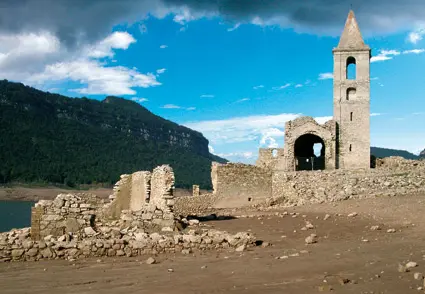
When we two years ago we went to the Reservoir Pantà de Sau undertaking, only the top of the church tower of a sunken village towered out of the water. Now the water level of the dam is at Vic in the north of Barcelona However, so low that the entire church Iglesia de Sant Romà from the 11th century is as it used to be dry. In addition to the church, ruins of houses in the village can also be seen, which was flooded in 1962 during the construction of the dam and was sunk in the reservoir for almost 50 years. The photogenic spectacle is more than questionable: the reservoir on the Ter River ensures, among other things, the water supply of the city of Barcelona.
The dam was not even filled to a fifth in winter. Now the precipitation should actually fall, from which the city of Barcelona and the popular holiday region Costa Brava can eat in summer. Also alarming that the Pyrenees This year only shine with thin snow caps. Sufficient melt water in spring is therefore not to be expected.
The state government therefore has one emergency plan developed, which, in addition to rationing and reducing line pressure, also the supply of the city of millions Barcelona with the help of ships. Filling swimming pools, car washing and irrigating parks and gardens are already banned in some regions of Catalonia.
The dilemma is not only due to the weather. Spain has been dealing with the scarce water reserves in a particularly carefree for years. As a result of outdated pipes and irrigation channels, 20 percent of the water is already lost during transport. The farmers receive water at subsidized prices. There is no incentive to save.
Spain’s water general director Palop is currently talking about the “worst drought in recent decades”. The following still applies: Tourists should not feel the water shortage!
At low water the church tower of a drowned village rises out of the Pantà de Sau. What we know about the reservoir and the village of Sant Romà de Sau is set out here at a glance.
Reservoir Pantà de Sau at a glance
- Origin: The reservoir was completed in 1962 and is an important source of Catalonia’s water supply
- Sunken Village: During construction, the village of Sant Romà de Sau was flooded. When the water level is low, the church tower protrudes from the water
- Reservoir chain: The reservoir belongs with Susqueda and Pasteral to a chain of three reservoirs on the river Ter
- Location: north of Barcelona, near Vic
Frequently asked questions about Pantà de Sau
When was the Pantà de Sau reservoir built?
The dam was completed in 1962. The village of Sant Romà de Sau was flooded.
When do you see the sunken church?
Only at low water levels. In the drought phases, the tower and the remains of the wall come to light, so most recently in spring 2023. When the reservoir is full, everything is under water.
Which reservoir system does the Pantà de Sau belong to?
Together with the reservoirs Susqueda and Pasteral, he forms a chain on the ter.
Sources: Wikipedia, Panta de Sau, Komoot, Church of Sant Romà de Sau, The Press, March 27, 2023.