“The name Costa Brava “Wild Coast” created in 1908 by the writer Ferrán Agullo,
when he admired the rugged rocks on the coast at Sant Feliu de Guíxols.”
Harbor city in the heart of Costa Brava
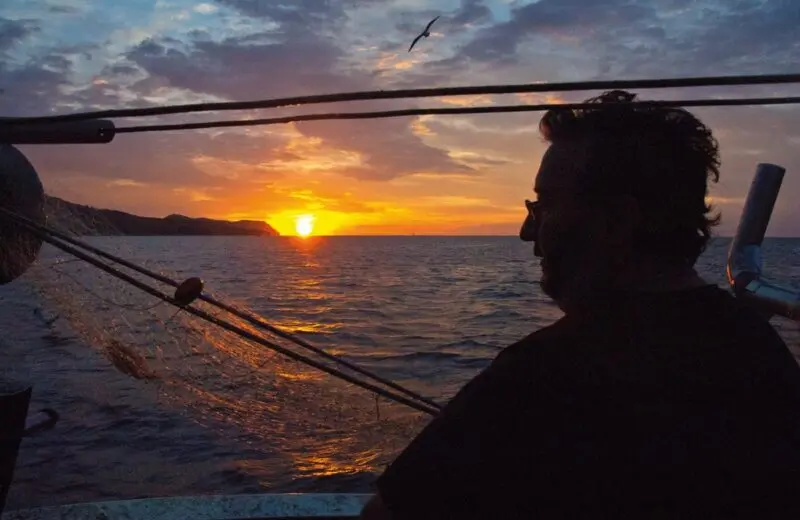
The small lively port city in the heart of the Costa Brava exudes southern flair. Early in the morning old fishermen are already sitting on the benches at the harbor and telling stories accompanied by the cry of the seagulls. Individual walkers walk among the plane trees of the promenade. Even today, the town still has a remarkable fishing fleet. Seafaring, fishing, cork industry and later tourism ensured prosperity in the city in the beginning of the last century.
Catalan Art Nouveau sign
 The casino and some villas that local entrepreneurs in the 19th and 20th centuries bear witness to the wealth of bygone eras to this day.
For example, the Casino dels Nois, built in 1888 by General Guitart, is considered an impressive sign of Catalan Art Nouveau. Just like the Casa Patxot, built between 1917 and 1920.
In the market hall built in 1929 on the Plaça del Mercat, the weekly market takes place every Sunday from the early hours of the morning. A colorful hustle and bustle that you should experience.
Plaça del Monestir
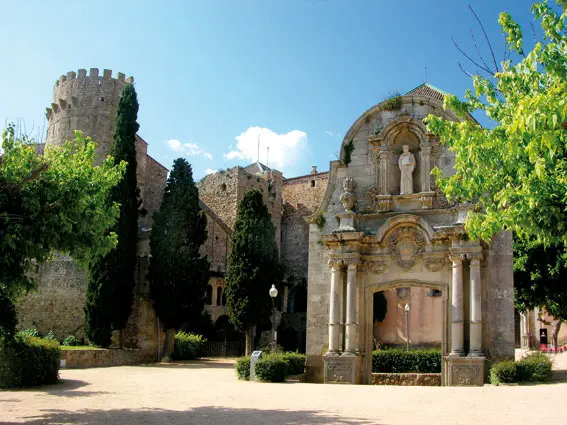 Contemporary witness of the medieval Sant Feliu is the area around today’s Plaça del Monestir. Remains of the city wall – the semicircular Torre del Fum and the square tower stump of the Torre del Corn – document former fortifications.
The Romanesque Porta Ferrada forms the framework for the annual international music festival “Festival Internacional de la Porta Ferrada”, which takes place annually from July to August.
In the direction of Santa Cristina de Aro you will find Pedralta, a spectacularly swaying granite wobbly stone. The Pedralta (6 m long, 4 m wide and 3.5 m high) is the second largest wobbly stone in Europe with a weight of 33 tons.
The most beautiful panoramic road of the Costa Brava connects Sant Feliu de Guixols with Tossa de Mar.
The most beautiful panoramic road on the Costa Brava combines Sant Feliu de Guixols with Tossa de Mar. Such spectacularly staged sea views – accentuated by bizarre rocks, green pine trees and gnarled cork oaks – are rarely offered. The road runs dangerously close to the edge of the cliffs in hairpin bends. It is advisable to stop at the viewpoints (Miradores) to trace Ferran Agulló, which in 1908 christened the 220 km long stretch of coast between France and Blanes Costa Brava – the “Wild Coast”.
Sant Feliu de Guíxols lies on the Costa Brava and is known for its Porta Ferrada music festival, held every year from July to August. Sights include the toy museum and the Casino de la Constància. The essentials are set out here.
Sant Feliu de Guíxols at a glance
- Festival: the Festival de la Porta Ferrada takes place every year from July to August; sources give 1958 or 1962 as its founding year
- Sights: the toy museum and the Casino de la Constància
- Coastal path: the Camí de Ronda links the town with Palamós in stage 5, see Camí de Ronda on the Costa Brava
Frequently asked questions about Sant Feliu de Guíxols
When does the Festival de la Porta Ferrada take place?
Every year from July to August.
Since when has the festival existed?
Sources give 1958 or 1962; according to Yelloh! Village it is the oldest music festival in Spain.
What can you see in Sant Feliu de Guíxols?
The toy museum and the Casino de la Constància, plus beaches and coves.
Sources: Turisme de Catalunya, Sant Feliu de Guíxols, Wikipedia, Sant Feliu de Guíxols, Yelloh! Village, Festival de la Porta Ferrada, AllTrails, Sant Feliu de Guíxols.
More: Keeping Tabs on Everything: Motorbike Tour Sant Feliu de Guíxols – Tossa de Mar, Wickelstein Pedralta in Sant Feliu de Guíxols.