The spring at the Darnius reservoir – Boadella
In the hinterland of the Costa Brava, the flowers sprout in spring and fresh leaf tips everywhere. Spring is also beginning in green at the Darnius reservoir – Boadella in the mountains. Green stimulates all senses and creates the ultimate feel-good flash.
Reservoir Darnius Boadella at a glance
- location: In the hinterland of the Costa Brava, in the Comarca Alt Empordà
- river: The reservoir conquers the Muga River and is therefore also called Muga Reservoir
- construction: The dam was built in 1969
- Size: At full stand around 3.6 square kilometers of water surface and 61 million cubic meters of capacity
- Task: Securing water supply for agriculture and places and protects against flooding of Muga
- Activities: Walk, kayak and fishing. What is allowed depends on the zone, please check on site
Green has a relaxing, calming and stressed effect. Latest research confirms what we have known for a long time: Green promotes the release of happiness hormones and is good for the soul. So off to the green. And where is the best place to go?

To the Darnius reservoir – Boadella
The Darnius reservoir was previously called a Boadella reservoir. It was recently renamed because most of the lake is in the municipality of Darnius and does not belong to Boadella d’Emporda. The reservoir covers an area of almost 100 hectares. The dam wall is 60 meters high and 230 meters long. The reservoir holds 62 million cubic meters of water. This means that around 10,000 hectares of arable land are irrigated and many communities are supplied with drinking water. Electricity is also generated here.

We drive from the Nii past old restored Masias and paddocks in the direction of the direction. Darnius And follow the signs “Café Central” and “Club Nautic” there. At Club Nautic we park our car and walk to the shore. To the right we follow the shore path to a peninsula.
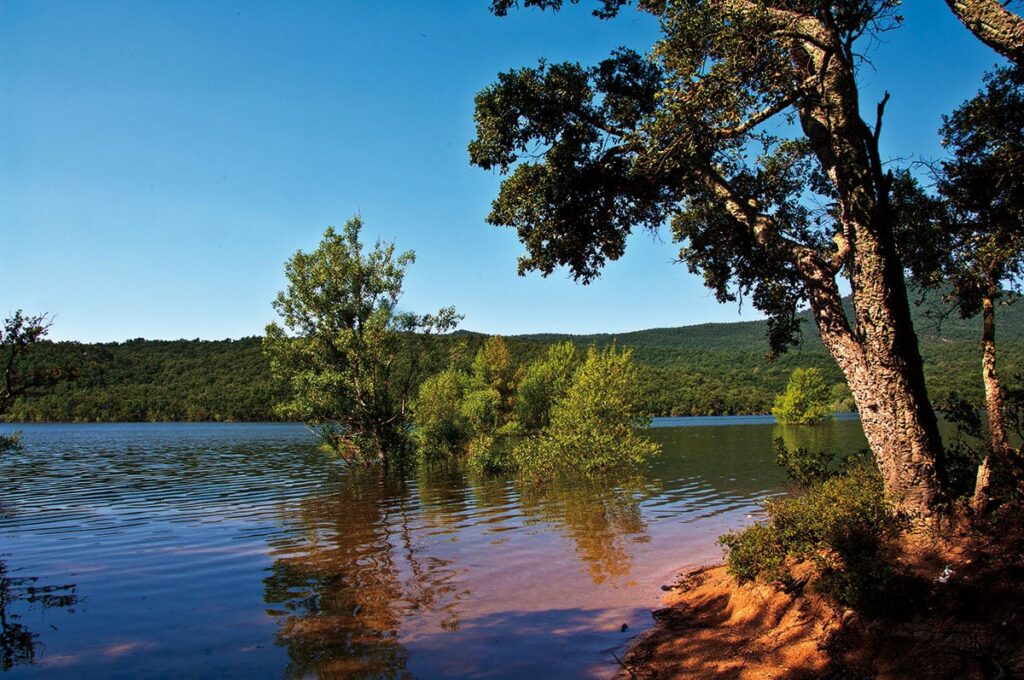
Here a herd of sheep Malmend greets us on the meadow. The waters of the Darnius reservoir – Boadella flashes between bizarre cork trunks and we climb over rocky shores, wave to an angler in a friendly manner and are disappointed to find that the path later in the nowhere sucked. So we walk the short distance back to the parking lot and try our luck in the direction of the dam wall.

Play of light and shadow between cork oaks and pine trees
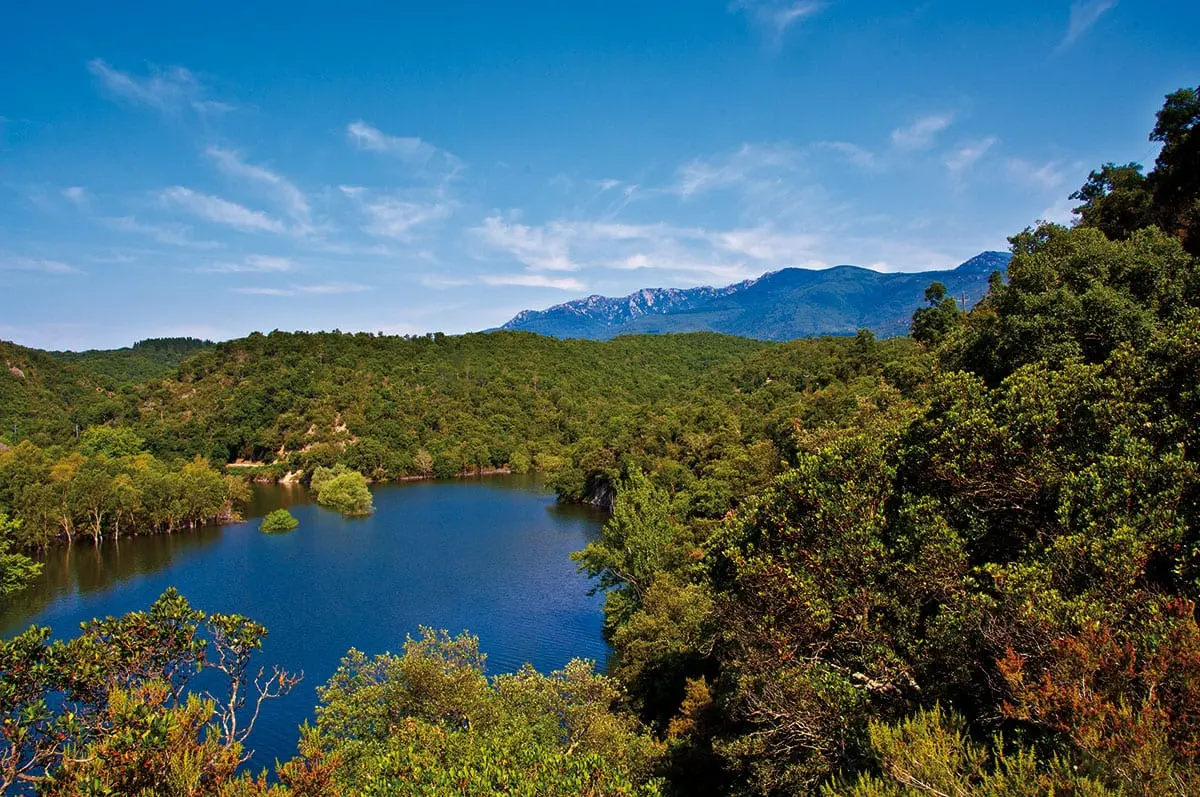
Here, too, the play of light and shadow between cork oaks and pine trees playfully conjures up reflections on the water. The fresh scent of the forest tickles our noses. Soon we will settle down on our jackets on the edge of the shore and enjoy the spring sun and the view over the Darnius reservoir – Boadella and the mountains to the last snow peak of the Pyrenees.
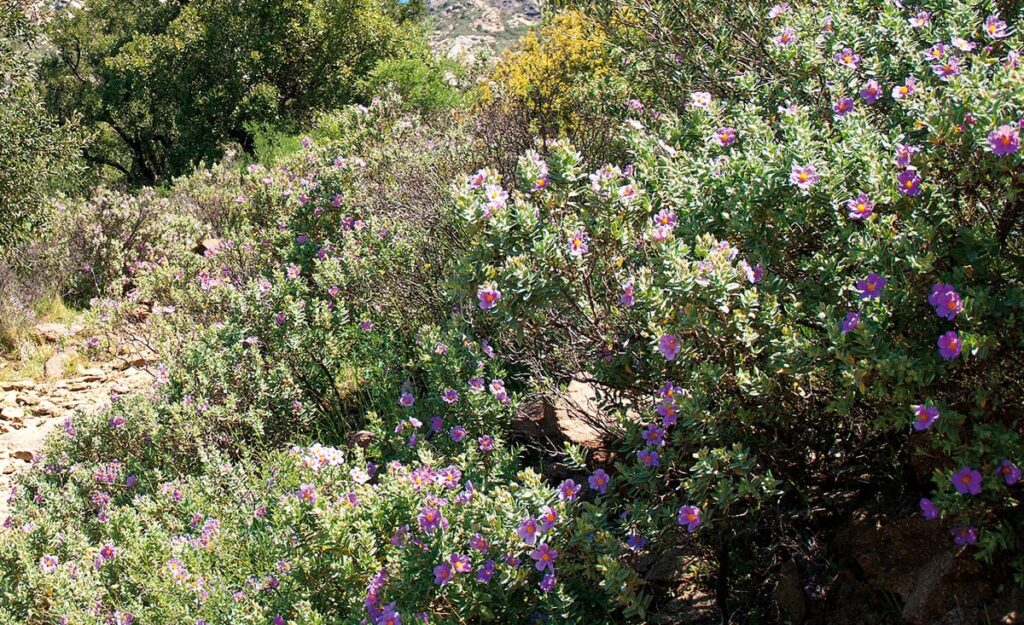
Spring is blooming all around us: broom, acacia, wild mallows, honeysuckle, shrubby ball flowers, rush lily and lavender can be found in the vicinity of the Boadella reservoir. The air is filled with the scent of wild plants and bewitched.
The landscape at the Darnius reservoir – Boadella
The landscape at the reservoir differs significantly from the coastal landscape, which is only a few kilometers away. Bizarre cork oaks dominate here in front of a blue sky. Boulders pile up into the water. The jay announces every intruder screeching loudly and then flies away excitedly.
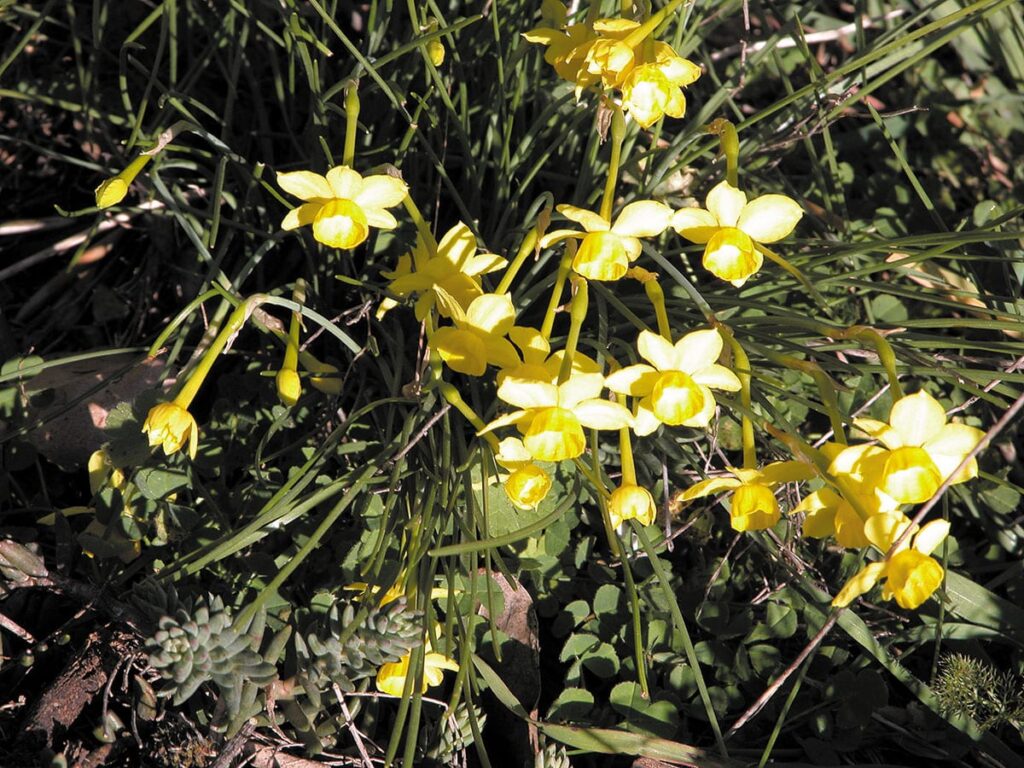
Mediterranean vegetation
The whole vegetation corresponds to that of the Mediterranean. Between pine and holm oaks you will find many different medicinal plants and herbs. In the mountains there are wild boars, wild chickens, squirrels, hedgehogs, rabbits, rabbits and badgers. Numerous bird species populate the area: the kingfisher, woodpeckers, dippers and many wild ducks enjoy themselves on the shore or in the water of the jammed muga.
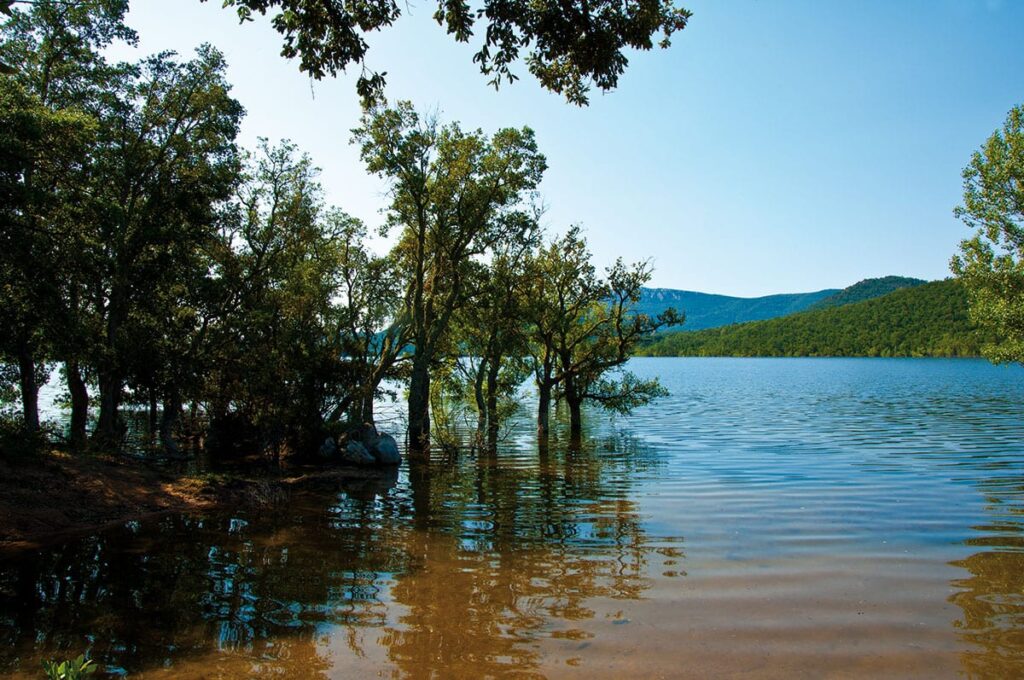
Blue glitters the water between the trees. The first bees humming and grasses weigh themselves in the wind. We breathe spring.
Frequently asked questions about the Darnius Boadella reservoir
Where is the Darnius Boadella reservoir located?
In the hinterland of the Costa Brava in the Comarca Alt Empordà. The reservoir is also called the Muga reservoir because it accumulates the Muga River.
When was the reservoir built?
The dam was built in 1969.
How big is the reservoir?
At full level, it covers around 3.6 square kilometers and holds 61 million cubic meters of water.
What is the reservoir for?
It secures the water supply for agriculture and localities in the region and protects against flooding of the Muga.
Sources for the information in the box and in the questions: Emporda Turisme: Darnius Boadella, Consorci Salines Bassegoda. Times, prices and rules change, please check the operator before visiting.