Spring in Sant Marti d’Empúries
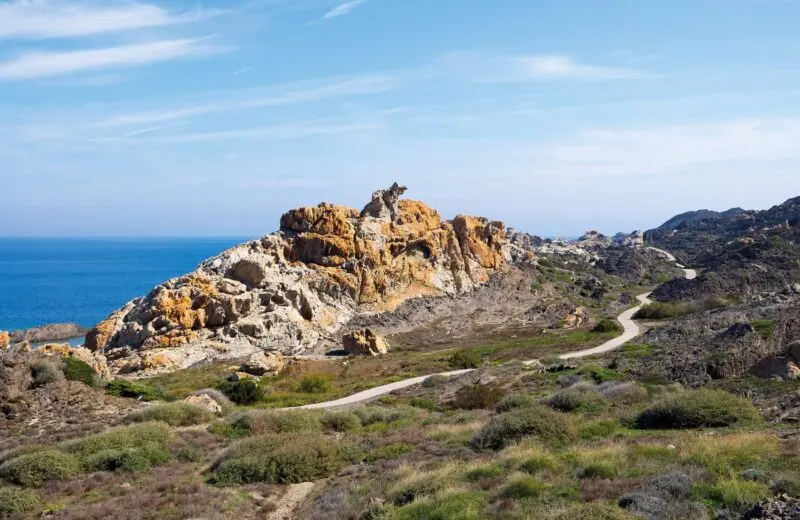
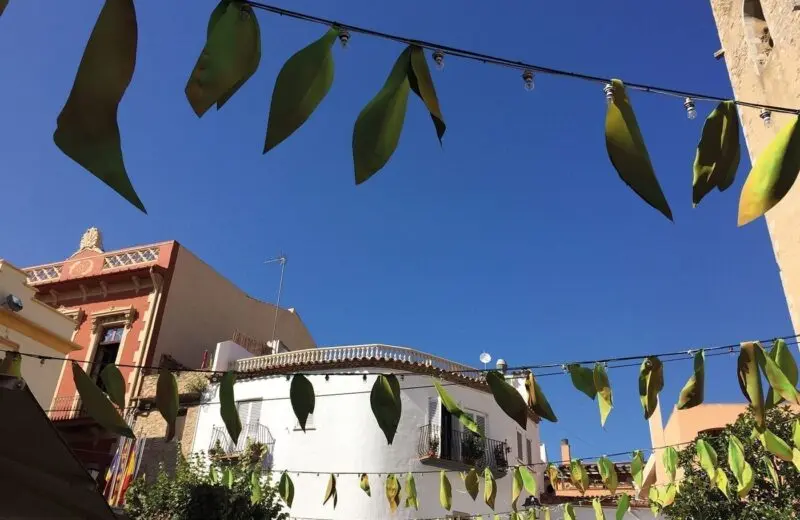
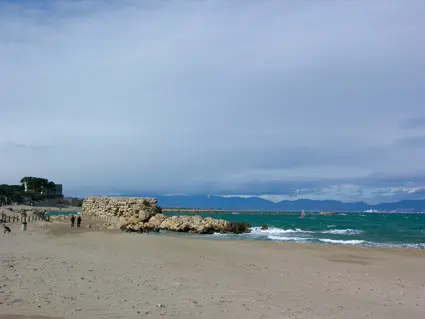
The sea of blossoms of the wisteria of the wisteria in Sant Martí d’Empúries in the spring is almighty between the old stone walls. Then we treat ourselves to a short break from the press life in one of the cafés and restaurants on the church square. Sant Martí d’Empúries is one of our favorite places on the Costa Brava. The small medieval place was once Capital city of the county Empúries and is now lovingly restored over the Mediterranean. Below the village, the beach with white sand lures you to sunbathe for the first time. Along the small bays and rock groups of picturesque beauty, the most romantic promenade of the Costa Brava runs past the ruins of Empúries to L’Escala.
Greek settlers
Here it was also where, in the 6th century BC, the first Greek settlers went ashore to settle where we find the ruins of Empúries today.
The first place they landed was by them Paliapolis called, at that time still a small island – today connected to the mainland and named Sant Martí d’Empúries. Later they also succumbed Roman the magical magic of the place. In the course of the Romanization, a military base was the basis for the Roman city (1st century BC) which, under Emperor Augustus, structurally and legally with the Greek branch Municipium emporiae merged.

Spanish Wine
The coexistence of the two cultures in a common metropolis makes Empúries a unique archaeological site. Was the hour of birth of Spanish wine culture here?
The Museo de Arqueología de Cataluña And Dominic Abernethy from Celler Petit in St Martí d’Empúries investigated this question.
They now want to document what their research has revealed at the 1st wine fair “Arrels del VI” from May 23rd to 25th, 2008 in Empúries. Your intuition: a three-day symbiosis of wine, culture and history with entertainment, enjoyment and information! The best wines in the region are presented. The entrance fee includes a small wine tasting and offers the opportunity to discover the ruins of d’Empúries daily at 4 p.m. under expert guidance.
Statue of Aeskulapi
Since March there has been a new attraction here: the statue of Aesculapian (Esculapi de Empúries), one of the most important finds of the archaeological excavations of Empúries, has now returned to its former site.
At the same time, this was the beginning of the celebrations for the hundred-year discovery of the Greco-Roman archaeological site of Empúries, which will follow further highlights.
The statue of Esculapi was found in Empúries in 1909 and previously kept in the Archaeological Museum of Catalonia in Barcelona. In recent years, it has been restored piece by piece. According to the latest studies, the statue is a rarity that is more than 2,200 years old.
Since March 15, Esculapi de Empúries has been in the Museu d’Arqueologia de Catalunya (mac) to admire in Empúries.
Aeskulap, Greek Asklepios, Latin Aesculapius, the Greek god of salvation, originally probably Thessal earth demon, was considered the son of Apollo and the Koronis. The sign of Aesculape is the edema – a staff encircled by the holy serpent.
The walk through the ruins of De Empúries enchants with indescribable sea views, ancient columns, mosaics, Mediterranean vegetation and lets us trace a little bit of the way of life of its former inhabitants. With a glass of wine in hand, of course, this is particularly impressive. We are excited.
More: Sant Martí d’Empúries on the promenade Passeig d’Empúries, The ruins of Empúries, Anno 1500 – Medieval Festival in Castelló d’Empúries.