The rebellion of the reapers “Guerra dels Segadors” Between 1640 and 1659 caused parts of Catalonia – the Roussillon and the northern half of Cerdanya – France with the Pyrenean peace. Today we see itself as a cultural region. The French city of Perpignan is entitled Catalan Capital of Culture. An occasion to explore the entire region beyond the border.
We leave the NII at Le Boulou and turn on the “Route des Alberes” towards the coast. Idyllic small towns and villages. Grazing horses in front of the panorama of the Alberesberg. green vineyards. Tranquil marketplaces with inviting street cafes.
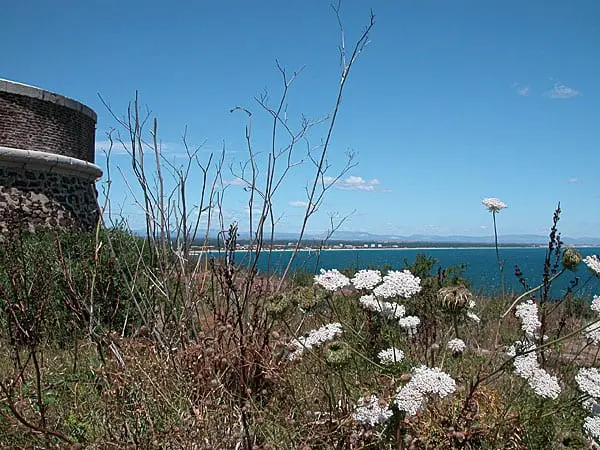
Our goal is Collioure at the foot of the “Monts Alberes” Located directly on a fjord-like bay. The place is considered the Pearl of the Vermeille and exudes romantic charm. We stop above the small town at the remains of old fortifications. The weather spoils us with the best views. Fascinated, the gaze wanders over the ink blue Golf du Lion which stretches from Cap de Creus to Toulon. We walk down to the old town at the harbor with its colorful fishing boats.
Collioure is considered the birthplace of Fauvism. The place shines with bright colors and fascinating light. Artists like Georges Braque, Raoul Dufy, Henry Matisse or Pablo Picasso were fascinated by Collioure. Henri Matisse noted “there is no bluer sky in France than Collioure’s.” The special light gave the coastal region its name: Purple Coast – Côte Vermeille. Painters still characterize Collioure today. They banish the moments and moods on canvas or paper with colors and take into account Collioure’s reputation as a “painting town”. most popular motif then and now: the Notre-Dames-des-Anges Church With the striking dome. We stroll out the mole and admire the silhouette of the King’s Castle, which separates the Port d’Amont harbor basin from the Port d’All. The Château Royal Inside is also worth seeing: Wehrgänge, the parade ground, a 16th-century prison, the 13th-century chapel and the Queen’s bedroom tell history. 981 erected by the Counts of Roussillon, then reached under the rule of Aragon, followed by the rule of the kings of Mallorca who completely renewed the castle in 1242 and 1280 and became the royal summer residence remodeling…
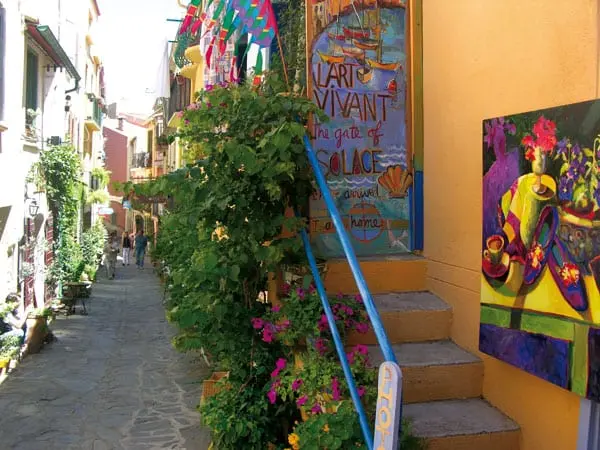
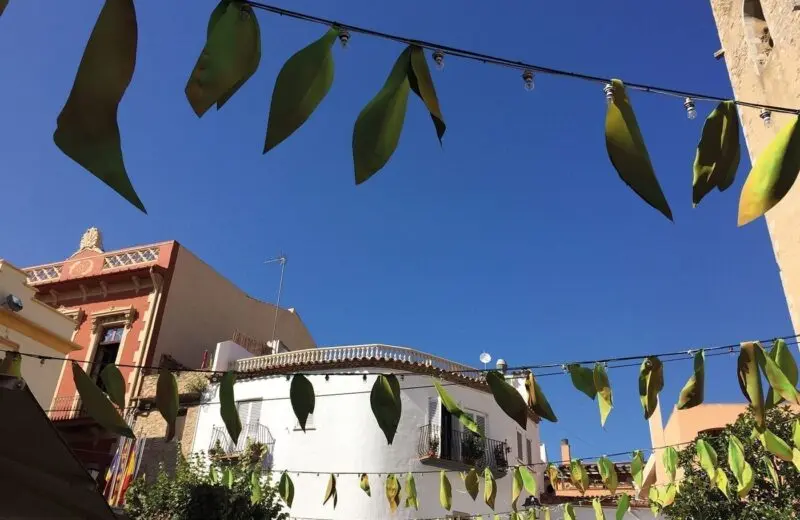
Later we lose ourselves in the old alleys with the picturesque stairs, flowers decorated houses, colorful boutiques, galleries, small cafés, bars and restaurants. We let ourselves be seduced into mussels and white wine. in the Brasserie “Hôtel des Templier” am Quai Amirauté There are countless works by artists who settled in Collioure. The owner René Pous had a heart for painters and exchanged many a mine for a picture.

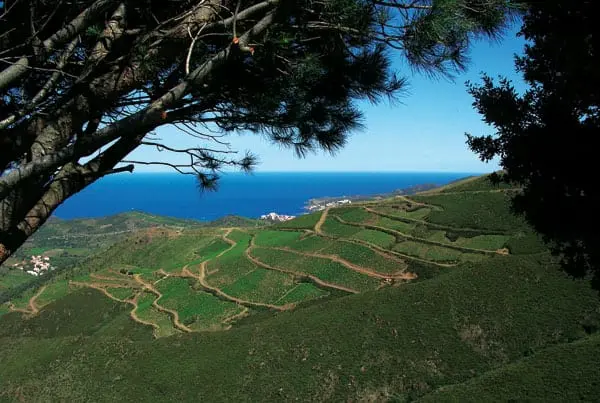
For the way back to Spain we choose the narrow and steep elevated road D86. As if on a balcony far above the sea, the serpentines with spectacular viewing angles lead past viewpoints and castle ruins through cork oak forests and vineyards. Here you get an overall impression of the idiosyncratic and varied beauty of the Côte Vermeille from a dizzying height. The fine “Vin Doux Naturel” is harvested all around on breakneck, steep vineyard terraces. It rests in oak barrels for 30 months.
In Banyuls-sur-Mer in the internationally known Wine cellar “Le Cellier des Templier” you can taste the wines of the region. The “Banyuls”, a mahogany-colored sweet wine – which harmonizes excellently with chocolate – is world-famous.
Via curves and gradients, it’s back to the Costa Brava.
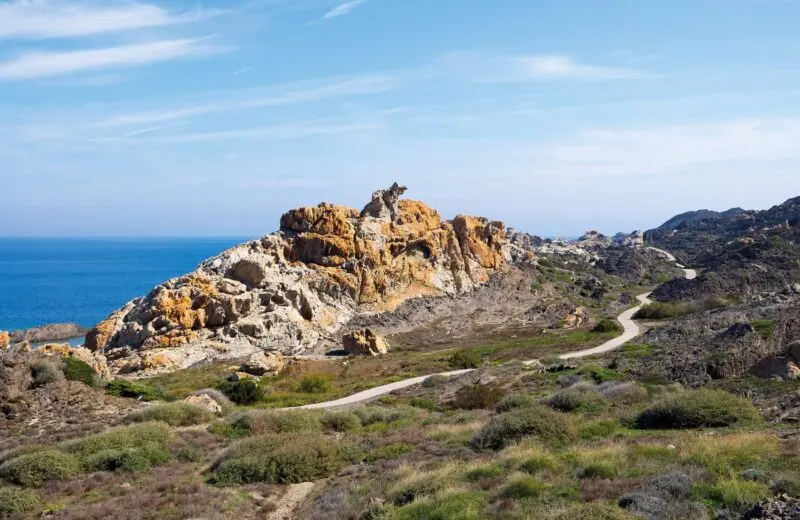
Rocky mountains on one side and azul blue glowing the Mediterranean Sea on the other, connecting one of the most beautiful coastal roads in Europe, France and Spain.