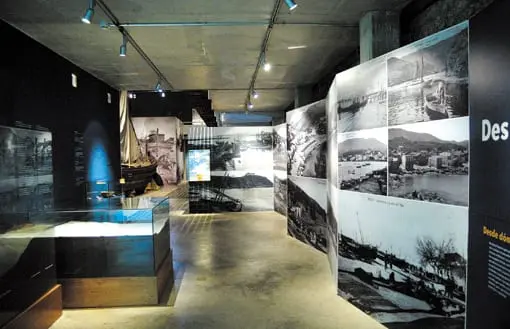
At the working harbour of Palamós, the Museu de la Pesca reveals a side of the Costa Brava that predates its beach holidays: fishing boats, maritime skills and the lives of the people who make a living from the sea. This guide brings together our archive photographs and up-to-date visiting advice.
Palamós Fishing Museum at a glance
- Address: Moll Pesquer s/n, 17230 Palamós, beside the fishing harbour
- See: fishing history, equipment, techniques and the region’s maritime heritage
- Experiences: guided fish-auction visits, cooking and tastings at Espai del Peix, fishing boats and Pescaturisme trips; check bookings
- Opening hours: seasonal; details below
- Tickets: from the museum’s official website or at the museum
Beyond the romance of the sea
Hemingway’s old fisherman and Jack London’s seafarers have helped shape the mythology of life at sea. Yet fishing has always meant physical work, unpredictable weather and a livelihood that depends on the catch. Before tourism transformed this coastline, fishing households followed the rhythm of departures, landings and sales. Engines, refrigeration and changing techniques transformed that world without erasing its character.
 Palamós is a good place to discover both its history and its present. The harbour still works; the museum puts the boats, tools and individual stories into context. It also explores the need to care for marine resources, an important question for fishing communities today.
The fish auction, Espai del Peix and Palamós prawns
The Llotja is the harbour’s fish-auction building, where catches enter the market. The museum organises guided visits, subject to its programme and fishing activity. An old claim that the auction can be watched every day at a fixed time is not reliable. At Espai del Peix, cooking workshops and tastings introduce local seafood; other experiences may include boats and Pescaturisme excursions. Book ahead where required.
 The celebrated Gamba de Palamós has a registered quality mark backed by the local council and fishers’ guild. Its requirements cover origin and traceability along with the handling and sale of the product. It should not be understood as a blanket guarantee about every prawn served in local restaurants.
Opening times
- October–April: Tue–Fri 10:00–13:30 and 15:30–19:00; Sat–Sun 10:30–14:00 and 16:00–19:00; Mondays closed
- May, June and September: Mon–Fri 10:00–13:30 and 15:30–19:00; weekends/public holidays 10:30–14:00 and 16:00–19:00
- July–August: daily 10:00–14:00 and 16:00–21:00
The museum publishes Christmas closures and may change opening arrangements. Check official visitor information before travelling, especially for special activities and ticket prices.
Frequently asked questions
Where is the Museu de la Pesca?
At Moll Pesquer in Palamós harbour, close to the fish-auction hall.
Can visitors watch the fish auction?
The museum offers guided visits when scheduled. Participation and timing depend on its programme and the fishing operation.
What does the Gamba de Palamós label mean?
It is a registered quality mark with controls covering traceability and the product’s journey from catch to sale.
Is it worth visiting with children?
Yes. The boats, fishing equipment and displays help families understand everyday life at a working Mediterranean port.
Official sources: Museu de la Pesca; Museums of Catalonia; Palamós council: prawn quality mark. The two photographs come from our 2010 archive.
More about Palamós
These stories were written in different years. Historical accounts remain identified as such; check each article for current visiting advice.