On this page
Our little electric boat rocked gently as we set off into Empuriabrava’s maze of canals. From the water, the white houses, garden terraces and private moorings tell a story you cannot see from the street. Come along on the boat trip we still remember so vividly.
Empuriabrava at a glance
- Canals: approximately 23 to over 25 km of navigable waterways, depending on the official source
- Moorings: around 5,000, many beside private homes
- Known for: Europe’s largest residential marina
- Location: Castelló d’Empúries, Bay of Roses, beside the Aiguamolls de l’Empordà natural park
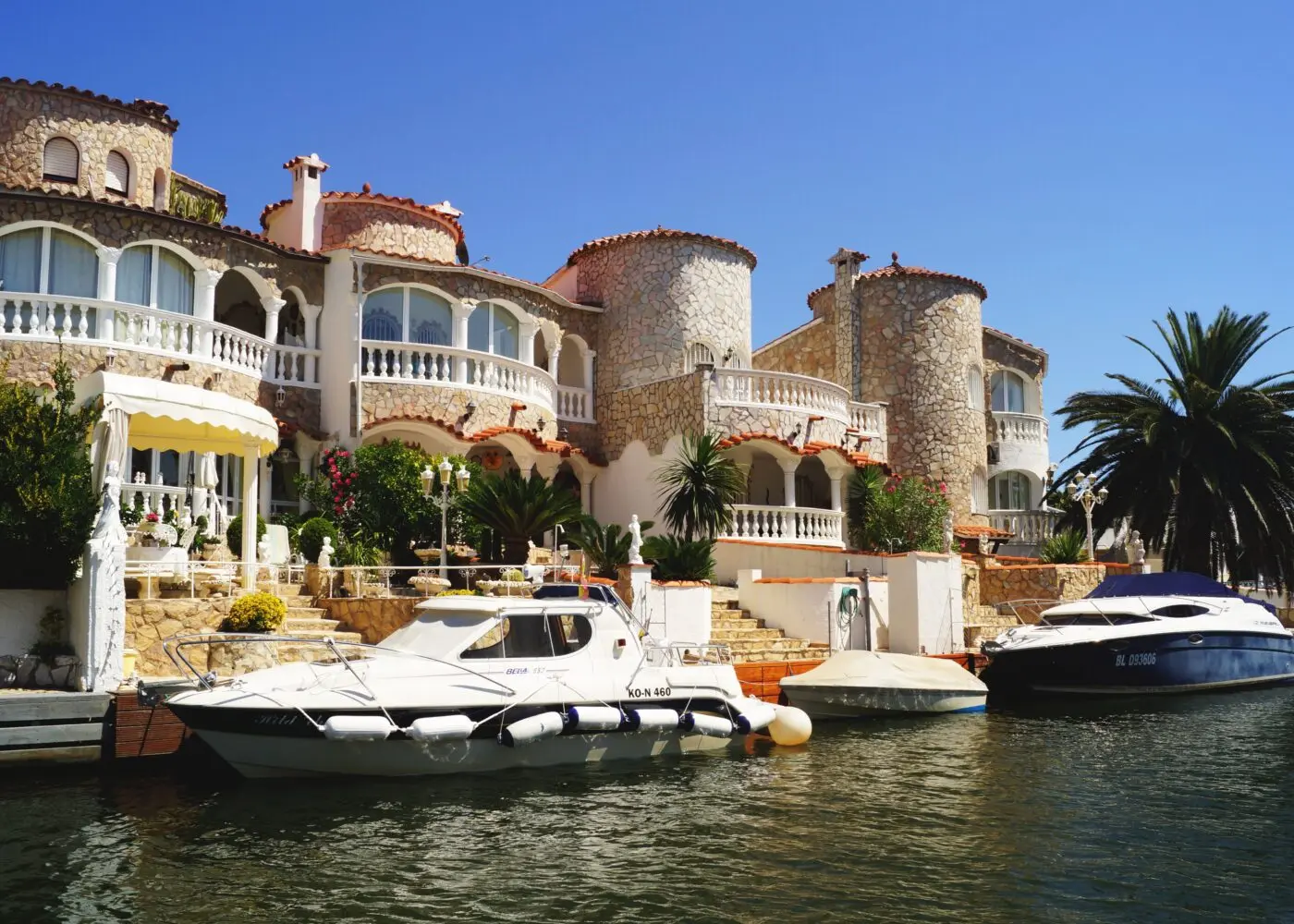
From above, Empuriabrava looks like a network of waterways woven between houses. Many villas open directly onto the canals, with a boat moored just beyond the terrace. It is easy to see why people call this corner of the Bay of Roses the “Spanish Venice”.

Until then, we had only known Empuriabrava from its streets. That day, we wanted a different perspective: to see the town from the canals, at the unhurried pace of a small boat.
We joined the holidaymakers and rented a little electric boat. A friendly local explained the controls, and off we went, wobbling rather more than we expected. For the first few minutes our tiny vessel felt like a nutshell on the water. Soon we found our balance and were gliding past waterfront gardens and houses in Empuriabrava, catching glimpses of life behind the terraces. Here, the water is part of everyday life; for some homeowners, their boat is parked almost at the back door.
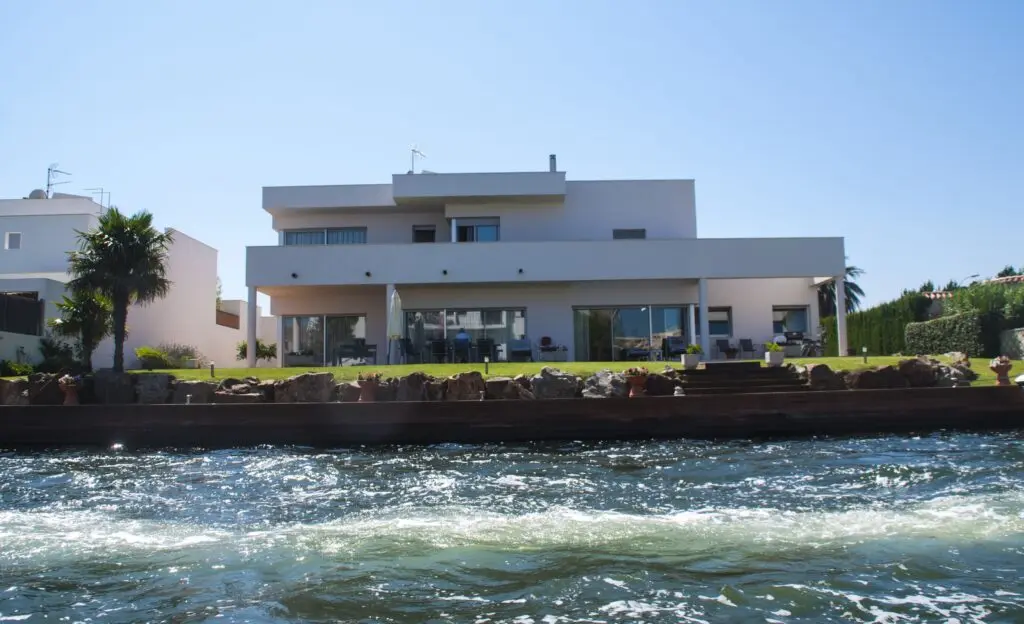
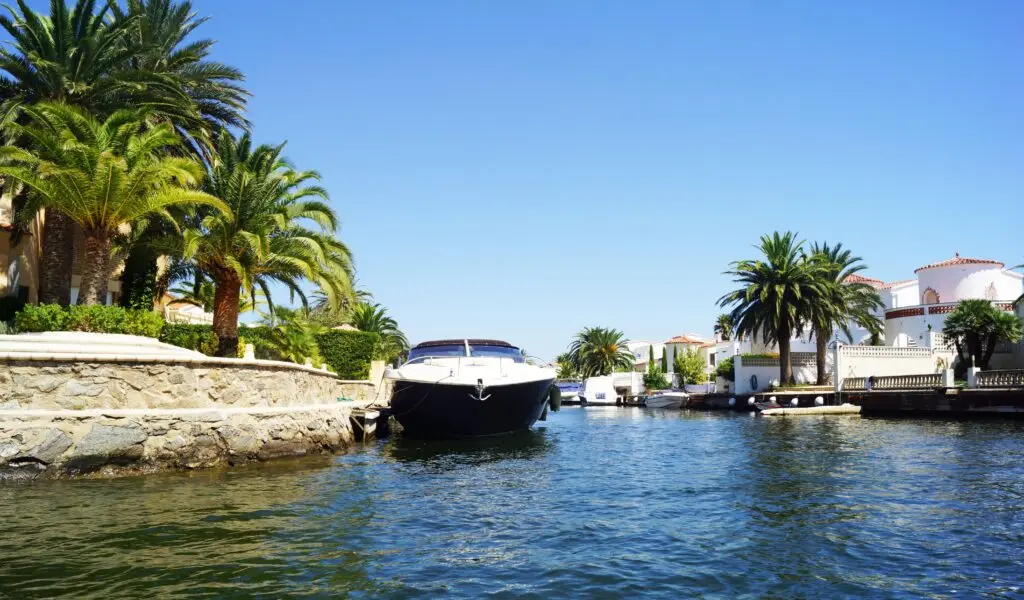
Even the smallest ripple made us sway as we ventured deeper into the canal network. A few boat owners waved and called out “Hola guapas”; others passed in yachts that made our little boat look tiny. We laughed, waved back and kept exploring.
Our camera memory cards filled quickly: immaculate gardens, Mediterranean houses, gleaming yachts and other visitors enjoying the same unexpected view of the town.
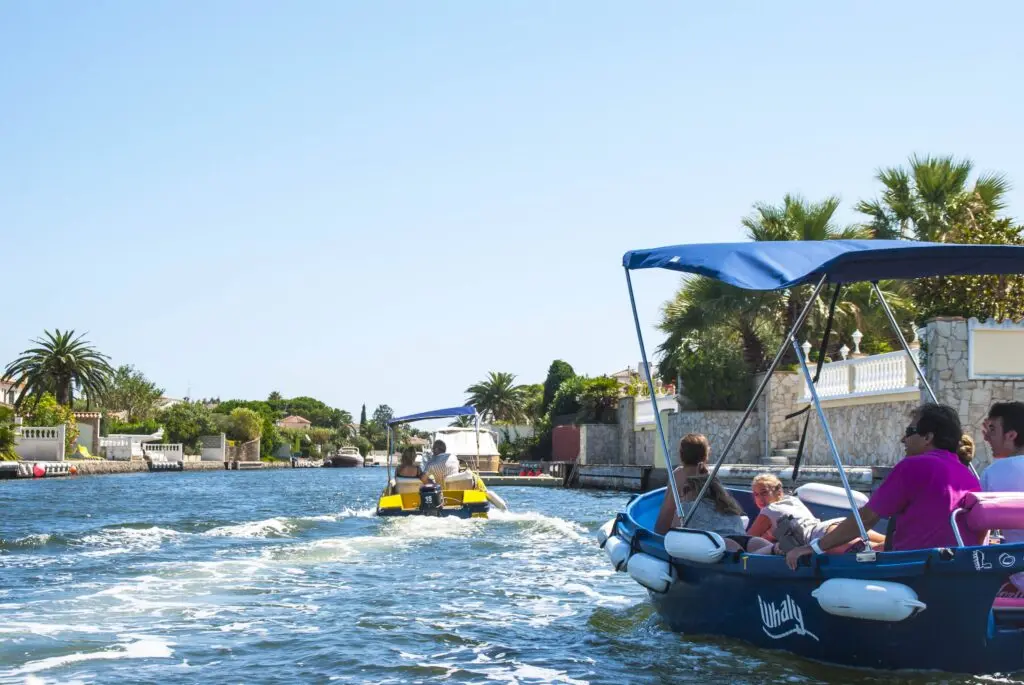
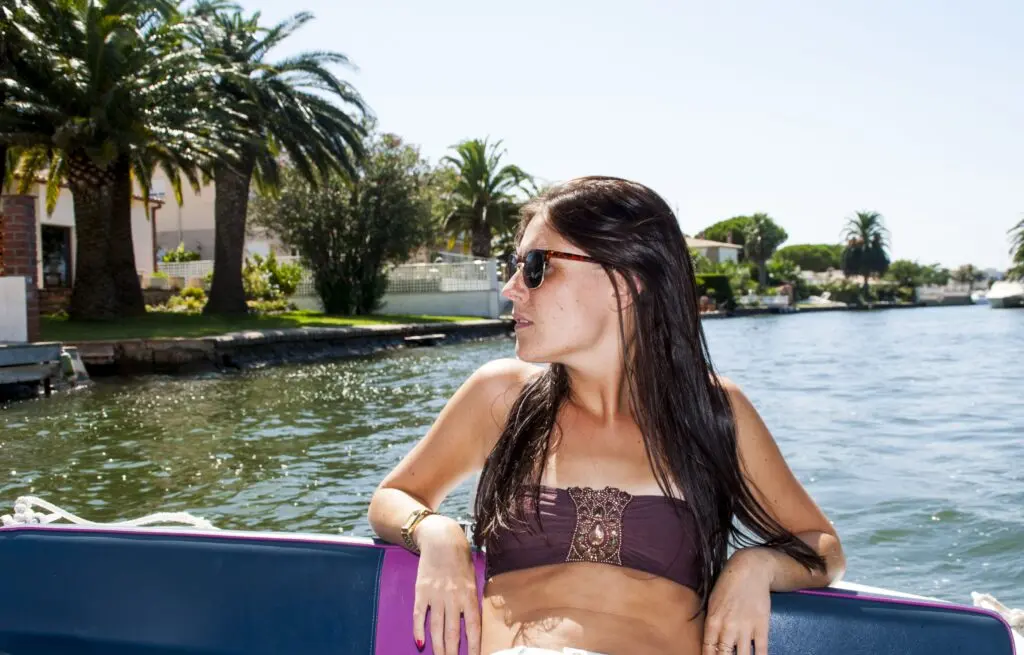
The hour passed far too quickly. We had discovered an intimate, almost quiet side of Empuriabrava, away from the lively roads and the wide sandy beach. “Venice of Spain” may be a playful nickname, but from a boat, with a new view around every bend, it suddenly makes sense.

Exploring the canals by boat
For a similar experience, ask a local boat-rental operator about short canal trips in a small electric boat. Some options do not require a boating licence, but conditions, routes and prices depend on the operator. Stay within the permitted navigation area, keep a gentle speed and respect the privacy of the homes along the water.
There is more to explore beyond the canals: our guide to Empuriabrava covers the beaches, airfield and other ideas, while Butterfly Park and the Aiguamolls wetlands make rewarding stops nearby.
Frequently asked questions about the Marina of Empuriabrava
How long are Empuriabrava’s canals?
Official sources use different measurements. Ports Costa Brava describes about 23 km of navigable canals, while the local tourism office refers to more than 25 km. The difference appears to depend on what is counted.
How many berths are there?
Approximately 5,000 moorings are generally cited, many of them directly beside private waterfront properties.
Is Empuriabrava the largest marina in the world?
Empuriabrava is commonly described as Europe’s largest residential marina. Claims that it is the world’s largest are less clear-cut and depend on definitions.
What is the best way to explore the canals?
Our favourite way is from a small rented boat; a walk along accessible waterfront areas offers another perspective. Check current rental conditions locally before setting out.
Official information: Ports Costa Brava, Tourism Office of Castelló d’Empúries.
More on this: All information about the location can be found in the article Empuriabrava – Spanish Venice, Butterfly Park Empuriabrava, Empuriabrava – new coast law.
More about Empuriabrava
- Empuriabrava: Life Between the Canals and the Sea
- Costa Brava by boat: Empuriabrava to Portlligat
- Butterfly Park Empuriabrava
- Empuriabrava Coastal Law: 2016 Mooring-Rights Archive
These stories were written in different years. Historical accounts remain identified as such; check each article for current visiting advice.