On this page
At Easter, Death dances through the streets of Verges: the procession with the Dance of Death takes place every year on Maundy Thursday. The essentials are set out here.
Easter on the Costa Brava at a glance
- Dance of Death: the Dansa de la Mort in Verges, between Figueres and La Bisbal
- Date: every year on Maundy Thursday, the exact time is given by the organisers
- History: according to the Ajuntament de Verges, the procession is first documented in 1666, already described as a custom at the time
- More: The Dance of Death in Verges
Spring is creeping in and Easter is just around the corner. In Catalonia, Easter is a festival full of light and darkness – with music, colours and strong emotions. A spectacle for the senses somewhere between mourning, tradition, a touch of horror and partying. Easter is the most important and oldest Christian festival. The resurrection of Jesus Christ from the dead is seen as a symbol of the victory of life over death. On Good Friday, Catholics and Protestants commemorate the crucifixion of Jesus. In many places in Spain, the night-time Easter processions take place.
Dancing skeletons at midnight
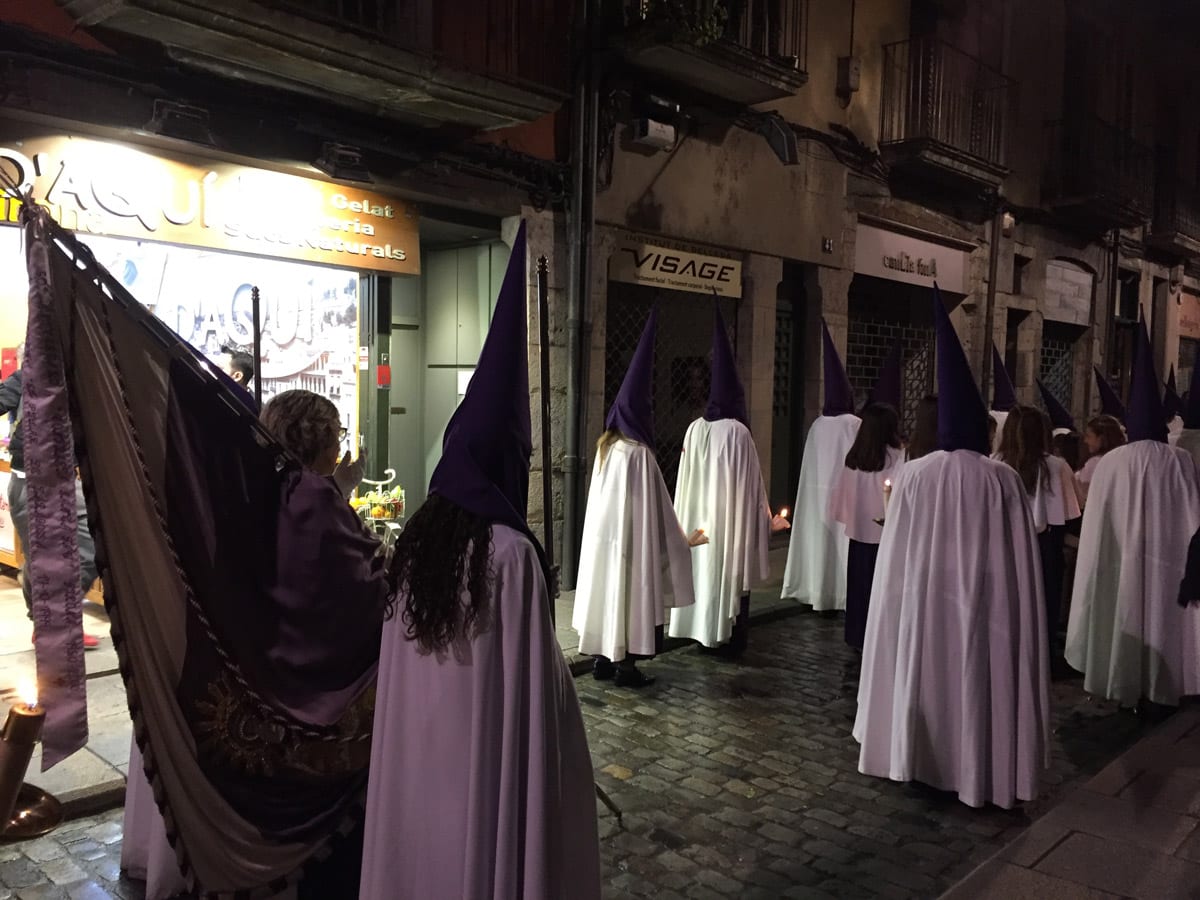
A gentle shiver runs down your spine when the tall hoods of Semana Santa move through the medieval lanes of Girona on Good Friday. In the hinterland of the Costa Brava, it gets particularly eerie in Verges as early as Maundy Thursday night. People gather there for one of the oldest processions in the country – the Dance of Death of Verges, first documented in 1666. In the flickering torchlight, this bizarre midnight spectacle moves slowly through the small medieval town of Verges year after year. Five dancing skeletons move to the beat of the drum. Interest is huge. Afterwards there is a party, and the bars and pubs in town are packed all night long.

The magic of the night
The ritual of the penitents is as much a part of Easter throughout Spain as amen is to prayer. Eternal damnation? Atonement without words? Penance in powerful images? Traditional staging or present-day reality? The processions of Semana Santa raise many a question. Striking and a little eerie, alluring and mysterious at the same time – the magic of the night-time processions is undeniable. Darkness and light. Medieval backdrops. Expectant crowds. Powerful images.

Saints as superstars
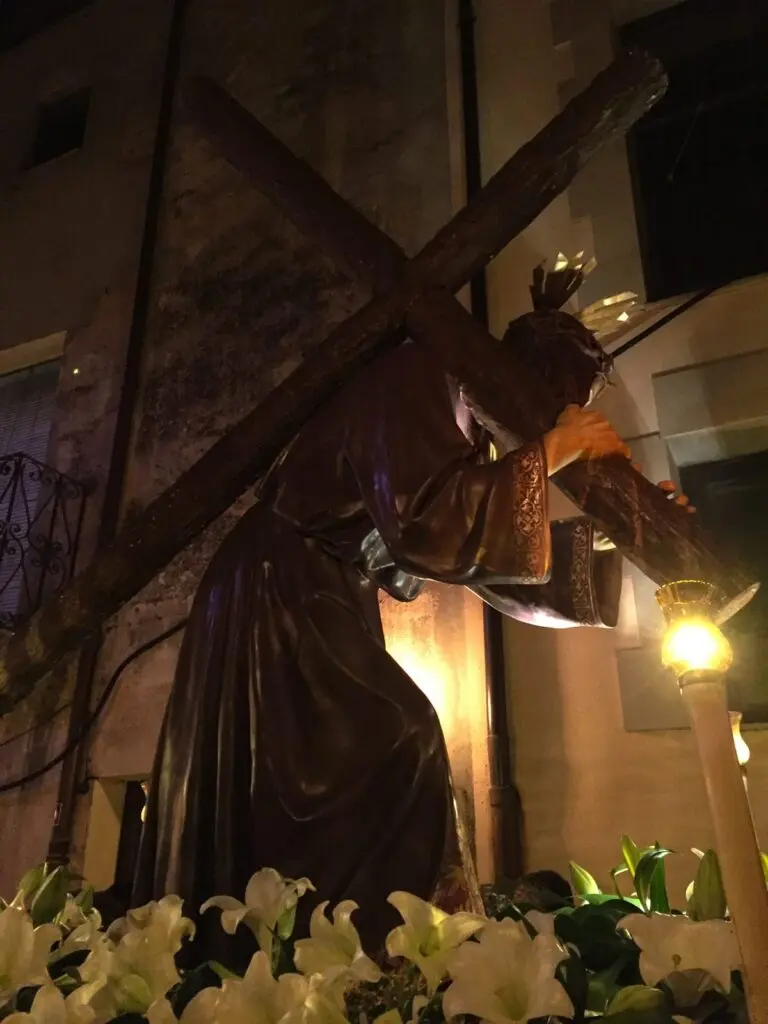
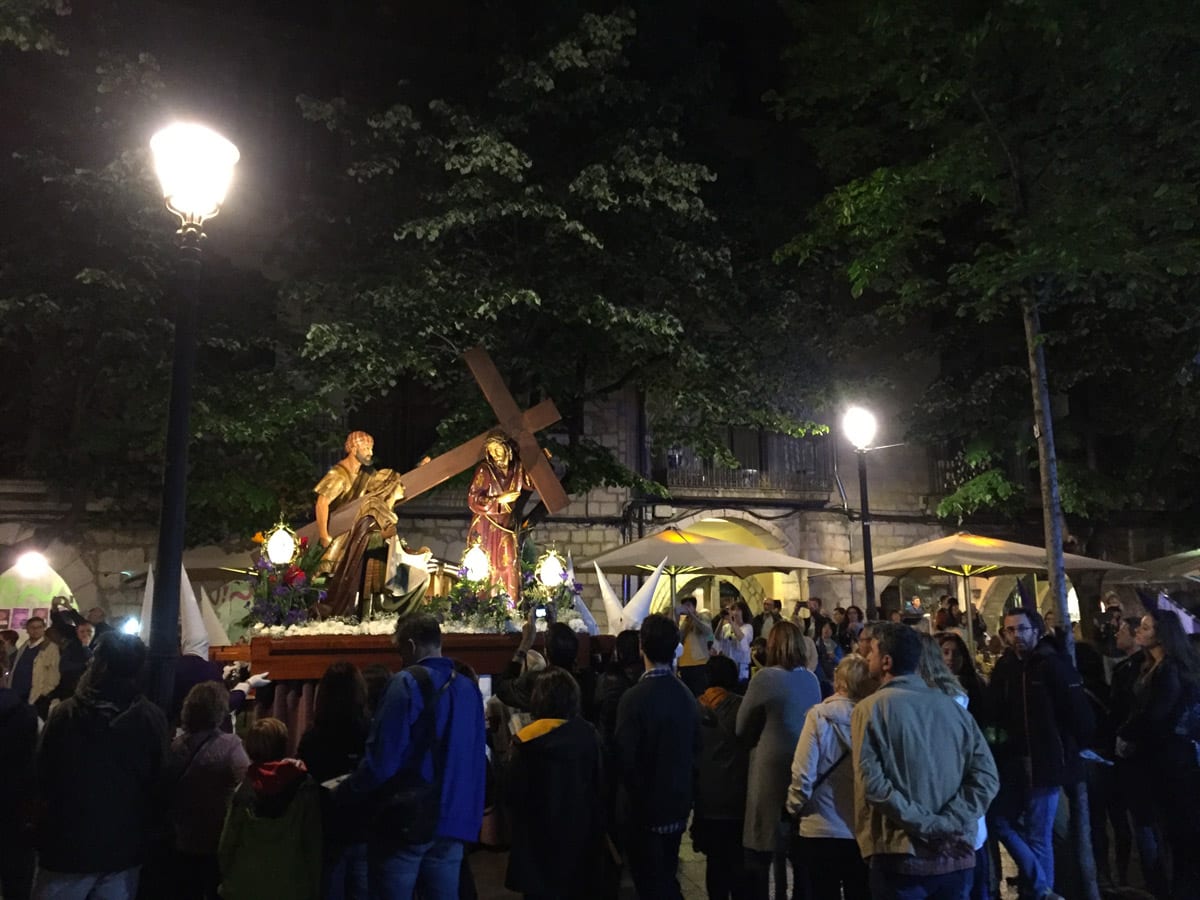
Year after year in Girona, paso after paso glides past us to loud cheers. First the crucified Christ, followed by the Virgin Mary. The life-size, hand-carved figures are framed by sumptuous flower arrangements. A heady scent of flowers mixed with incense tickles our noses. People film, flash and take photos. In the age of Instagram and Facebook, the whole world is there when the saints leave the churches and mingle with the crowd. A hint of superstar feeling drifts through the night. In the 21st century the saints are washed into the sea of data, digitised millions of times. To this day the processions of Semana Santa are an expressionist event you have to experience live! Grief and despair paired with enjoyment and joie de vivre – emotions are never closer together. Even if you don’t believe in redemption and resurrection yourself, you now get an inkling of eternity.
Colourful hoods move through the city
In Girona, the doors of the cathedral’s mighty portal open on Good Friday at around 10 pm. Slowly the hooded men, grouped by colour according to their brotherhoods – the confraries – descend the broad steps to the large square in front of the cathedral. Here the procession forms, and the bearers shoulder one paso after another against the impressive backdrop of the huge church. In the end, Semana Santa is not a deadly serious, archaic matter of faith: the colourful crowd of onlookers lining the lanes is in high spirits. Late at night, Semana Santa is also a first-class street party. The cafés and bars are packed and people celebrate exuberantly. Finding a free table at a street café takes luck. Midnight is long past by the time we finally have our first cava sparkling in the glass. Salud, and happy Easter to everyone!
Frequently asked questions about Easter in Verges
When does the Dance of Death in Verges take place?
Every year on Maundy Thursday.
Where is Verges?
In the Baix Empordà between Figueres and La Bisbal.
Since when has the Dance of Death existed?
According to the Ajuntament de Verges, the procession is first documented in 1666, already described as a custom at the time. Dances of death existed in many places in Europe in the Middle Ages.
Sources: Turisme de Catalunya, Die Prozession von Verges, Freibeuter Reisen, Dansa de la Mort, Rove.me, La Dansa de la Mort de Verges.